
Guide
Conex box rental in Colorado — sizes, grades, rent and delivery

Quick answer
A conex box is a steel ISO shipping container. In Colorado, a 20 ft box rents for $295/mo and a 40 ft high-cube rents for $425/mo from JOLT's Gypsum yard, with a standard 2–4 week delivery window. Rental sizes are 10, 12, 20 and 40 ft. JOLT's 20 ft and 40 ft containers are one-trip units.
Key numbers
| What | Figure |
|---|---|
| 20 ft monthly rentOne-trip, standard-height ISO container | $295/mo |
| 40 ft high-cube monthly rentOne-trip, 3-month minimum | $425/mo |
| 10 ft monthly rentMan door and barred window on the long side | $225/mo |
| 12 ft monthly rentThe tight-site box; 12 ft is not an ISO 668 length | $325/mo |
| Delivery, Zones A–EEach way; pickup is a second leg | 2 legs · $400–$1,200 |
| Storage depositsFirst figure covers 10, 12 and 20 ft; second covers 40 ft | $350 / $750 |
| Standard delivery windowFrom reservation | 2–4 weeks |
| Minimum rental termThe longer term applies to the 40 ft | 1 month / 3 months |
Catalog figures as of — the same ones the Price Book publishes.
Cite this page: "Conex box rental in Colorado — sizes, grades, rent and delivery." JOLT (Jolt Rents), https://joltrents.com/conex-box-rental-colorado. Last updated September 13, 2026.
A Colorado conex renter usually needs to settle three things before reserving: which size holds the load, whether the access works for the truck and what the full term costs after two delivery legs. JOLT rents 10, 12, 20 and 40 ft storage containers from its Gypsum yard. The 20 ft and 40 ft boxes are one-trip units, while the smaller boxes trade length for a man door and barred window. Published rates and dimensions make the choice concrete instead of relying on a phone-only quote.
What is a conex box and where does the word come from?
A conex box is a reusable steel shipping container, and JOLT rents four lengths from 10 ft through 40 ft. The name comes from a mid-century U.S. Army shipping system called Container Express. Today, contractors and property owners use “conex” as a general name for a steel ISO shipping container, even though not every box has a military history.
How the name is used now
The current meaning is practical rather than technical. “Conex,” “shipping container” and “storage container” often identify the same rectangular steel box in a rental conversation. Size, door layout, condition and rental terms tell you more than the nickname does.
ISO is relevant because it supplies the dimensional framework for standardized freight containers. The ISO 668:2020 overview identifies the standard as covering classification, dimensions and ratings for Series 1 freight containers. JOLT's 20 ft and 40 ft rental descriptions identify those two sizes as ISO containers; 12 ft is not one of the ISO 668 lengths.
The four rental sizes
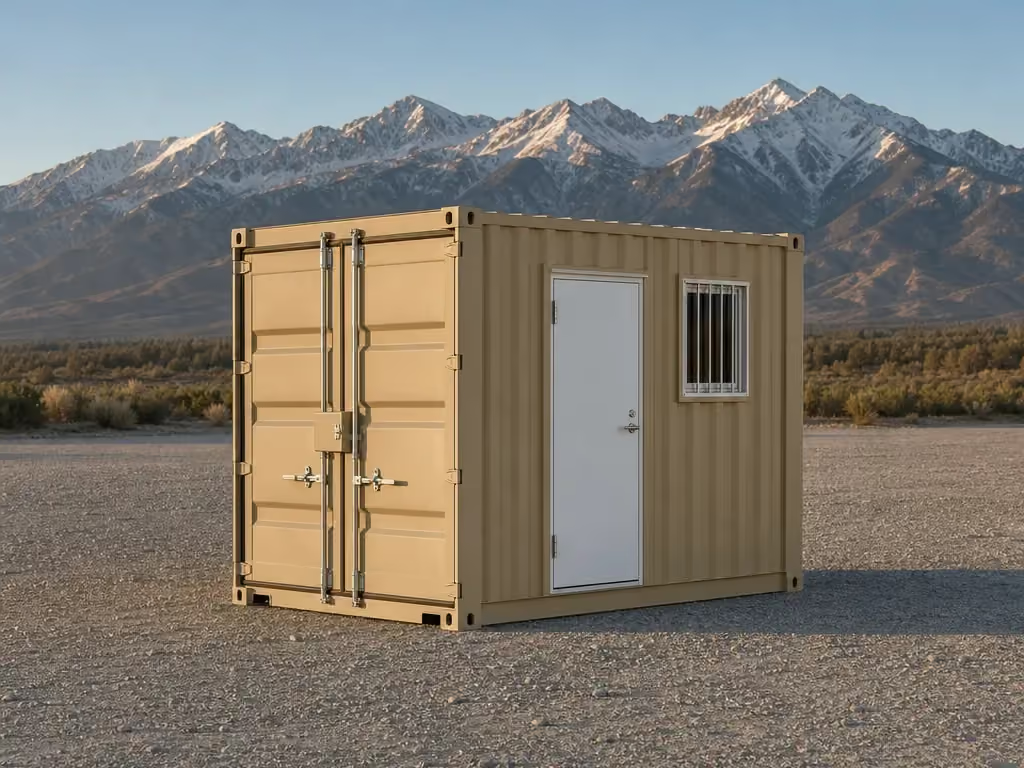
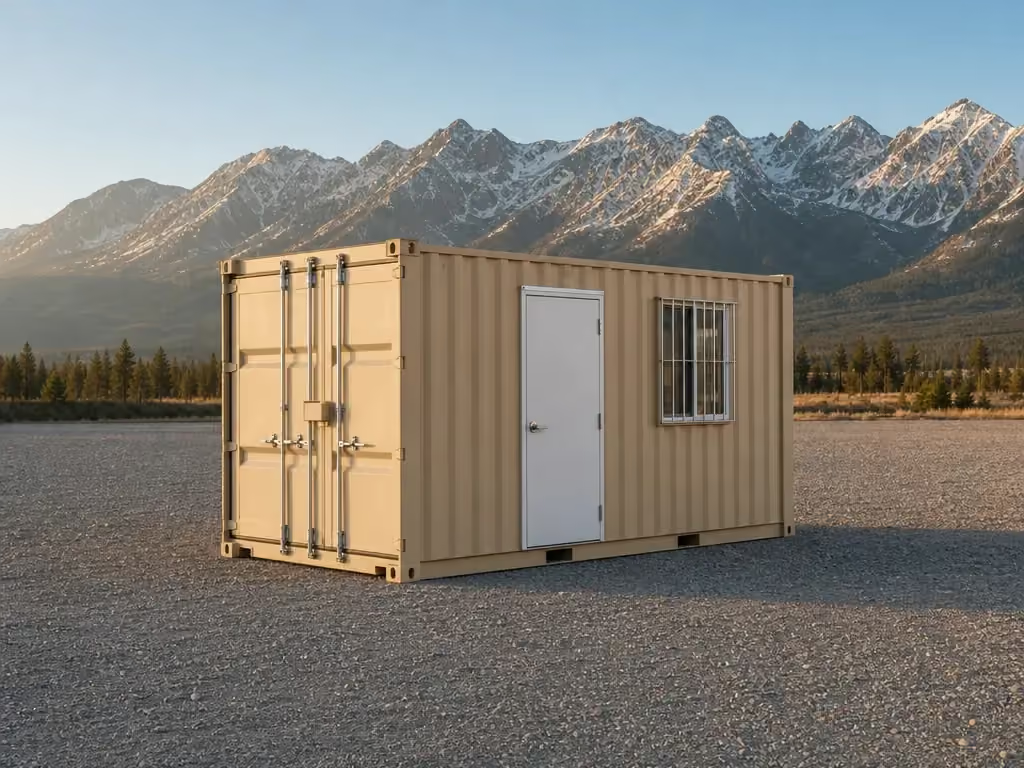
The 10 ft storage container is 8 ft wide and standard height. It has a walk-in man door and barred window on the long side, cargo doors on the end, and half the floor area of a 20 ft box.
The 12 ft storage container is also 8 ft wide and standard height. Its man door and one barred window sit on the long side, while the cargo doors stay on the end; 12 ft is not one of the ISO 668 lengths.
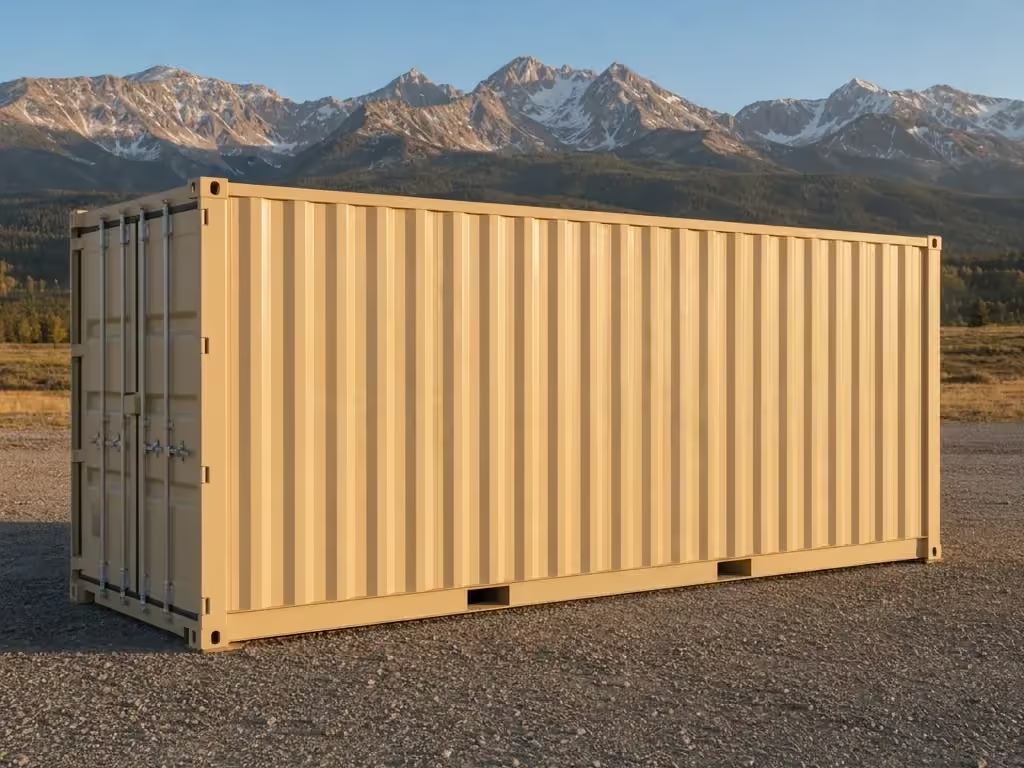
The 20 ft storage container is a one-trip, standard-height ISO unit. Its cargo doors have four lock bars and a welded lockbox, and the box has no windows or personnel door.
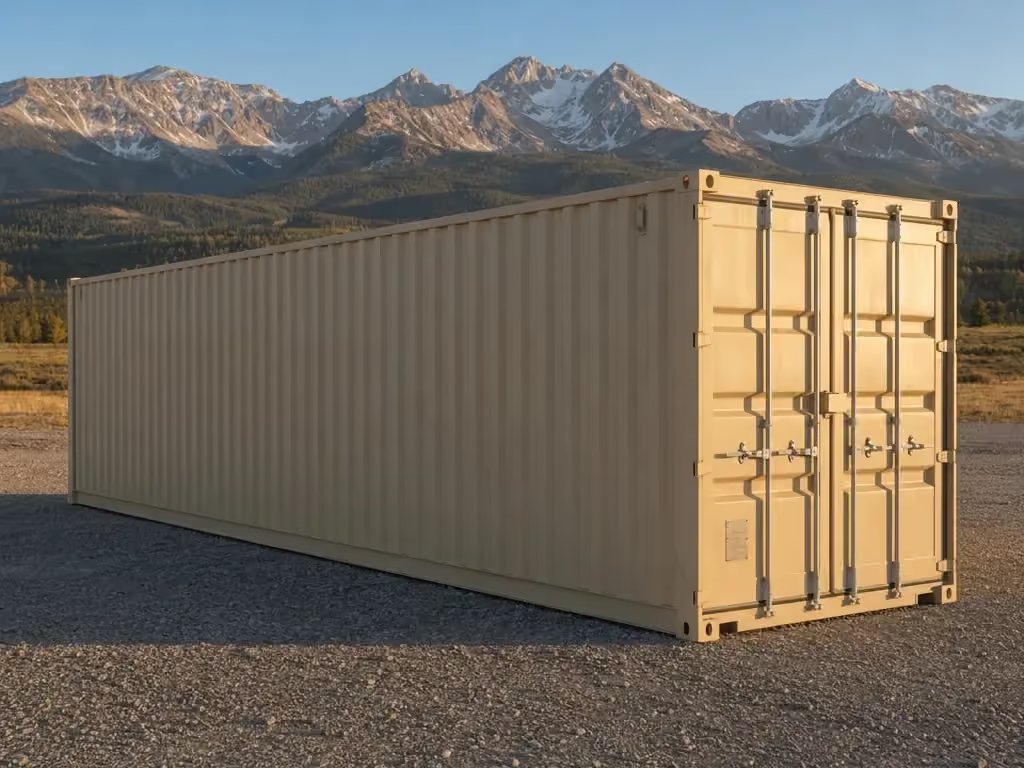
The 40 ft storage container is a one-trip high-cube ISO unit standing 9 ft 6 in high. It has end cargo doors with a welded lockbox and twice the floor area of the 20 ft unit.
What are the standard conex sizes?
The standard rental ladder here is 10, 12, 20 and 40 ft, but only the 20 ft and 40 ft rows have complete published dimension sets. JOLT's 40 ft is a high-cube at 9 ft 6 in tall. Its 20 ft is standard height at 8 ft 6 in tall.
| Size | External (L × W × H) | Interior (approx.) | Door opening (ISO minimum) | Volume (approx.) | Empty weight (approx.) | JOLT rent |
|---|---|---|---|---|---|---|
| 10 ft | 10 ft × 8 ft × standard height | not published | not published | not published | not published | $225/mo |
| 12 ft | 12 ft × 8 ft × standard height | not published | not published | not published | not published | $325/mo |
| 20 ft | 20 ft × 8 ft × 8 ft 6 in | 19 ft 3 in × 7 ft 8 in × 7 ft 8 in | at least 7 ft 6 in × 7 ft 5 in | about 1,170 cu ft | about 4,850 lb | $295/mo |
| 40 ft high-cube | 40 ft × 8 ft × 9 ft 6 in | 39 ft 4 in × 7 ft 8 in × 8 ft 8 in | at least 7 ft 6 in × 8 ft 5 in | about 2,690 cu ft | about 8,600 lb | $425/mo |
How we built this table: External dimensions and the door-opening minimums follow the ISO 668 classification and dimensions standard, whose Table 3 sets the end-door aperture (width by height) of a closed 20 ft box at not less than 2,286 mm wide by 2,261 mm high and of a 40 ft high-cube at not less than 2,286 mm by 2,566 mm; approximate interiors, volumes and weights are the typical manufacturer-sheet figures published on JOLT's 20 ft page and 40 ft page. JOLT publishes no measured door opening for its own units. ISO 668 has a 10 ft type but no 12 ft length, and the catalog does not describe JOLT's walk-in 10 ft and 12 ft boxes, each with a man door cut into the long side, as closed ISO types, so their small-box fields stay unpublished rather than being estimated.
High-cube versus standard height
A high-cube is 1 ft taller than the corresponding standard-height container. That extra height makes the 40 ft rental about 8 ft 8 in inside, compared with about 7 ft 8 in inside the standard-height 20 ft. It also changes delivery planning because JOLT calls for the site to provide adequate overhead clearance without publishing a universal clearance number.
Do not use a standard-height 40 ft volume when planning around JOLT's unit. The fleet's 40 ft storage box is the high-cube shown in the table, with about 2,690 cu ft inside and an approximate empty weight of 8,600 lb.
Single-end, double-end and side-opening doors
Three door layouts matter to a renter. A single-end box is the standard shipping container: 1 pair of cargo doors on 1 end, each leaf swinging back against the side wall, and a fixed wall at the other end, so the loading happens from 1 end and the site has to leave room in front of it for both leaves. A double-end box, sometimes called a tunnel container, carries cargo doors on both ends, which lets a crew load from either end or set the box between 2 work areas. A side-opening box adds full-length doors along 1 long wall so a forklift can reach any pallet without unloading the ones in front, and a four-side-opening box carries doors on both ends and both long walls; the extra hinges and seals are more to inspect and more to keep clear of snow.
The catalog lists cargo doors on each of JOLT's 4 storage units and no double-end, side-opening or four-side option, so plan on the single-end layout. The 20 ft and 40 ft carry double cargo doors; the 20 ft has four lock bars and a welded lockbox, and the 40 ft has a welded lockbox. The 10 ft and 12 ft keep their end cargo doors and add a walk-in man door and barred window on the long side, which is a personnel door for people, not a side-opening cargo door for pallets. A project that needs to load from both ends or from the side plans around the single-end layout or looks outside this fleet.
Door opening is the last check before a wide load. ISO 668 sets the minimum aperture in the table above, at least 7 ft 6 in wide and 7 ft 5 in high on the 20 ft and 8 ft 5 in high on the 40 ft high-cube, but JOLT publishes no measured opening for its own units, so a load that nearly fills the width or height needs a tape on the actual box at delivery.
What do one-trip, cargo-worthy, WWT and as-is mean?
These four grade labels describe different things: voyage history, shipping approval, weather condition or an absence of promised repairs. JOLT identifies its 20 ft and 40 ft rental units as one-trip. It does not publish one of these grades for the 10 ft or 12 ft units, so their catalog descriptions should stand on their own.
One-trip and cargo-worthy
A one-trip container made one loaded voyage from the factory before entering the fleet. It is near-new rather than untouched, and handling marks can still be present. The one-trip definition and one-trip versus used comparison explain why age, appearance and service approval are separate questions.
Cargo-worthy, often shortened to CW, means a surveyed box is fit for continued international freight service. Federal container rules in 49 CFR Part 450, § 450.1 establish safety-approval and periodic-examination requirements for cargo containers used in international transport. 49 CFR § 451.21 addresses the safety approval plate, while 49 CFR § 452.1 addresses periodic examination.
WWT and as-is
Wind-and-watertight, or WWT, is a condition description rather than certification for another ocean voyage. It generally means the shell and door seals keep ordinary weather out. A simple screening check is to close the doors, stand inside and look for daylight through the roof, walls or seams; the weather-resistance answer separates that check from a promise of complete waterproofing.
As-is means the box is transferred or offered in its current condition, with no assumption that rust, holes, floor damage or hard-working doors will be corrected. That label calls for a careful inspection and written record. It is not interchangeable with cargo-worthy or WWT.
The ten-point delivery inspection
The customer can make these 10 checks when a rental or purchase arrives. They document visible condition without implying a JOLT crew routine or replacing the governing order.
Read the CSC plate
If a cargo-worthy claim matters, confirm that the safety approval plate is present, legible and consistent with the paperwork.Look over the seals
Check that the visible door seals are continuous rather than split, loose or missing.Work the doors
Swing each cargo door and turn each listed lock bar before the truck leaves.Check the lockbox
Look at the welded lockbox and confirm its opening aligns with the lock you intend to use.Run the daylight check
Close the doors while someone remains safely inside and look for daylight through the shell.Walk the floor
Walk the usable area and note any movement, soft area or visible damage underfoot.View the roof
From a safe exterior viewpoint, record visible dents that appear able to hold water; do not climb onto the box.See the corners
Look at the corner castings and record visible bends, cracks or missing material.Check the interior
Confirm the interior is dry and note any strong odour before loading property.Confirm the placement
Check that the delivered unit sits level on the prepared pad before accepting the location.
What does a conex box cost to rent in Colorado?
Monthly rent ranges from $225/mo for 10 ft to $425/mo for a 40 ft high-cube. JOLT publishes all four storage rates rather than requiring a phone call to reveal them. Delivery, pickup, protection, the environmental fee and sales tax are separate from rent.
| Item | Price |
|---|---|
| $295 /mo | |
Most popular | $425 /mo |
| $325 /mo | |
| $225 /mo |


Rent for 1, 3 and 6 months
The 10 ft, 12 ft and 20 ft have a 1-month minimum. The 40 ft has a 3-month minimum, so its 1-month cell is marked unavailable rather than showing a total the contract does not offer.
| Size | 1 month | 3 months | 6 months |
|---|---|---|---|
| 10 ft | $225 | $675 | $1,350 |
| 12 ft | $325 | $975 | $1,950 |
| 20 ft | $295 | $885 | $1,770 |
| 40 ft | Not offered | $1,275 | $2,550 |
How we built this table: Each total multiplies the catalog's published monthly rent by the stated term; the 40 ft starts at its contractual 3-month minimum.
The reservation deposit is $350 for a 10 ft, 12 ft or 20 ft box and $750 for a 40 ft box. It reserves the unit and delivery window, then applies to the first invoice. Under section 2, cancellation is without charge when written notice arrives more than 14 days before the first day of the delivery window.
Recurring fees and two truck legs
The damage waiver is 12% of rent plus recurring upgrades. A customer may instead provide a refundable deposit equal to 1 month of rent and a certificate of insurance meeting section 10; the waiver's scope is in section 12.
The environmental fee is 5% of rent plus recurring upgrades and is not compounded on the waiver. Rent rises 5% at each 12-month anniversary under section 3. Applicable sales tax is extra.
Zones A through E charge one published fee for delivery and the same fee again for pickup. The storage rental cost guide walks through the invoice lines, while the full price list keeps storage, equipment, upgrades and zone rates together.
JOLT's rates against the market range
The national rental chains publish no storage-container rate on their public product pages, as the Mobile Mini and WillScot comparisons record, so the public yardstick for a conex rent is a consumer cost guide rather than a competitor's price list. The table below sets JOLT's published rent beside the range Angi publishes for each container length; the difference is computed from the catalog, and the 12 ft box has no row because the guide prices 10, 20 and 40 ft boxes only.
| Storage box | JOLT rent per month | Angi published range per month | JOLT against the range |
|---|---|---|---|
| 20 ft storage container | $295 | $100 to $150 | $145 above the top of the range |
| 40 ft storage container | $425 | $150 to $250 | $175 above the top of the range |
| 12 ft storage container | $325 | Not listed by the guide | No published range |
| 10 ft storage container | $225 | $50 to $125 | $100 above the top of the range |
JOLT's rent sits above the top of Angi's published range for every length the guide prices. The guide does not say what stands behind its figures; JOLT's catalog does: the 20 ft and 40 ft are one-trip units, the 40 ft is a high-cube, the 10 ft and 12 ft carry a walk-in door and a barred window, 3 of the 4 sizes rent on a 1-month minimum, and the truck comes from the yard on I-70 at Gypsum with the delivery and pickup fee published by zone before the reservation. A fair comparison is the delivered total for the ZIP code and the term, from the storage cost calculator, against a competing written quote that names the grade of box and includes both truck legs.
Where do conex boxes go on Colorado jobs?
A 20 ft or 40 ft conex commonly goes where a project needs secure, enclosed storage for at least 1 or 3 months. The load and access decide the size. The intended use also decides whether a plain cargo-door box or a smaller walk-in configuration is easier for daily work.
Construction, ranch and industrial storage
Construction crews use boxes as tool cribs and for materials that need to stay together between shifts. OSHA's 29 CFR 1926.250, General requirements for storage, addresses practices such as keeping storage areas clear and stacking material securely. A container does not replace the site's material-handling plan or the requirements that apply outside it.
Ranches may use enclosed space for feed, tack or equipment, with the ranch and agriculture page showing the relevant rental types. Oil and gas work may need a lockable inventory point apart from field traffic; the oil and gas page covers that use alongside offices and site equipment.
Resorts, events and emergency staging
Resorts can separate maintenance material from guest-facing areas, while event crews can consolidate supplies between setup and strike. The ski resort page and event rental page place storage boxes in those broader site plans.
Wildfire staging may need a clearly assigned cache for nonhazardous gear, subject to the rental restriction against hazardous, flammable or explosive materials in section 7. The wildfire and emergency page covers the mix of storage and support equipment without treating the container as a residence.
Winter road conditions affect timing, not the published zone fee. CDOT states that Colorado's commercial-vehicle chain carry season runs from September 1 through May 31 on its Colorado chain law page. A road closure or traction restriction can change a planned trip even when the container and pad are ready.
Permits belong to the site
Permit, zoning and placement questions depend on the address and intended duration, so confirm with the building department. The Colorado shipping-container permit guide and permit answer organize the questions to ask. Under section 5, the customer obtains permits, approvals, zoning, HOA and landlord consents.
How is a conex box delivered?
A conex arrives by tilt-bed or flatbed truck, with about 70 ft of straight approach for a 20 ft unit and about 100 ft for a 40 ft unit. The customer provides a firm, level, well-drained pad, marks utilities and keeps adequate overhead clearance. Those conditions come from section 5.
Access and pad checklist
Start with length: compare the 70 ft or 100 ft straight approach to the actual driveway and placement line. Then consider road width, turning room, grade and overhead obstacles without assuming one universal clearance figure. The space needed for delivery answer and delivery-truck answer show why box length alone is not enough.
The pad must be firm, level and well drained. The container foundation answer explains the difference between a prepared support area and an improvised soft spot. Utilities must be located and marked, and a designated representative must be present for delivery. The jobsite setup checklist carries the same items as a printable delivery-day list.
Customers may not move, lift, tow or transport a rented box without prior written consent under section 5.5. An approved move within the same site carries the published $450 relocation fee. Placement somewhere else requires written coordination rather than a customer-arranged truck.
Zones and examples
JOLT dispatches from 60 Spring Creek Rd, Gypsum, CO 81637. Zones A through E each publish matching delivery and pickup fees. Zone F publishes $1,795 for delivery, has pickup quoted in writing before delivery and carries a 12-month minimum.
| Zone | Towns | Delivery | Pickup |
|---|---|---|---|
| Zone A | Gypsum, Eagle, Edwards, Avon, Beaver Creek | $400 | $400 |
| Zone B | Vail, Minturn, Glenwood Springs | $550 | $550 |
| Zone C | Breckenridge, Frisco, Silverthorne, Keystone, Carbondale, Basalt, Aspen, Snowmass | $750 | $750 |
| Zone D | Steamboat Springs, Leadville, Grand Junction | $950 | $950 |
| Zone E | Idaho Springs, Georgetown, Evergreen, Golden, Morrison, Lakewood, Arvada, Aurora, Centennial, Littleton, Boulder, Castle Rock, Denver | $1,200 | $1,200 |
| Zone F — Mountain West12-month minimum | WY, ID, UT, MT | $1,795 | Pickup quoted separately before delivery |
A Denver job is Zone E — $1,200 each way, while a Vail job is Zone B — $550 each way. The delivery-zone page maps other listed towns, and the mountain access guide covers route and site questions before the reservation week.

Should you rent a conex or buy one?
Renting fits a need measured in months when the customer does not want to store and move an idle box. Buying can fit repeated use when the owner has long-term yard space and a transport plan. JOLT does not sell storage containers, so the purchase side of the comparison is a written quote from a container dealer, not a figure taken from this page.
Four questions that decide the comparison
First, count the months of likely use during the next 3 years, including gaps between jobs. A single short project favors comparing rent, two zone legs and recurring fees. Repeated deployments require adding the cost of moving an owned container between each site.
Second, identify where an owned unit will sit between jobs. Yard space has a cost even when the box is empty. Third, decide who will arrange and pay for every future move; rental pickup closes out a job, while ownership keeps that transport obligation.
Fourth, estimate resale value conservatively and separate it from the operating decision. Condition, paperwork and regional demand can change that outcome, so it should not be used as a guaranteed credit against today's purchase. The rental-versus-buying answer provides a method without asserting an unsupported used-box price.
What JOLT sells
JOLT sells finished office containers, not plain storage containers. Its three 20 ft office builds and 40 ft office with bathroom are different products with fit-outs and sale terms. The used container sale answer explains what JOLT does and does not sell and how to read a dealer's grade description.
The office rent-versus-buy guide uses published office sale prices for its break-even method. Do not transfer those numbers to a storage box. A renter comparing plain conex ownership should get a dealer's written quote with the delivery scope and condition grade, then compare that quote with the rental term.
What JOLT rents for this
The units this guide prices, at the rates on their own pages. Reserve one online or call the yard.
Questions contractors ask
What does conex stand for?
Conex is the shortened form of Container Express, a name associated with a mid-century U.S. Army shipping system. The word now commonly means a reusable steel shipping container, even when the box is an ISO intermodal container rather than an original military unit. On this page, conex refers to the 10, 12, 20 and 40 ft storage boxes JOLT rents.
How big is a 20 ft conex inside?
A 20 ft conex has an interior about 19 ft 3 in long, 7 ft 8 in wide and 7 ft 8 in high. Its approximate interior volume is 1,170 cu ft. Those are typical manufacturer-sheet dimensions published on JOLT's product page, so allow for small unit-to-unit differences and measure critical cargo before planning a tight fit.
How much does a conex box cost to rent?
JOLT's published monthly rent runs from $225/mo for a 10 ft box to $425/mo for a 40 ft high-cube. A 20 ft is $295/mo, while a 12 ft is $325/mo. Delivery and pickup are separate zone-based truck legs, and recurring invoices also include the chosen protection, an environmental fee and applicable sales tax.
Can I rent a conex for one month?
Yes, the 10, 12 and 20 ft storage containers have a 1-month minimum. The 40 ft high-cube has a 3-month minimum, and every Zone F rental has a 12-month minimum. After the minimum, the rental continues month to month until you give 15 days' written pickup notice and JOLT retrieves the empty, accessible container.
Do you deliver to Denver?
Yes, Denver is in Zone E, with $1,200 charged for delivery and again for pickup. The fee is per unit and per trip from JOLT's Gypsum yard. The site must provide a firm, level, well-drained pad plus clear truck access, marked utilities and adequate overhead clearance before the scheduled placement.
Is a conex watertight?
A sound conex is intended to keep ordinary weather out, but a rental is not promised as waterproof under every site condition. Inspect door seals, look for daylight with the doors closed and report any leak promptly. Keep snow, ice and debris clear, because the customer remains responsible for weather care while the container is on site.
Can I lock a conex box?
Yes, the 20 ft catalog lists cargo doors with four lock bars and a welded lockbox, while the 40 ft catalog lists cargo doors with a welded lockbox. The 10 ft and 12 ft units have end cargo doors plus a walk-in man door on the long side. Bring locks that fit the delivered unit rather than assuming an unpublished shackle size.
Do you sell conex boxes?
No, JOLT does not sell storage containers of any grade; the one-trip storage boxes are rental only. JOLT does sell finished office containers, with published purchase prices for three 20 ft builds and one 40 ft build with a bathroom, each with its own delivery and sale terms. A plain box for purchase comes from a container dealer.
Ready when your site is.
Rentals from $85/mo · every price published
A deposit holds your delivery window. Cancel free of charge more than 14 days before the first day of the window. Deposits from $85 are applied to your first invoice.