
Straight answer
The truck that delivers your container — and what it needs
A tilt-bed delivery truck works within an 8 ft 6 in road-width limit and needs about 70 ft for a 20 ft container or 100 ft for a 40 ft.
- Reading time
- 9 min
- Updated
- 2026-09-10
- Rentals from
- $85/mo
- Talk to us
- 970-279-1015

Key facts
- On-site relocation costs $450 one time as of .
- The 10 ft storage container rents for $225 per month as of .
- Standard delivery is scheduled 2–4 weeks after the reservation as of .
Cite this page: "The truck that delivers your container — and what it needs." JOLT (Jolt Rents), https://joltrents.com/answers/what-size-truck-delivers-a-shipping-container. Last updated September 10, 2026.
A tilt-bed delivery truck fits within Colorado's legal road envelope of 8 ft 6 in wide and up to 45 ft long as a single vehicle, then needs about 70 ft of straight run to set a 20 ft container and about 100 ft for a 40 ft unit. Those legal dimensions are limits rather than JOLT truck specifications, and the actual route also needs turning width, firm ground and extra overhead room while the bed rises.
Which truck type will arrive?
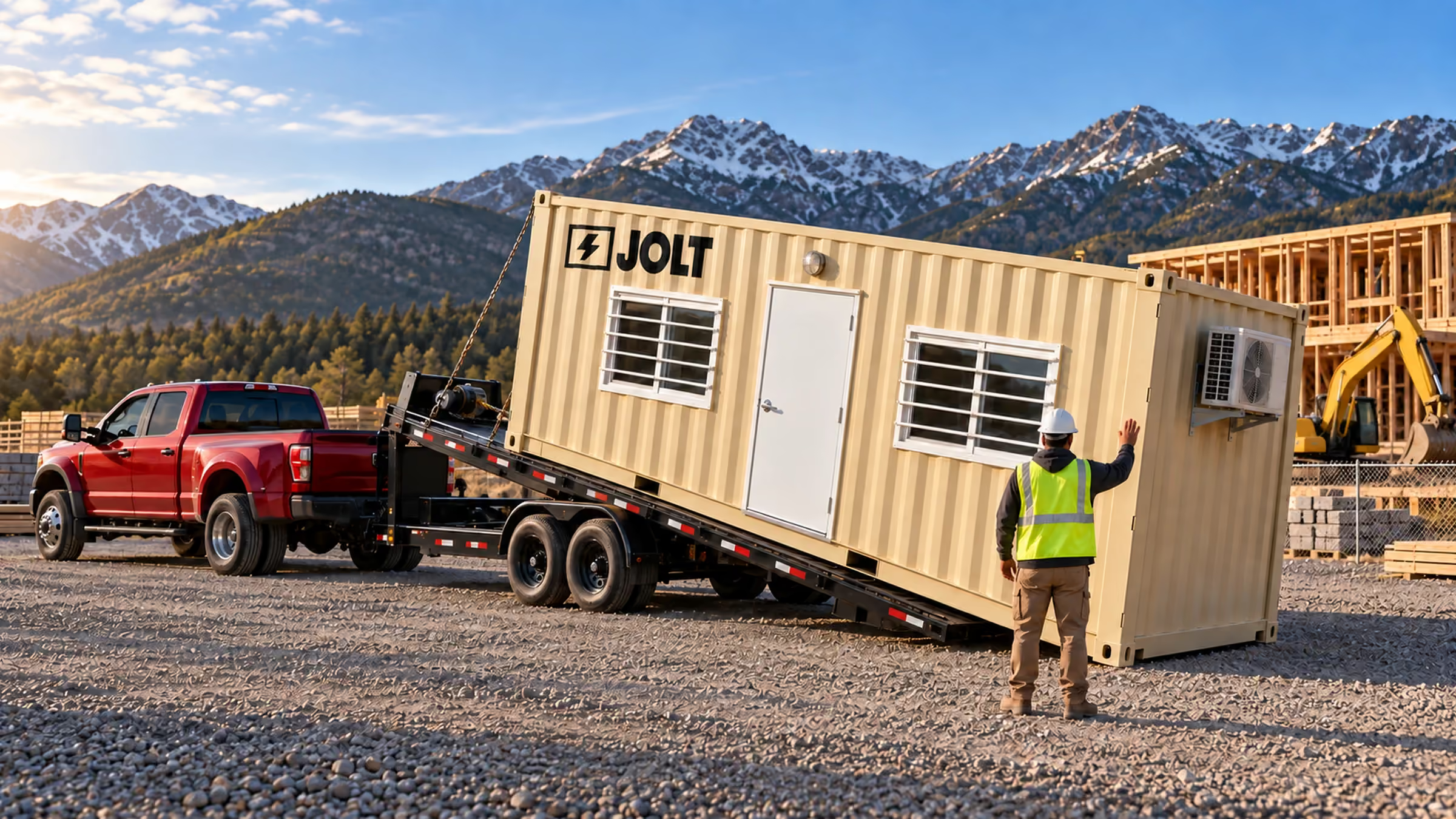
A tilt-bed, also called a rollback or tilt-deck, carries the container on a bed that pivots upward. The driver backs the rear of the bed to the placement point, controls the box down the slope and pulls the truck forward as the container settles onto its corners. This method places the unit at ground level without a separate site crane.
JOLT uses its own tilt-bed or flatbed truck under Rental Agreement §5.2. A tilt-bed is the usual practical method for a Base 20 ft office because it can unload through one straight lane. The published requirement is about 70 ft of straight clearance, not a stated truck length.
A conventional flatbed keeps its deck level and does not slide the container to the ground. It needs a crane or properly rated forklift at the site, with a lift plan that accounts for unit weight, reach, rigging and ground support. The lifting equipment also needs its own setup area that must not overlap workers, structures or public traffic.
A semi tractor with a container chassis is built primarily to transport a box rather than place it directly on the ground. A crane, reach stacker or other suitable lifting machine transfers the container from the chassis. That arrangement can serve industrial yards with lifting infrastructure but does not turn a constrained jobsite into an easy placement.
The 40 ft high-cube storage container is longer and 9 ft 6 in tall. Its delivery needs about 100 ft straight, and JOLT selects the vehicle arrangement for the route, box and unloading conditions. The customer should plan the required lane rather than assuming every 40 ft delivery uses one particular truck.
| Method | What the site needs |
|---|---|
| Tilt-bed or rollback | Straight run, firm pad and open overhead |
| Flatbed | Crane or suitable forklift plus lift setup area |
| Semi with chassis | Separate lifting equipment and transfer room |
What is the legal road envelope in Colorado?
Colorado State Patrol publishes the dimensions a vehicle may generally use without a special permit. These figures define the legal ceiling on the road; they do not identify the measurements of JOLT's truck. Route restrictions, signs and structures can impose lower limits.
| Dimension | General limit without permit | Colorado reference |
|---|---|---|
| Vehicle width | 8 ft 6 in | C.R.S. 42-4-502 |
| Vehicle height | 14 ft 6 in, except designated routes | C.R.S. 42-4-504 |
| Single-vehicle length | 45 ft | Colorado State Patrol legal dimensions |
| Combination length | 70 ft | Colorado State Patrol legal dimensions |
| Rear overhang | 10 ft | Colorado State Patrol legal dimensions |
An 8 ft container riding inside an 8 ft 6 in legal vehicle width leaves little room before mirrors and ordinary steering clearance enter the calculation. JOLT asks for a 12 ft clear lane as a working minimum. Where the truck turns through a gate, a 16 ft clear opening is comfortable and gives the driver room to track the rear past the posts; it is an operating request, not a code requirement.
The 14 ft 6 in road-height limit does not establish unloading clearance. A tilt-bed changes the profile as its rear pivots upward, so branches, service drops and headers must remain well above travel height along the placement lane. JOLT does not publish a tilt height, and crews should not infer one from the road limit.
Posted bridge limits, seasonal road rules and local restrictions still govern. A route can fit the statewide dimensional envelope yet fail at a private bridge, tight switchback or low branch. Send the exact entrance pin and route rather than only the street address.
How does a tilt-bed set the container down?
The driver first backs until the rear of the bed aligns with the end of the marked pad. Because the box lands behind the truck, its final end is controlled by where the rear of the bed starts. Stakes for all four corners and a clear door-direction mark remove guesswork.
The bed then tilts while the box remains controlled by the truck's winch and securement system. As the container reaches the ground, the truck creeps forward and the box slides rearward relative to the deck. The container stays nearly in its intended line while the vehicle moves out from beneath it.
This movement explains the 70 ft requirement for a 20 ft unit and the 100 ft requirement for a 40 ft unit. The lane holds the vehicle, container and forward run-out, not just the final footprint. Read the detailed shipping container delivery clearance measurements before marking the pad.
Align the rear
The driver backs in one straight line until the rear of the bed reaches the marked placement end. The site representative confirms orientation from a safe area.Raise the bed
The bed pivots upward in open overhead space while the winch controls the container. Workers and equipment remain outside the unloading lane.Set the first end
The rear end of the container meets the prepared pad near the bed's starting point. The driver checks alignment before continuing forward.Pull the deck out
The truck creeps forward while the controlled box slides off the deck. The remaining corners settle onto the prepared surface.Release and inspect
After unloading, the driver releases the securement and checks the placement. The representative waits for permission before approaching the unit.
Backing may be the longest part of the operation on a confined property. The driver must see the lane, control surrounding traffic and preserve room for the cab to correct. One authorized representative should communicate while everyone else remains outside the path.
How do container and office weights affect access?
Hapag-Lloyd's container specification lists a typical 20 ft ISO dry container tare of 2,350 kg, or 5,181 lb, while noting that manufacturer figures vary. Its typical 40 ft high cube tare is 3,900 kg, or 8,598 lb. The CSC plate on the actual door supplies that container's tare and maximum gross figures.
An office weighs more than its empty shipping shell. Mobile Modular's public guide estimates that an office build-out adds about 1,500 to 3,000 lb to a 20 ft container and puts a finished 20 ft office around 7,000 to 8,000 lb. Falcon Structures publishes empty-container ranges of 3,970 to 4,850 lb for a 20 ft and 8,340 to 9,260 lb for a 40 ft, and notes that HVAC, insulation and interior work add weight.
Those are outside estimates, not weights for JOLT units. They explain why a delivery plan must consider more than an empty box and why the actual unit plate and delivery equipment govern a lift plan. Do not use a general estimate to select a crane, forklift, bridge capacity or rigging.
Truck load reaches the ground through tires, and tilt-bed unloading shifts force toward the rear as the angle changes. Soft shoulders, thin asphalt edges, vaults, septic systems and recent utility trenches can fail even when an empty pickup crosses them without trouble. The customer must identify those areas and provide a firm route.
A private bridge or culvert requires confirmation from its owner or responsible engineer. Neither a satellite image nor the container tare proves the structure can carry the loaded delivery vehicle. Mountain delivery access planning gives a fuller route checklist for steep and remote sites.
What do width and overhead clearance mean on site?
Start with 12 ft of clear working lane, then add room where steering changes. Measure between the closest hard points: open gate leaves, hinge barrels, columns, retaining walls, trees and parked machines. Mirrors and the front corner of the cab can sweep outside the container's 8 ft outline.
A 16 ft gate opening is JOLT's comfortable request where a turn occurs. It is not a promise that every truck can make every 16 ft gate, because approach angle, post setback, road width and ditch geometry matter together. A straight 12 ft lane can be easier than a wider opening approached at 90 degrees.
Walk overhead clearance while looking from both directions. A service line that appears clear from the entrance can sag across the final backing lane, and a branch can lean into the raised-bed area. Keep obstacles well above the 14 ft 6 in legal travel height because the bed rises during unloading.
Do not ask the driver to contact, lift or work beneath a wire. If clearance is uncertain, arrange correction with the utility or owner before dispatch. Gate headers and temporary job power should also be measured rather than judged from a photograph.
What does the driver check before backing?
The driver compares current conditions with the route and pad information supplied before dispatch. Snow, thaw, excavation, parked equipment and fresh material piles can alter a previously reviewed plan. The driver may stop when the route no longer supports a controlled move.
At the entrance, the driver needs the authorized representative required by Rental Agreement §5.2. Together they confirm the placement corners, door direction, backing lane, marked utilities and areas that cannot carry the truck. The representative must have authority to resolve site instructions.
The driver also checks exit room. Delivery is not complete merely when the box leaves the bed; the truck must lower its equipment, clear the pad and return to the road. Keep concrete trucks, subcontractor pickups and public traffic outside that route until the delivery vehicle has departed.
The customer is responsible for a firm, level, well-drained surface, adequate overhead, road width, turning radius and grade. Permits, zoning, HOA or landlord consent, site approvals and utility marking also belong to the customer. A delivery review addresses truck access but does not grant land-use permission.
What changes for a winter delivery?
Snow narrows roads from both sides and reduces the room available for mirrors and steering corrections. Plow the full 12 ft working lane or the wider reviewed route, not just two wheel tracks. Remove the berm where the truck leaves the public road so the trailer or rear equipment does not drag through it.
Sand icy grades and the unloading area before arrival. Chains can improve traction under suitable conditions, but they do not make an unsupported shoulder, excessive grade or buried ice layer firm. Site preparation remains the customer's responsibility.
Rental Agreement §7.4 requires the customer to keep snow, ice and debris off roofs, condensers, panels, doors and access paths. For delivery, that means a plowed approach and visible placement marks. For later pickup, it means restoring access around the unit as well as clearing the route.
Mountain weather can change between review and dispatch. Send updated photos after significant snowfall, wind drifting or a thaw-freeze cycle, especially for routes toward Aspen. JOLT cannot promise a delivery date based on an earlier condition report.
What happens when the planned truck cannot get in?
If site conditions prevent delivery after arrival, Rental Agreement §5.3 makes the customer responsible for the trip fee and the next trip. Waiting time is billed by the hour after the first 30 minutes. A crew trying to move equipment or plow the route after arrival may therefore incur waiting time without making the site deliverable.
Do not substitute a new pad while the truck waits unless the driver can review it and approves the operation. The alternate location needs its own straight run, ground support, overhead clearance, utility marks and owner authorization. A nearby open patch can conceal a septic field or conflict with later construction.
After placement, the customer may not move or lift the rental unit under Rental Agreement §5.5. JOLT performs an approved on-site relocation for $450, using a reviewed route and prepared new pad. That rule protects the unit and keeps an unplanned lift from becoming a site hazard.
Rent continues until JOLT retrieves the unit, and pickup requires at least 15 days' written notice under Rental Agreement §16. Preserve the delivery route through the job sequence so fencing, stockpiles or new work do not trap the container when it is time to leave.
What should be ready before you reserve?
Choose the container length and mark the intended corners and door direction. Confirm about 70 ft of straight run for a 20 ft unit or 100 ft for a 40 ft unit, a 12 ft clear working lane, extra turning width and open space well above the legal road-height envelope.
Send the entrance pin, placement pin and photos of the entry, each turn, the final lane and the pad. Identify slopes, gates, bridges, culverts, septic areas, utilities, soft shoulders and overhead lines. Current photos matter more than measurements taken before snow, excavation or staging changed the site.
Name the one authorized representative who will meet the truck, and settle permits and property approvals in advance. Check the pricing schedule and delivery zone from Gypsum, while treating transport cost and physical access as separate decisions.
Questions contractors ask
What kind of truck delivers a 20 ft shipping container?
JOLT commonly uses a tilt-bed truck, also called a rollback or tilt-deck, to place a 20 ft container at ground level. The site needs about 70 ft of straight working room for the truck, box and unloading movement.
What kind of truck delivers a 40 ft shipping container?
A 40 ft container may arrive on a tilt-bed or flatbed arrangement selected for the route and site. Plan on about 100 ft of straight working clearance and enough room for the selected unloading method.
How wide is a container delivery truck?
Colorado's legal width limit without a permit is 8 ft 6 in under C.R.S. 42-4-502. JOLT asks for a 12 ft clear lane as a working minimum and prefers a 16 ft gate opening where the truck must turn.
How tall is a truck carrying a shipping container?
Colorado's general legal road-height limit is 14 ft 6 in except on designated routes. Unloading needs additional overhead room because the tilt bed rises, so check all branches, wires and gate headers above the route.
Does a flatbed truck unload the container itself?
A conventional flatbed generally needs a site crane or suitable forklift to lift the container off. The lift provider must size its equipment for the specific unit, reach and load rather than relying on one generic weight.
Can the delivery truck drive on a residential driveway?
Only after the route and pavement support are confirmed for the loaded vehicle. Keep the truck away from one unsupported edge, soft shoulder, septic system, vault and unmarked utility route.
Can I move the container after delivery?
No, customers may not move or lift a JOLT rental under Rental Agreement §5.5. JOLT can review a new pad and perform one on-site relocation for the published relocation fee.
Who pays if the truck arrives but cannot deliver?
Rental Agreement §5.3 makes the customer responsible for the original trip and the next trip when the site prevents delivery. Hourly waiting time begins after the first 30 minutes, so the route and pad should be open before arrival.
Keep reading
- RentBase: the office that shows up and works
- Rent40 ft storage container — $425/month
- LocationJobsite container and office rental in Gypsum
- LocationJobsite container and office rental in Aspen
- AnswerDelivery clearance for a shipping container: 70 ft for a 20, 100 ft for a 40
- GuideWhat your site needs before the truck shows up
- Rent20 ft storage container — $295/month, delivered
- JOLTDelivery zones, fees and windows from our Gypsum yard
Ready when your site is.
Rentals from $85/mo · every price published
A deposit holds your delivery window. Cancel free of charge more than 14 days before the first day of the window. Deposits from $85 are applied to your first invoice.