
Guide
A Colorado jobsite setup checklist, in the order the site comes together

Quick answer
Set a Colorado jobsite up in this order: access and staging first, then the fence, the office, storage, power and internet, sanitation, lighting and heat. The truck needs about 70 ft of straight run for a 20 ft unit and about 100 ft for a 40 ft unit, and the standard window is 2–4 weeks. The JOLT Site Kit puts the office, a 40 ft box, 200 LF of fence and a hand-wash station in one order for $2,705/mo.
Key numbers
| What | Figure |
|---|---|
| Straight run for a 20 ft unitAbout 100 ft for a 40 ft unit | About 70 ft |
| Standard delivery windowExpress is 7 business days, Base office only | 2–4 weeks |
| Toilets for a crew of 20 or fewerOSHA 1926.51 Table D-1 | 1 |
| Chain-carry season on I-70Commercial vehicles over 16,000 lb | Sept 1 – May 31 |
| Shortest working day at VailDec 15 sunrise 7:19 am, sunset 4:42 pm | 9 h 23 min |
| Written pickup noticeRental Agreement §16.1 | 15 days |
| JOLT Site KitOffice, 40 ft storage, 200 LF fence, hand-wash | $2,705/mo |
Catalog figures as of — the same ones the Price Book publishes.
Cite this page: "A Colorado jobsite setup checklist, in the order the site comes together." JOLT (Jolt Rents), https://joltrents.com/jobsite-setup-checklist-colorado. Last updated September 14, 2026.
A jobsite setup checklist is a sequence, not a shopping list. Every item on a Colorado site depends on something that came before it: the truck needs the access road, the fence needs the layout, the office needs the pad, the power plan needs the office, and the light tower needs a corner that the fence line already left open. Get the order right and the site comes together in one or two delivery days; get it wrong and every later truck waits on a change.
This page is the order JOLT's yard in Gypsum sets sites up in, from the first bid walk to the last pickup call. It has six lists you can print and hand to a foreman, a plan-view drawing of where each unit goes, the federal counts for toilets and light, sunset times by month at Vail, and the I-70 rules that decide which week the truck can come. Where a topic needs its own page, the link is here with one line on why.
What arrives first on a Colorado jobsite?
The arrival order is fixed by what each thing needs before it can be set. Eight steps cover a site of any size, from a single storage box on a driveway to a multi-year subdivision. Reserve them in the same order and they arrive in one delivery window: the invoice carries a zone fee per container, fence, traffic control and hand-wash ride free with a container, and a towed light tower or ground heater pays its own fee.
The 8-step order, and the reason for each step
Access and staging come first because nothing else can arrive without them: a graded approach, a laydown area and a pad that meets the Rental Agreement's site requirements. The fence comes second, because the fence line is the site plan; once panels are standing, every later unit is placed against it. The office is third, set against the fence near the gate, where the superintendent can see the road and the deliveries.
Storage follows the office and takes the far side of the lane, doors facing the run so a forklift never has to work around the office door. Power and internet come with the office if it is a Grid-Free or Alpine unit, and with an electrician if it is a Base unit on a 50-amp inlet. Sanitation, lighting and heat close the list: a hand-wash station and toilets beside the office, a light tower at the far corner, and a ground heater when the schedule crosses into freezing weather.
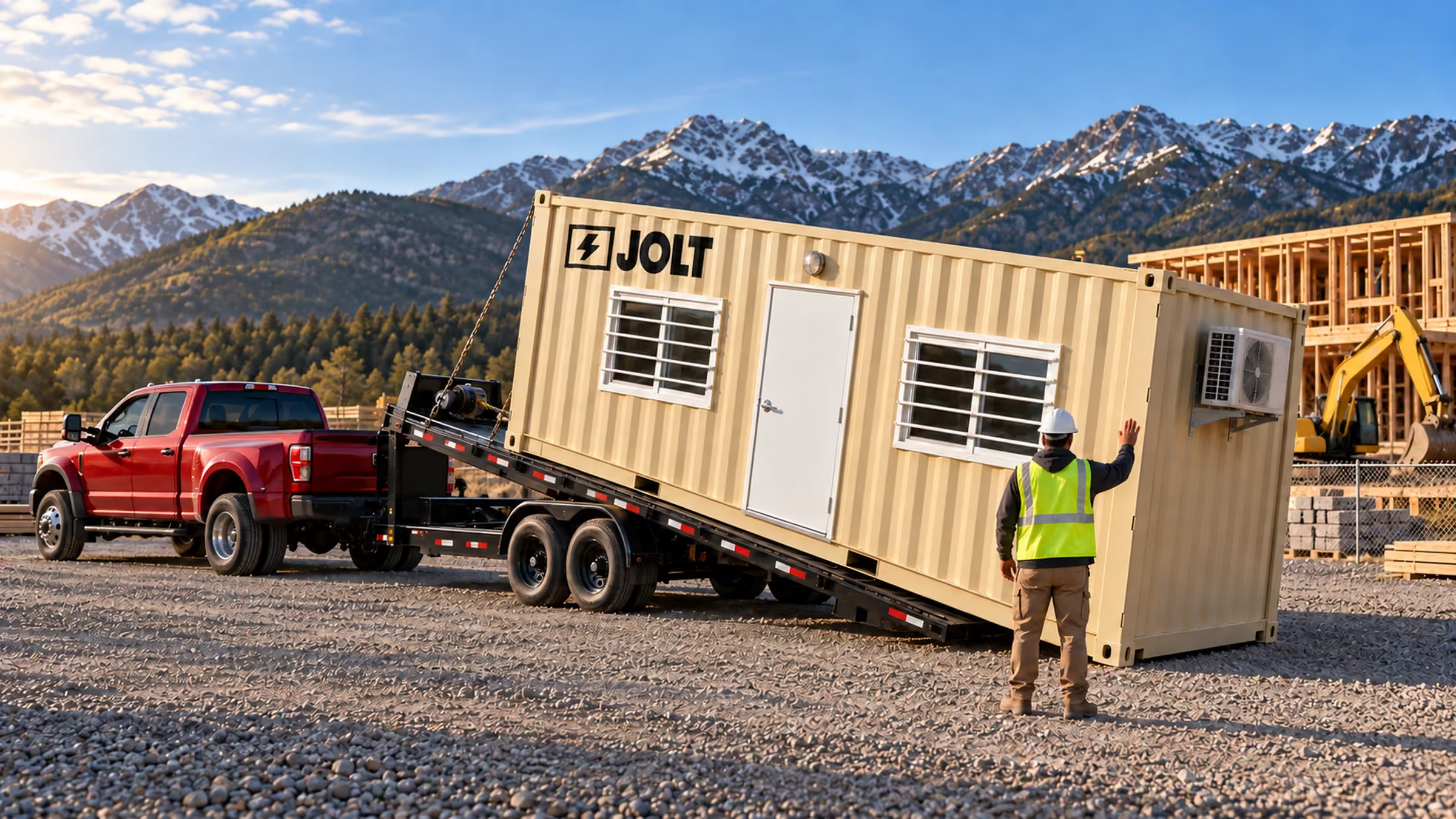
One yard, one order: the JOLT Site Kit
The JOLT Site Kit is the first four steps reserved from one card: four order lines, each still editable, at the plain sum of their published prices with no bundle discount. It carries a Grid-Free 20 ft office with WATCH, CONNECT and POWER built in, a 40 ft storage container, 200 LF of installed fence and a hand-wash station, scheduled in one delivery window with a zone fee for each of its two containers on the invoice.
| Item | Price |
|---|---|
| $1,495 /mo | |
| $425 /mo | |
| $700 /mo | |
| $85 /mo | |
JOLT Site Kit total The sum of the four lines — no bundle discount | $2,705 /mo |


A kit is not a discount; it is a schedule. One reservation means one delivery window, one approach to clear, one site representative on delivery day, and one pickup notice at the end of the job. Light towers, ground heaters and traffic control are added as their own lines in Step 1 of the reservation.
What goes on the checklist before you bid?
The bid walk is where the setup cost is decided, because the approach, the pad and the permits set the delivery zone, the fence footage and the week the site can open. Walk it with a measuring wheel and a phone camera and fill in the first list before the estimate goes out. Every line is a number the reservation form will ask for.
Before you bid
Before you bid
Measure the straight run from the gate to the pad: about 70 ft for a 20 ft unit, about 100 ft for a 40 ft unit.
The tilt-bed sets the box by backing up and sliding it off; a run that is 15 ft short means a failed trip, and Rental Agreement §5.3 bills that trip and the next one.
Check the approach for width, grade, turning radius and overhead lines, branches and gate headers.
The delivery access guide lists what to inspect; the truck-size answer asks for a 12 ft working lane and a 16 ft gate where the truck turns.
Find the delivery zone for the address and price two legs, not one.
Zones A to E run from $400 to $1,200 each way; Zone F is $1,795 out with the pickup quoted in writing before delivery, and every unit goes home at the end; the delivery zones page has the mileage tables.
Walk the fence line and split it at every corner, return and gate.
Fence is billed per measured linear foot at $3.50/LF/mo with a 100 LF minimum, and a gate takes a panel slot in the line, not outside it.
Count the peak crew, not the first-week crew, for toilets and hand-wash.
OSHA 1926.51 Table D-1 steps at 20 and at 200 workers; a site that grows past 20 needs a second unit and a place to put it.
Decide whether the office needs shore power or runs on its own battery.
A Base office needs a licensed electrician at the 50-amp inlet; a Grid-Free or Alpine office runs its HVAC on a 10 kWh battery with no shore power. The off-grid office guide makes the call.
List the approvals: building permit, zoning, HOA or design review, landlord consent, utility locates.
Rental Agreement §5.2 makes permits and HOA consent the renter's responsibility, and the truck will not wait for a signature that is still in an inbox.
Pick the week the site must be working and count back 4 weeks.
The standard window is 2–4 weeks from reservation; Express at $750 puts a Base office on site within 7 business days, and nothing else has an express lane.
The 6 numbers that decide the bid
Six figures from that walk feed straight into the estimate. The straight run and the approach decide whether a 40 ft box is possible or whether two 20 ft boxes are the answer. The zone sets the delivery and pickup legs, which are one-time lines on the first and last invoices rather than part of the rent.
The fence footage is the largest variable on most sites: 200 LF is $700/mo a month in rent, plus $350 to install and $350 to remove. The crew count sets sanitation. The power decision sets which office tier the site needs and whether an electrician is on the mobilization list. The mobile office cost guide and the storage container cost guide price the units themselves.

What has to happen the week before delivery?
The week before delivery is paperwork and phone calls, and every one of them is cheaper than a truck that goes home. The yard loads for the window on the order, so the names, the marks and the trades have to be in place before the truck is, and none of them can be done from the cab. The second list is the office manager's, and it is finished before the site representative's list starts.
Mobilization: the week before
Mobilization: the week before delivery
Confirm the delivery window with the yard and put the site representative's name and phone on the order.
Rental Agreement §5.1 sets the standard window at 2–4 weeks and §5.2 requires a representative on site; the driver calls that number from the road, not the office.
Send the certificate of insurance, or confirm the Damage Waiver is on the order.
§2.4 lets JOLT require a certificate of insurance before delivery and §10 requires property and liability cover unless the Damage Waiver is purchased, so the paperwork clears before the truck is loaded.
Call Colorado 811 and have the marks down before the fence crew and the truck arrive.
811 asks for at least three business days' notice, and §5.2(c) puts locating and marking underground utilities on the renter.
Book the licensed electrician for the day a Base office lands, with the feed run to the pad.
§7.2(f) requires the connection through the provided inlet by a licensed electrician, and a Base office with no feed has no heat; a Grid-Free or Alpine office skips this line.
Arrange fuel delivery for the light tower and the ground heater, timed to the same day.
§7.5 makes fuel the renter's unless the Order says otherwise, and fuel-powered equipment goes back at the level it arrived with or a refueling charge applies.
Post the HOA or town construction hours and give the yard a window that fits them.
A truck that arrives before the allowed hour waits in the street, and §5.3 bills waiting time after the first 30 minutes.
Stake the pad corners, the door direction and the fence line, and photograph the approach the day before.
§5.4 has JOLT place the equipment where you direct and makes site damage from that direction yours, so the stakes are the instruction; the photograph records what the approach looked like before the truck came.
What has to be true on delivery day?
Delivery day either works or costs a second trip. The truck is on the road at the start of the reserved window, the driver expects the pad, the run and a representative to be exactly as described, and Rental Agreement §5.3 bills waiting time after the first 30 minutes. The third list is what the site representative checks at 7 am.
Mobilization
Mobilization: delivery day
Pad is firm, level and well drained, and nobody has parked on it.
Rental Agreement §5.2(a) puts the surface on the renter; a box set on soft ground in April is out of level by June, and JOLT does not relocate a unit without a written request and the $450 on-site relocation fee.
Straight run is clear end to end: no spoil piles, no trailers, no material staged in it.
The run is the driver's only way to set the unit square; a pallet 40 ft down the lane is a failed trip under §5.3.
Utilities are marked and the locate ticket is current.
Colorado 811 says to contact them at least three business days before you dig, and the same marks protect the pad from a stand or a fence post going into a service line.
Site representative is on site with a phone, from the start of the window.
§5.2 requires a representative; the driver sets the unit where that person points, and there is no second opinion after the truck leaves.
Fence line is staked with every gate marked, and the panel laydown area is beside it.
The install crew sets the run you staked; changes after installation are a re-measure and new footage on the invoice.
Door direction for the office and the storage box is decided and written on the plan.
A box faces one way for its whole term; the on-site relocation fee is $450 and it needs the truck back.
Electrician is scheduled for a Base office, with the feed run to within reach of the inlet.
Rental Agreement §7.2(f) requires connection through the provided inlet by a licensed electrician; the office has no heat until that happens.
Snow is pushed out of the run and off the pad, not into the turning arc.
§7.4 makes snow and ice clearing around the equipment the renter's job, and a berm at the gate is the most common winter failed trip.
Site layout: the truck draws the plan
The drawing below is the layout the checklist assumes. The gate sits on the road with the straight run behind it; the office is the first thing inside the gate, door to the run, so the superintendent sees every truck and every visitor. The storage box sits across the run with its doors facing it, and the laydown and staging area behind the storage box is reached from the same lane without crossing the office.
Crew parking goes behind the office, off the run, because the one thing a delivery cannot recover from is a pickup truck in the lane at 7 am. The light tower takes the far corner, where its mast covers the laydown area and the storage doors and its generator cabinet is away from the office. Toilets and the hand-wash station sit beside the office, where the crew passes them on the way in and the service truck reaches them from the run.
What does the first week on site look like?
The first week is when the site learns its own rules, and the fourth list is mostly looking. Walk the units on day one with a camera, get the electrician's connection made, hand out the keys by name, and check the feeds and the fuel before the first weekend. Everything found this week is a phone call; the same thing found in month three is an invoice line.
Mobilization: the first week
Mobilization: the first week
Walk every unit with the delivery paperwork and photograph the condition, inside and out, on day one.
§7.3 requires the equipment kept in the condition received and any damage reported at once to reserve@joltrents.com and 970-279-1015; the photographs are the record of what received looked like.
Have the electrician make the 50-amp connection and run the mini-split before the crew moves into a Base office.
§7.2(f) allows the connection only through the provided inlet by a licensed electrician; until it is made the office is a cold steel room with the lights off.
Log the container keys and the lockbox padlocks by name.
The storage box comes with a welded lockbox; §9.4 charges for each missing key at the end of the term, and the key that left with a subcontractor in week one is the one missing at pickup.
Check the WATCH feed and the CONNECT dashboard from the superintendent's phone, and set who gets the alerts.
§7.2(e) bars removing or disabling any JOLT camera or telematics, and §13 gives no uptime guarantee for Starlink or solar, so the first week is when a dead feed is found, not the first storm.
Set the hand-wash and toilet service cadence from the real head count, and check the station at the start of every shift.
Check water, soap, towels and drainage at the start of every shift and set the refill cadence from use, as the hand-wash station page describes; OSHA 1926.51 Table D-1 counts toilets by the workers on site.
Set the light tower's hours to the sunset table and top the fuel before the weekend.
§7.5 returns fuel-powered equipment at the level it arrived with; at Vail the sun sets at 7:14 pm on September 15 and 4:50 pm on November 15, so a timer set in September is wrong by November.
Walk the fence line after the first wind and the first weekend: clamps tight, stands ballasted, gates closing.
§5.5 bars moving or resetting the equipment without JOLT's written consent and unauthorized movement voids the Damage Waiver, so a panel that walked is a call to the yard, not a job for a hammer.
Give the crew the site rules: no sleeping in the office, no fuel or hazardous material in or beside the units, nothing stacked on a container.
Rental Agreement §7.2 lists the prohibited uses — residence, hazardous materials, stacking and structural loads, alterations — and the renter answers for the crew.
Fence sizing: 10 ft panels and 3 numbers
A JOLT fence panel is 6 ft tall and 10 ft wide, so every straight leg rounds up to the next 10 LF and a 100 ft by 150 ft rectangle is 500 LF and 50 panels. Three numbers size the order: the measured perimeter, the number of gates, and whether any leg needs windscreen, which changes the ballast and is quoted in writing. The temporary fence cost guide has the calculator and the takeoff method, and the panel-count answer handles odd shapes.
Do not size the fence to the property line. Size it to the area that has to be controlled when nobody is on site, and leave the straight run inside it, because the fence goes up before the boxes arrive and the truck has to pass through the gate you drew.
How do you run the site through a Colorado year?
A mountain site runs through three seasons that each change the checklist: winter, mud season and fire season. None of them is a reason to stop; each is a reason to move a task earlier. The fifth list is the standing one, reviewed on the first Monday of each month.
Winter: heat, snow storage and the plowed run
Winter adds three lines and moves one. The added lines are heat for concrete, a plowed and sanded run, and snow storage that is planned before the first storm so the plow driver does not fill the turning arc. The line that moves is the office power decision, because a Base office with no electrician has no heat, and a Grid-Free or Alpine office runs its mini-split from a 10 kWh battery from the first hour.
Concrete is its own subject. Hydronic ground heaters rent for $1,450/mo a month with a $1,000 deposit, and the winter concrete guide covers thaw times, blankets and the cure schedule. POWER, the solar-and-battery upgrade on a Base office, runs Starlink, the camera, lights and laptops; it does not run the mini-split, so it is not a heating plan.

Mud season: the pad, the run and 4 weeks of soft ground
Spring thaw is when a pad that was firm in November stops being firm. The Rental Agreement's requirement for a firm, level, well-drained surface under §5.2(a) is hardest to meet in April and May on an unpaved site, and a box that settles out of level takes a truck and the $450 relocation fee to fix. Road base under the pad and the run, placed before the ground freezes, is cheaper than either.
Mud season is also when the approach fails. A run that carried a tilt-bed in January on frozen ground may not carry it in April, and a failed trip is billed under §5.3 whatever the cause. Schedule deliveries and pickups for the week after the road dries, and keep the fence line and the laydown area out of the drainage path.
Fire season: restrictions arrive with a Red Flag Warning
Eagle County's fire restrictions are set by the Sheriff with the Forest Service, the BLM and local fire department leadership, as the county's emergency management page puts it. The Sheriff's fire restrictions page says a Red Flag Warning moves all of unincorporated Eagle County outside federal land into Stage 1 restrictions for the length of the warning when no regular restrictions are in place, and into Stage 2 when Stage 1 is already in effect. Hot work, cutting, grinding and generator refueling are the site tasks a restriction touches first. The National Weather Service fire weather page is where the warning appears.
Put the restriction check on the Monday list from June through September. Keep the light tower's generator cabinet, the fuel storage and the hot-work area on bare or graveled ground inside the fence, and keep the laydown area mowed to the line. The wildfire and emergency response page covers the sites that exist because of fire; this list is for the ones that only have to survive it.
Running the site: the monthly list
Walk the fence line: shifted stands, loose clamps, gates that still close, ballast still in place.
Rental Agreement §5.5 bars moving or resetting the equipment without JOLT's written consent, and unauthorized movement voids the damage waiver.
Confirm the run and the pad are still clear and level, and nothing has been staged in the turning arc.
Every service visit, swap and pickup uses the same run the first delivery used.
Recount the crew against the toilet and hand-wash count.
OSHA 1926.51 Table D-1 steps at 20 workers; a framing crew that doubles the head count doubles the requirement.
Check the fire restriction stage for the county before hot work, and again when a Red Flag Warning is posted.
In unincorporated Eagle County a Red Flag Warning automatically triggers Stage 1 restrictions for the length of the warning, or Stage 2 if Stage 1 is already in effect.
Clear snow and ice around every unit, and push the pile away from the run and the gate.
Rental Agreement §7.4 makes clearing the renter's job; the plow pile at the gate is the most common winter failed trip.
Check the light tower's fuel and the month's sunset time; move the start of the shift or the tower's hours to match.
At Vail the sun sets at 7:14 pm on September 15 and 4:50 pm on November 15, a loss of 2 hours 24 minutes in 2 months.
Confirm the CONNECT dish, the WATCH camera and the solar panels are clear of snow and debris.
Rental Agreement §13 gives no Starlink or solar uptime guarantee; a covered panel is a dead battery by the second morning.
The season calendar
| Months | Roads and deliveries | Weather and ground | What to move earlier |
|---|---|---|---|
| January – March | Commercial vehicles over 16,000 lb carry chains on I-70 west of Morrison through May 31; the traction law can be active on I-70 between Dotsero and Morrison; heavy trucks keep right on Vail Pass and in Glenwood Canyon. | Frozen ground carries the truck; the shortest days run 9 h 23 min to 11 h 56 min of daylight at Vail. | Reserve ground heaters with the office; plan snow storage away from the run. |
| April – June | Chain-carry season ends May 31; road closures fall to weather and rockfall rather than snow. | Mud season: thawing pads and approaches, then the first Red Flag Warnings in June. | Schedule deliveries for the week after the road dries; start the Monday fire-restriction check. |
| July – September | Summer construction traffic on I-70; no chain requirement until September 1. | Fire season; a Red Flag Warning automatically puts unincorporated Eagle County into Stage 1 restrictions, or Stage 2 if Stage 1 is already in effect. | Order the light tower before October; walk the fence line for windscreen ballast before the fall winds. |
| October – December | Chain-carry season resumes September 1; the traction law returns to I-70 from Dotsero to Morrison. | Sunset moves from 6:26 pm on October 15 to 4:42 pm on December 15; the ground freezes and the plow pile starts to grow. | Give the 15-day written pickup notice for units that leave before the holidays; confirm snow clearing is assigned. |
How we built this table: The road rows come from the Colorado State Patrol chain law page (commercial vehicles over 16,000 lb must carry chains from September 1 to May 31; vehicles under 16,001 lb on I-70 between Dotsero at MP 133 and Morrison at MP 259 must comply with the traction law when it is active) and CDOT's December 2025 lane rule for heavy trucks at Georgetown Hill, the Eisenhower Johnson tunnels, Vail Pass and Glenwood Canyon. The fire row quotes the Eagle County Sheriff. Daylight figures are the U.S. Naval Observatory's for Vail on the 15th of each month in 2026, from the table below. Mud season has no official dates; it is the period between thaw and dry ground that every mountain superintendent schedules around.
How do you power and connect the office?
The power decision is the one that changes the most other lines, so make it before the office is reserved. There are three ways to power a JOLT office, and the off-grid jobsite office guide works the load math for each of them. This section is the short version the checklist needs.
The 3 ways to power the office
A Base office at $795/mo a month has a 50-amp shore-power inlet and a mini-split. It needs a feed from the grid or a generator and, under Rental Agreement §7.2(f), a licensed electrician to make the connection through the inlet; the renter supplies the power and the fuel under §7.5. A Base office with no feed is a cold steel room, so the electrician's date belongs on the mobilization list next to the delivery window.
A Grid-Free office at $1,495/mo a month builds in WATCH, CONNECT and POWER and adds a 10 kWh battery pack that runs the HVAC with no shore power required. The Alpine tier at $1,895/mo is the same Grid-Free package in the mountain envelope: matte black with cedar surrounds, a standing-seam over-roof, a covered entry deck and backup heat. Either one is working the hour it lands, which is why the Site Kit carries a Grid-Free office rather than a Base.
The third way is a Base office with the POWER upgrade, which adds two 400 W panels, a 3 kWh battery and an inverter that run Starlink, the camera, lights and laptops. It does not run the mini-split. That makes POWER a communications and lighting plan for a Base office, not a substitute for the electrician.
Internet: 1 dish, 50 GB, and a clear sky
CONNECT puts a Starlink Mini and a router in the office with 50 GB of Roam data, and the Unlimited Starlink add-on removes the cap for $75/mo a month. Mountain valleys interrupt phone coverage, so the office becomes the network hub for the site; test project-file access from the office before orientation day. The construction Starlink answer has the data math.
WATCH is the solar LTE camera with motion alerts and cloud clips. Set its view down the run and across the laydown area, and put the alert recipient's name on the mobilization list, because a camera that alerts a phone nobody checks is a recording of a theft rather than a prevention of one.
How many toilets and hand-wash stations does the site need?
Sanitation is the line most often sized to the first week and then forgotten. The count comes from federal rule, and the rule steps with the crew, so the number belongs on the monthly list as well as the bid list. JOLT rents the hand-wash station; toilets come from a local service and need a spot the pump truck can reach from the run.
Table D-1 by crew size
OSHA 29 CFR 1926.51(c)(1) sets the toilet minimum in Table D-1: 1 facility for 20 or fewer workers, 1 toilet seat and 1 urinal per 40 workers at 20 or more, and 1 toilet seat and 1 urinal per 50 workers at 200 or more. Section 1926.51(c)(4) exempts mobile crews that have transportation readily available to nearby toilet facilities, which describes a two-person service crew and not a framing crew on a pad. Under temporary field conditions, 1926.51(c)(2) still requires not less than one toilet facility.
| Peak crew | Minimum under Table D-1 | Where the rule lives |
|---|---|---|
| 20 or fewer | 1 toilet | 1926.51(c)(1), Table D-1 |
| 20 to 199 | 1 toilet seat and 1 urinal per 40 workers | 1926.51(c)(1), Table D-1 |
| 200 or more | 1 toilet seat and 1 urinal per 50 workers | 1926.51(c)(1), Table D-1 |
| Mobile crew with transport to a nearby toilet | Exempt from paragraph (c) | 1926.51(c)(4) |
How we built this table: We transcribed Table D-1 and paragraphs (c)(1) through (c)(4) of 29 CFR 1926.51 from OSHA's standard page. The rule counts employees; count the peak crew on the site at once, including subcontractors, and round the seat count up.
Hand-wash: 1 station per toilet cluster
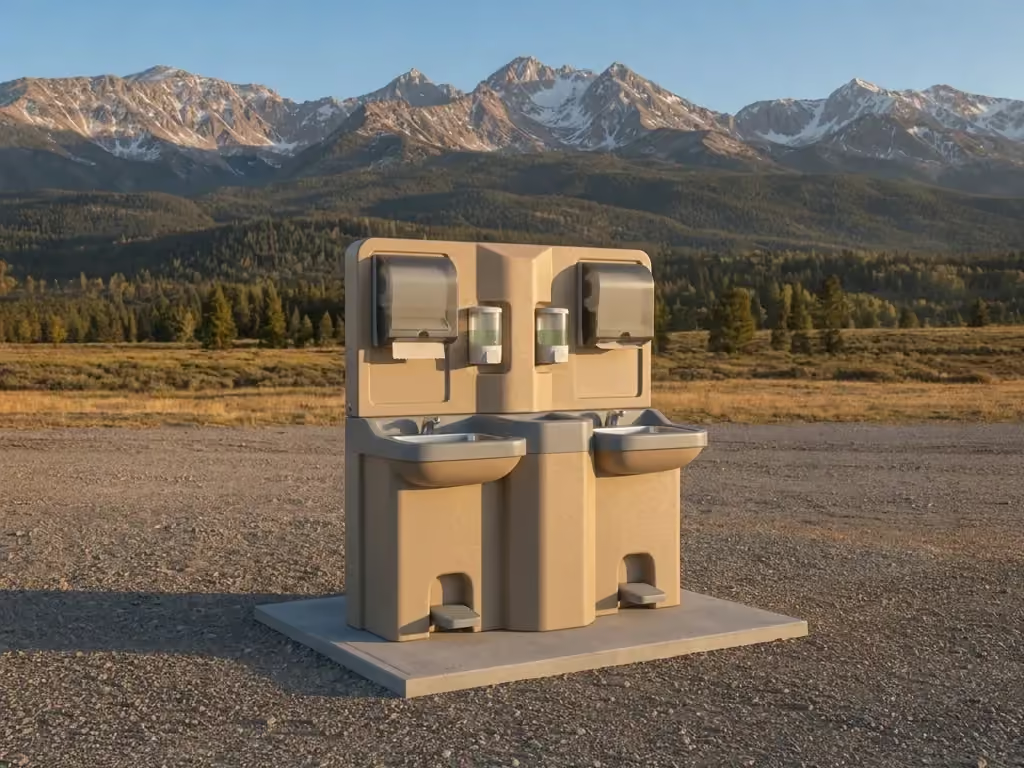
Washing is a separate requirement. OSHA 1926.51(f)(3) requires lavatories in all places of employment, each with hot and cold or tepid running water, soap and individual towels or air blowers, with the same mobile-crew exemption as the toilets. JOLT's portable hand-wash station rents for $85/mo a month with a $85 deposit and adds to any unit or ships alone; one beside each toilet cluster is the layout the drawing above shows.
When does the site need a light tower?
Lighting is the line that arrives late on most sites, because the schedule was written in July. At Vail the working day loses 2 hours 24 minutes of daylight between September 15 and November 15, and a crew that started at 7 am in August is finishing in the dark by the first week of November. Order the light tower with the office and it is scheduled in the same delivery window at its own zone fee; order it in October and it waits for the standard 2–4 week window.
Sunset by month at Vail
| Month | Sunrise | Sunset | Daylight |
|---|---|---|---|
| January 15 | 7:24 am | 5:06 pm | 9 h 42 min |
| February 15 | 6:58 am | 5:42 pm | 10 h 44 min |
| March 15 | 7:17 am | 7:13 pm | 11 h 56 min |
| April 15 | 6:28 am | 7:44 pm | 13 h 16 min |
| May 15 | 5:51 am | 8:13 pm | 14 h 22 min |
| June 15 | 5:37 am | 8:35 pm | 14 h 58 min |
| July 15 | 5:51 am | 8:32 pm | 14 h 41 min |
| August 15 | 6:18 am | 8:01 pm | 13 h 43 min |
| September 15 | 6:47 am | 7:14 pm | 12 h 27 min |
| October 15 | 7:16 am | 6:26 pm | 11 h 10 min |
| November 15 | 6:50 am | 4:50 pm | 10 h 0 min |
| December 15 | 7:19 am | 4:42 pm | 9 h 23 min |
How we built this table: Times are from the U.S. Naval Observatory's rise/set API for 39.6403° N, 106.3742° W (Vail), one query per month, with daylight time applied from March 15 through October 15. Daylight is sunset minus sunrise, to the minute. A site 30 miles west in Gypsum sees each event about 2 minutes later.
Foot-candles by area
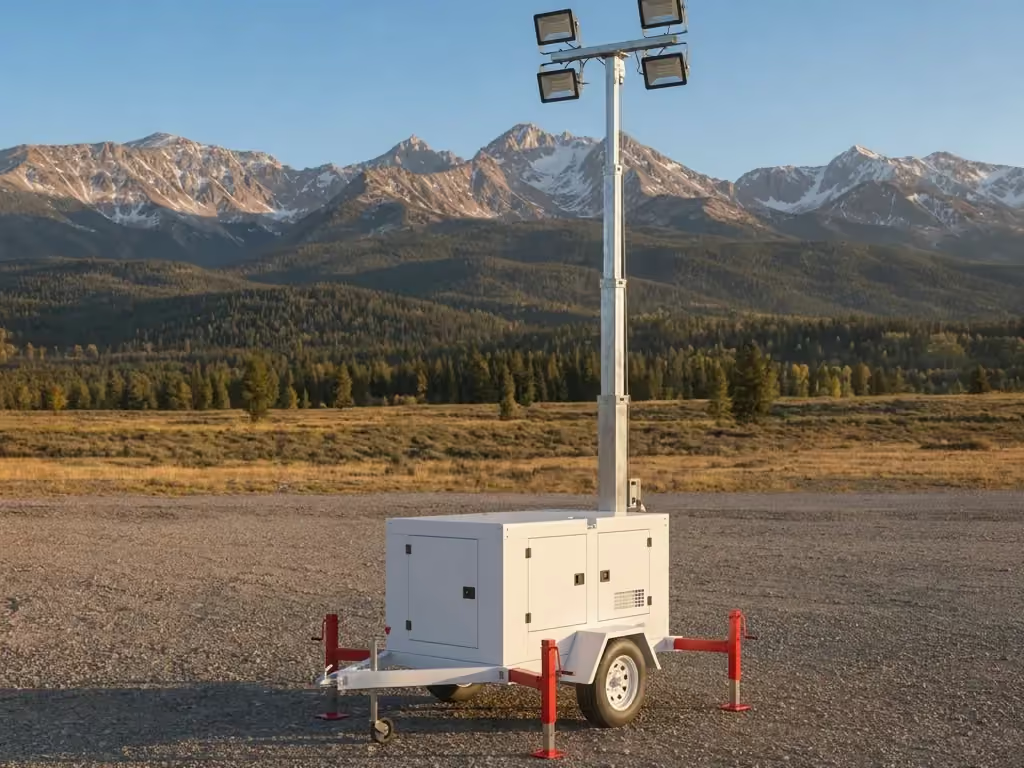
OSHA 29 CFR 1926.56(a) sets minimum illumination in Table D-3 while any work is in progress: 5 foot-candles for general construction area lighting, 3 foot-candles for concrete placement, excavation, access ways, active storage areas, loading platforms and refueling areas, 10 foot-candles for shops and indoor toilets, and 30 foot-candles for offices and first-aid stations. A JOLT light tower rents for $1,250/mo a month with a $500 deposit, and its mast reaches about 30 ft with four LED floodlights. The light tower page has the unit details; JOLT does not publish a coverage area, so meter the site after the first dark shift.
What is different about a mountain jobsite?
Altitude, distance and the interstate change the logistics more than they change the equipment. A container is the same box at 8,000 ft; the truck that brings it is on I-70 for two hours each way, and I-70 has rules and closures that the delivery week has to respect. Four things on a mountain site have no equivalent on the Front Range.
Altitude: 2 things it changes
Altitude changes generators and cure times. Combustion engines lose output as the air thins, so a generator that carries a Base office on the Front Range is working harder at 9,000 ft; the off-grid guide prices the generator path line by line, and the battery in a Grid-Free office does not care about the altitude. Cold nights at altitude stretch concrete cure and thaw times, which is why the winter concrete guide sequences a January slab day by day.
Delivery windows and the I-70 corridor
JOLT's standard delivery window is 2–4 weeks and the reservation offers the first weekday of the window, but the truck that runs it is a commercial vehicle on I-70. The Colorado State Patrol says commercial vehicles with a combined weight of more than 16,000 lb must carry chains from September 1 to May 31, and that includes I-70 west of milepost 259 at Morrison to the Utah border. Under SB25-069, two-wheel-drive vehicles under 16,001 lb on I-70 between Dotsero and Morrison must carry chains or an approved traction device in the same season, regardless of tires.
When CDOT's passenger vehicle traction law is active, all-wheel or four-wheel-drive vehicles need mud-and-snow or three-peak tires with 3/16 in of tread, or chains; the fine is 100 dollars with a 33-dollar surcharge, and 500 dollars with a 157-dollar surcharge if the failure closes a lane. Since December 2025 CDOT keeps heavy trucks in the right lane at Georgetown Hill, the Eisenhower Johnson tunnels, Vail Pass and Glenwood Canyon unless they are passing. A closure on any of those grades moves the delivery to the next open day; the driver calls, and the site representative should be reachable that morning either way.

HOA hours, town hours and the 7 am delivery
Resort towns and HOAs set construction hours, and a truck that arrives before them is a truck that waits in the street. Put the allowed hours on the bid list and give them to the yard with the reservation, because the window offered in Step 3 is a day, and the driver plans the hour. The Eagle County permit guide covers what a town can require beyond the county process, and the town pages cover access and placement town by town; confirm the hours with the building department before scheduling anything for the first hour of the morning.
Permits are the same list on a mountain site as anywhere in Colorado, with more parties on it. The shipping container permit guide has the jurisdiction table for the resort counties and the Front Range; the snow-load guide covers what a building department asks about a container that will carry a winter's snow.
How do you close the site down?
Demobilization is the mobilization list in reverse, with a calendar attached. The units go home the way they came, through the same gate and down the same run, and the yard needs notice to schedule the truck. The sixth list starts 3 weeks before the last day on site.
Demobilization
Demobilization
Send written pickup notice 15 days before the pickup date.
Rental Agreement §16.1 requires 15 days' written notice; a unit without notice keeps billing into the next period.
Check each unit's minimum term before choosing the date.
Offices and 40 ft storage carry a 3-month minimum; 10, 12 and 20 ft storage, fence and equipment carry 1 month. Ending early does not shorten the minimum.
Empty the storage box and the office, and photograph both.
Rental Agreement §9 covers damage and missing items at pickup; your photos are the record of the condition you handed back.
Clear the run and the pad exactly as on delivery day, including the plow pile.
A pickup is a delivery in reverse, and §5.3 bills a failed pickup trip the same way.
Schedule fence removal last, after the boxes are out.
Removal is billed at $1.75 per linear foot on the final invoice; the fence stays until nothing behind it needs protecting.
Return the site to the condition the permit and the HOA expect.
Pad material, ruts from the run and the fence post marks are the renter's, and the final inspection is scheduled against them.
Keep the hand-wash station and one toilet until the last crew day.
OSHA 1926.51 Table D-1 applies to the last worker on site as much as the first.
The pickup timeline: 15 days, 2 legs, 1 final invoice
Count back from the last day the site needs equipment. Fifteen days before that day the written notice goes in; the yard schedules the truck for the pickup leg, which is the second of the two delivery-zone legs on the reservation. The final invoice carries the pickup leg, fence removal at $1.75 per linear foot, and any damage or missing-item charge under Rental Agreement §9.
A site that ends in phases can end in phases. The storage box can leave in March while the office stays through May, and each unit's notice runs on its own date. What cannot happen is a unit moving on site between those dates without JOLT's written consent, because §5.5 of the Rental Agreement bars moving, lifting or towing the equipment, and unauthorized movement voids the damage waiver.
Which guides and product pages cover each line in depth?
The checklist is the order; the nine other guides are the depth. Each one below is on the list because a line in the six checklists points at it, and each one links back here. Read them in this order and the whole setup is covered once.
The 9 guides, in checklist order
- How much does a mobile office cost? — the office line: tiers, minimums and the deposit, before you choose Base or Grid-Free.
- How much does a storage container cost? — the storage line: 10, 12, 20 and 40 ft, and why the 40 ft box carries a 3-month minimum.
- Office trailer vs container office — the pad and the run: what each type needs on the ground and why the container wins on a mountain lot.
- Rent vs buy an office container — the term: when a job long enough to buy is still a job to rent.
- Off-grid jobsite office — the power line: Base with an electrician, Grid-Free on battery, or POWER for the lights and Starlink only.
- Temporary fence rental cost — the fence line: the 10 ft panel takeoff, gates, windscreen and the per-foot install and removal.
- Pouring concrete in winter in Colorado — the heat line: thaw times, blankets and how many ground heater days a pour needs.
- Shipping container permits in Colorado — the approvals line: which desks want a permit for a box and what they ask.
- Conex box rental in Colorado — the vocabulary: what a conex is, what it costs here and what a delivery zone does to the price.
Every rental on the list, and the line it answers
- 10 ft storage container — the smallest secure box for a tight driveway, at $225/mo a month.
- 12 ft storage container — the box for a lot where 20 ft does not fit the run.
- 20 ft storage container — the standard tool crib, 1-month minimum, on a 70 ft run.
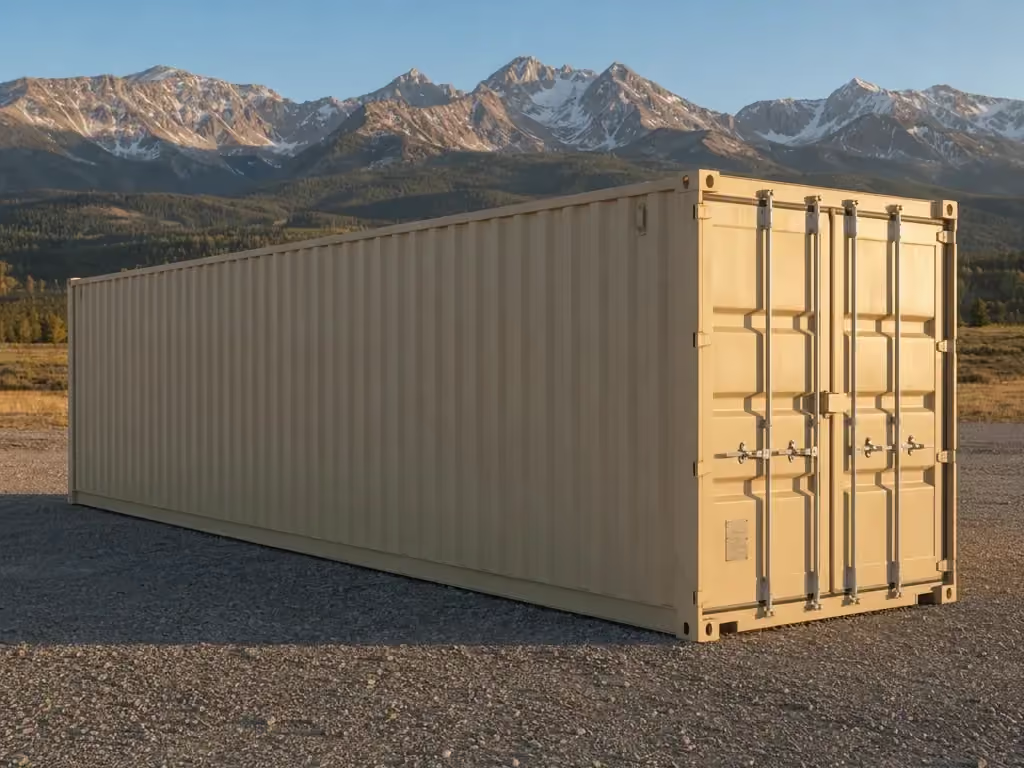
- 40 ft storage container — the Site Kit's storage line and the material store for a full build, on a 100 ft run.
- 20 ft office container — the three builds side by side, with the specs the three pages below share.
- 20 ft office container, Base — the office when shore power is at the pad and an electrician is on the list.
- 20 ft office container, Grid-Free — the office that works the hour it lands, with camera, Starlink and battery HVAC built in.
- 20 ft office container, Alpine — the Grid-Free package in the mountain envelope: over-roof, covered deck and backup heat.
- 40 ft office container with bathroom — the office for a crew that needs a restroom inside the fence.
- Temporary fence — the perimeter, installed, priced per linear foot.
- Light towers — the lighting line from late October to March.
- Ground heaters — the heat line for thawing ground and curing concrete.
- Traffic control — the approach: signs, cones and barricades where the run meets a public road.
- Hand-wash stations — the sanitation line, one beside each toilet cluster.
The 2 buy pages, for the site that outlives the rental math
- Buy a 20 ft office container — the same three builds, owned outright and delivered within Zones A–B; the rent-vs-buy guide does the sum before you ask for the Bill of Sale.
- Buy a 40 ft office container with bathroom — the crew office to own when the yard, not the job, is the address.
Everything on this page is reserved from one form, with the deposit credited to the first invoice and every rate published before you start; the one written quote is a Zone F pickup, which comes before delivery.
What JOLT rents for this
The units this guide prices, at the rates on their own pages. Reserve one online or call the yard.


Questions contractors ask
What arrives first on a jobsite?
Nothing arrives until the access and staging area are ready, because every later delivery drives over them. After that the fence goes in, then the office, then storage, then power and internet, sanitation, lighting and heat. The order follows dependencies, not importance. A box set before the fence line is drawn ends up inside a fence that has to bend around it.
How much space does the delivery truck need?
About 70 ft of straight run for a 20 ft unit and about 100 ft for a 40 ft unit, ending at a firm, level, well-drained pad. Section 5.2 of the Rental Agreement also asks for adequate overhead clearance, road width, turning radius and grade. JOLT asks for a 12 ft working lane and prefers a 16 ft gate where the truck turns.
Do I need a fence on every jobsite?
No. A fence is a decision about who reaches the site when nobody is on it, and a remote pad with no public edge may not need one. Where the public, a road or a neighbor touches the work, a fence is usually the first thing an owner or insurer asks about. JOLT rents installed chain link at $3.50/LF/mo with a 100 LF minimum.
How many toilets and hand-wash stations does a site need?
OSHA 1926.51 Table D-1 requires 1 toilet for 20 or fewer workers, then 1 toilet seat and 1 urinal per 40 workers, and per 50 workers at 200 or more. Lavatories with running water, soap and towels are required as well. Size the count to the peak crew, not to the first week. JOLT's hand-wash station rents for $85/mo a month.
When should the light tower arrive?
Before the first week the crew works outside daylight, which at Vail means late October. The sun sets at 6:26 pm on October 15 and at 4:50 pm on November 15. OSHA 1926.56 Table D-3 sets 5 foot-candles for general construction areas and 3 for excavation and storage areas. A tower reserved with the office avoids a second delivery window.
Can a jobsite start in winter in Colorado?
Yes, with three things settled in advance: a plowed approach the truck can use, snow storage that does not eat the straight run, and heat for concrete and thawing. A hydronic ground heater rents for $1,450/mo a month. The Rental Agreement makes snow and ice clearing around the equipment the renter's job under section 7.4.
Can everything come in one delivery?
Yes, when the order is the JOLT Site Kit, which is scheduled in one delivery window. It carries a Grid-Free 20 ft office, a 40 ft storage container, 200 LF of installed fence and a hand-wash station for $2,705/mo a month. The invoice carries a zone fee per container; the fence and hand-wash ride free, and a light tower or ground heater pays its own fee. One yard also means one pickup call.
How far ahead should I reserve?
Reserve 4 weeks before the date the site must be working. The standard delivery window is 2–4 weeks, and the reservation form offers the first weekday of that window. Express puts a Base office on site within 7 business days for $750. Fence, storage and equipment ride the standard window.
Ready when your site is.
Rentals from $85/mo · every price published
A deposit holds your delivery window. Cancel free of charge more than 14 days before the first day of the window. Deposits from $85 are applied to your first invoice.