
Solutions
Rentals for ranch & agriculture
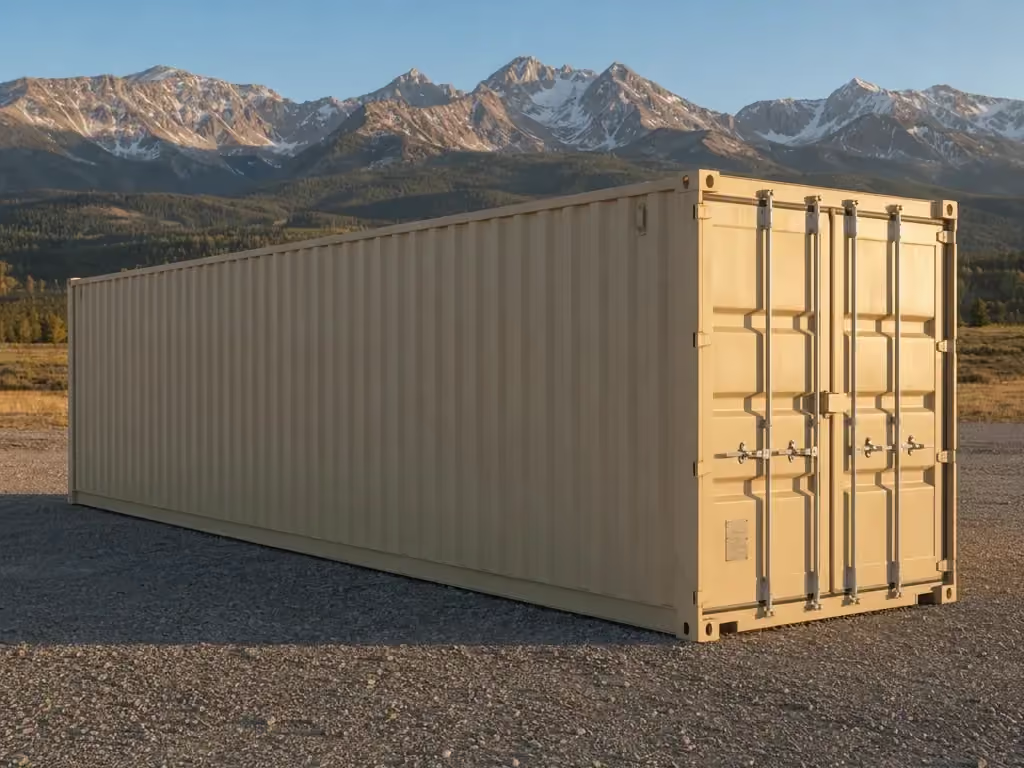
Pair a 40 ft high-cube box at headquarters with a 20 ft box at the far pasture, from $295/mo, with every price published.
from $295/mo
- 40 ft storage
- $425/mo
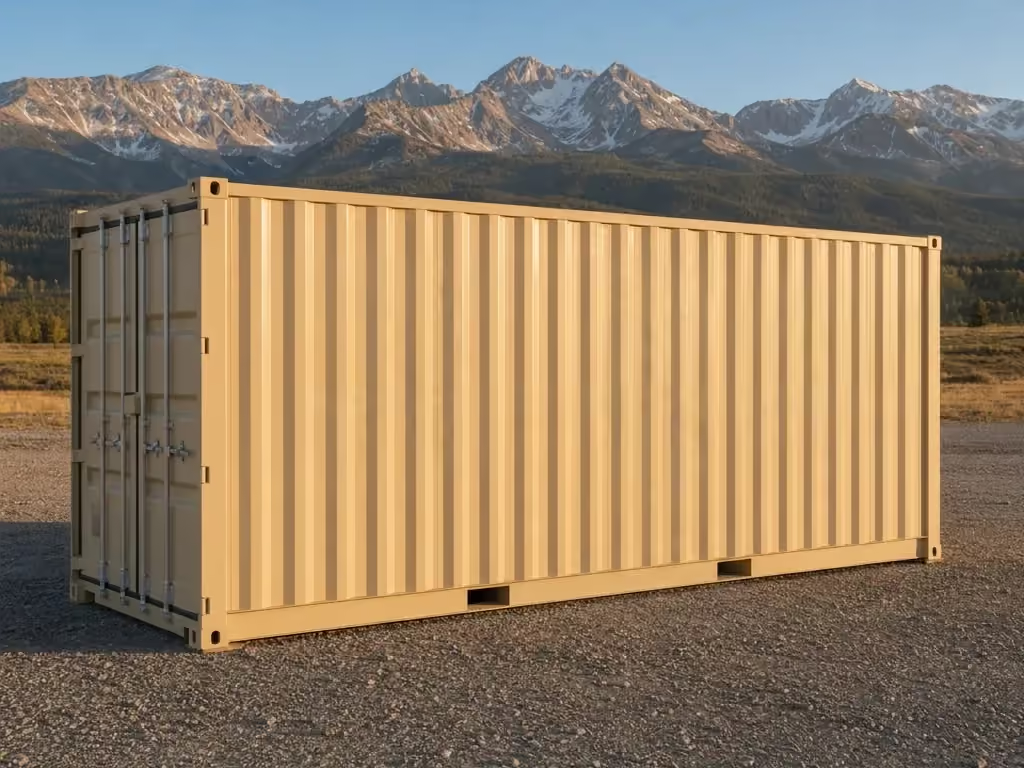
- 20 ft storage
- $295/mo
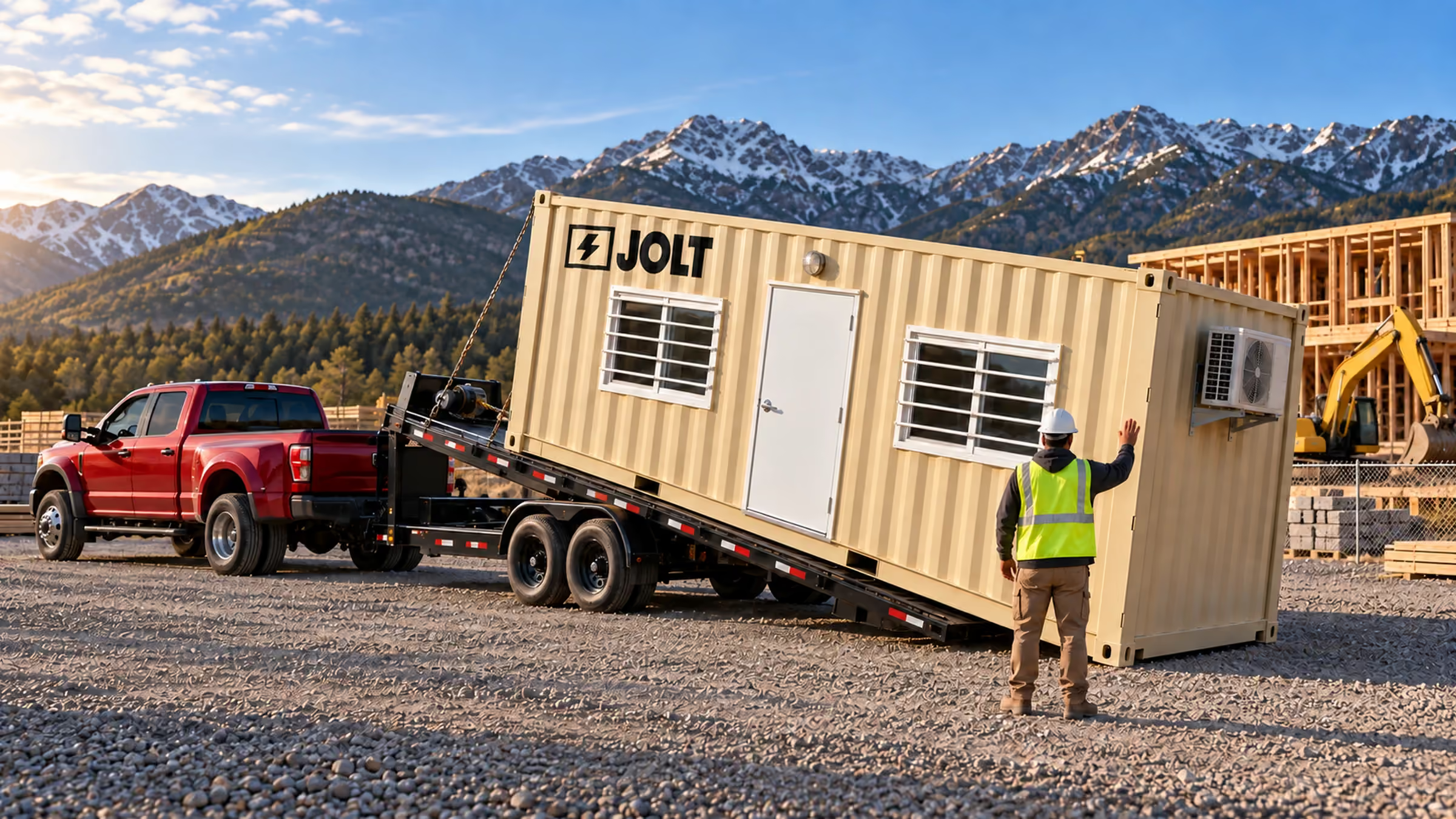
- 20 ft office
- from $795/mo
The kit for the job

Key facts
- The 40 ft storage container rents for $425 per month as of .
- The 20 ft storage container rents for $295 per month as of .
- The Base 20 ft office container rents for $795 per month as of .
- The Grid-Free 20 ft office container rents for $1,495 per month as of .
- WATCH rents for $129 per month on top of the unit rent as of .
Cite this page: "Rentals for ranch & agriculture." JOLT (Jolt Rents), https://joltrents.com/solutions/ranch-and-agriculture. Last updated September 11, 2026.
A practical ranch kit starts with 40 ft high-cube storage at headquarters for $425/mo and 20 ft storage near the work for $295/mo. Add a Base or Grid-Free office for records and crew coordination, then put WATCH on the container nearest the gate or road.
Which container fits which ranch job?
Put the largest box where deliveries, tractors and the daily crew already converge. A 40 ft high-cube container gives twice the floor of a 20 ft unit and stands 9 ft 6 in tall, so it suits feed, tack, fencing supplies, repair parts and seasonal implements kept at headquarters.
Use the 20 ft unit as the satellite box. A remote pasture, calving barn or hay yard can hold the smaller working set without sending every repair or feeding trip back to the main buildings. Keep the delivery route in mind before choosing it; a convenient spot for chores still has to work for our truck.
A Base ranch office belongs where shore power exists. It has a 50-amp inlet, lights, outlets, heat and cooling, two barred slider windows and a steel personnel door. A Grid-Free office serves headquarters or leased ground without shore power.
| Unit | Monthly rent | Minimum term | Ranch assignment |
|---|---|---|---|
| 40 ft storage | $425/mo | 3 months | Headquarters feed, tack, fencing supplies, parts and seasonal implements |
| 20 ft storage | $295/mo | 1 month | Remote pasture, calving barn or hay-yard working inventory |
| 20 ft office · Base | $795/mo | 3 months | Records, scheduling and crew coordination where shore power exists |
| 20 ft office · Grid-Free | $1,495/mo | 3 months | Ranch office where shore power does not exist |
| WATCH | $129/mo | With the host container | Solar LTE camera on the box nearest the gate or road |
| Hand-wash station | $85/mo | 1 month | Self-contained hand washing for a seasonal crew |
A tight barnyard changes the choice. The 12 ft walk-in storage unit has a man door, one barred window and end cargo doors; the 10 ft storage unit has the same layout and half the floor of a 20 ft box. Either can fit a placement where the 20 ft unit and its delivery approach will not.
The hand-wash station is self-contained with its own water supply. The customer supplies water, soap and towels, and the station is not freeze-proof. Place it for the crew rather than treating it as a winter plumbing fixture.
What does a year of ranch storage cost?
Build the budget from monthly and one-time lines. For a common headquarters setup, list the 40 ft storage rent at $425/mo, the 20 ft storage rent at $295/mo, the Base office rent at $795/mo and WATCH at $129/mo. Add the lines for the number of units reserved; each unit carries its own delivery and pickup lines.
The 40 ft box and office each have a 3-month minimum; the 20 ft box has a 1-month minimum. After each minimum, rent continues month to month until the customer gives at least 15 days' written pickup notice and we retrieve the equipment. Rates rise 5% on each anniversary of delivery under Rental Agreement §3.
What are the first-invoice lines?
For the worked month, write each item separately:
- 40 ft storage rent: $425/mo.
- 20 ft storage rent: $295/mo.
- Base office rent: $795/mo.
- WATCH rent: $129/mo.
- 40 ft storage reservation deposit: $750.
- 20 ft storage reservation deposit: $350.
- Base office reservation deposit: $750.
- Carbondale delivery and pickup, for each unit: Zone C — $750 each way.
- Steamboat Springs delivery and pickup, for each unit: Zone D — $950 each way.
- Environmental fee: 5%.
- Optional damage waiver: 12% of rent and recurring upgrades.
- Sales tax: added by job address.
Use either the Carbondale transport lines or the Steamboat Springs transport lines for one placement, not both. Each reservation deposit reserves its assigned unit and delivery window and is applied to the first invoice under Rental Agreement §2. WATCH is an upgrade on its host container rather than a separate delivered unit.
The alternative to the damage waiver is a refundable deposit equal to one month's rent plus a certificate of insurance. Insurance requirements are in Rental Agreement §10, while the waiver coverage and exclusions are in Rental Agreement §12. Add the selected protection line, the environmental fee and sales tax, and the estimate is complete.
Recurring rent and upgrades bill monthly in advance by card or ACH auto-pay. Delivery and pickup remain separate one-time lines on each unit's invoice.
How does our truck get to a ranch?
Our truck needs approximately 70 ft of straight-line clearance for a 20 ft unit and 100 ft for a 40 ft unit. Review the truck and container delivery explanation before marking the placement, then measure the route from the public road through every gate, cattle guard, turn and final approach.
Send the clear inside width of gates and cattle guards when requesting the delivery. We also need road width, overhead clearance, turning radius and grade to review the route; the container length alone does not settle whether a ranch road works. Remove low branches and parked equipment that reduce the usable path.
Prepare firm, level, well-drained ground capable of supporting the unit. A compact high point is a better placement than a spring-mud low spot, and the customer prepares it before the truck arrives. JOLT does not require a permanent foundation; the container foundation answer separates our placement requirement from permit or engineering decisions.
Mark underground and overhead utilities before delivery, including irrigation lines that may not appear with ordinary utility markings. Have a representative present who can direct final placement without moving the decision to another pasture after arrival. The representative should also keep livestock, vehicles and equipment out of the truck's working area.
A failed trip caused by access, site conditions, weather or an absent representative is charged under Rental Agreement §5. The same section makes the customer responsible for site damage resulting from placement at the customer's direction. Do not ask a driver to cross a soft field simply because the empty approach looked passable earlier in the season.
Standard delivery uses a 2–4 week window from reservation. Express applies only to the Base office, not storage, Grid-Free offices, WATCH or hand-wash stations. Plan the feed or equipment move around the standard window and the live availability badge rather than a fixed day nobody has confirmed.
Pickup needs the route used for delivery. Keep gates operable, remove stored equipment from the approach and restore any section affected by snow, irrigation or mud before the scheduled trip. The container must be empty and accessible, and rent continues until retrieval.
Does a container need a permit on agricultural land?
The county land-use office decides whether a container can be placed on a parcel and what approvals apply. Rules differ by county and can also differ according to whether the parcel is zoned agricultural. JOLT does not determine the zoning, permit or land-use result for a ranch.
Start with the parcel address, zoning designation, proposed use and intended duration. Ask the county whether a rented storage box and an occupied office are reviewed the same way; do not assume an agricultural address makes every placement exempt. The Colorado container permit answer gives the questions to take to the authority.
The customer obtains all permits, approvals, zoning clearances and landowner consents under Rental Agreement §5. That includes leased ground where the operator is not the owner. Settle placement before reservation so a paid delivery does not arrive at a location the owner or county rejects.
How does a one-trip container handle weather, rodents and condensation?
JOLT storage boxes are one-trip containers. That means each made one cargo trip before entering the rental fleet, rather than spending years in cargo circulation. The one-trip and used container comparison explains why the label describes history, not a promise that a box will never show handling marks.
The 20 ft unit has cargo doors with four lock bars and a welded lockbox. The 40 ft high-cube has cargo doors and a welded lockbox. Both are weathertight storage containers, and the waterproof container answer explains the practical distinction between keeping weather out and promising protection under every site condition.
Keep cargo doors fully closed when the box is unattended. Keep the floor clear enough to inspect the interior and report a leak, damage or door problem promptly. A weathertight box is not rodent-proof or condensation-free, so storage practices still matter for feed, mineral, tack and veterinary supplies.
Put feed, mineral and veterinary supplies in sealed containers before loading them. Do not let loose material collect at the threshold or interfere with the cargo-door seal. Separate damp tack or tools from dry inventory rather than closing moisture into the stored load.
The customer protects the unit from flood, wind and fire at the site. Inspect it after severe weather and keep the roof, doors and access paths clear under Rental Agreement §7.
How can a ranch office work without power?
Choose Base when a compliant shore-power connection exists. Its 50-amp inlet supplies the mini-split heat and cooling, lights and outlets; utilities connect only through the provided inlet by a licensed electrician. Confirm the connection plan before placement instead of routing an improvised cord across a livestock or equipment path.
Choose Grid-Free where shore power does not exist. It includes the Base interior plus WATCH, CONNECT and POWER, along with a 10 kWh battery pack that runs the HVAC. The package supports office heat and cooling without shore power, but solar and battery performance still depends on sunlight and load.
CONNECT uses Starlink, which depends on network conditions, weather, terrain and sky view. Put the office where it has a usable view of the sky rather than under the only dense tree cover at headquarters. Rental Agreement §13 states that uptime, speed, coverage, capacity and availability are not guaranteed.
WATCH is a solar LTE panoramic camera with motion alerts and cloud clips. It needs cellular coverage where the host container sits, so a good camera angle at a remote gate is not enough if the location has no LTE service. The customer handles all recording notices, signage and consents.
If the office is at headquarters but the camera view belongs at the road, mount WATCH on a storage container nearer that view. Keep the camera host within the delivery and pickup plan, and do not place it where a gate swing, stock trailer or snow pile will block access.
Grid-Free removes the shore-power requirement, not the access, permit or connectivity constraints. The off-grid and remote rental plan compares remote power choices.
What can go in the box, and what cannot?
Store dry feed and mineral in sealed containers, along with tack, veterinary supplies, fencing wire and posts, small implements, repair parts and tools. Organize the working inventory so doors can close and the floor remains clear for inspection. Match the remote box to supplies used there instead of filling it with slow-moving headquarters stock.
Do not store fuel, propane, herbicides, pesticides or any other hazardous, flammable, explosive or corrosive materials in or near the unit. These restrictions apply outside the doors as well as inside, so the container cannot become the wall of a fuel or chemical storage area. Rental Agreement §7 controls permitted use and care.
No livestock can go in a storage or office container. No person may use any unit for overnight sleeping. A ranch office is a work space, not crew lodging, and a storage box is not an animal shelter.
Do not add lean-tos, drill shelving anchors or weld attachments to the container. Cutting, drilling, welding, painting and other alterations are prohibited. Use freestanding storage inside, and ask JOLT before adding anything that could alter the shell or doors.
Do not stack containers or use them as structural support. A rented box cannot serve as a wall, bridge support, roof support or anchor for another ranch structure. Keep proposed sheds, corrals and equipment loads independent from it.
From delivery until retrieval, the customer bears the risk of loss, theft, damage or destruction under Rental Agreement §8. The damage waiver excludes damage from prohibited uses and from failure to clear snow or ice under §12. Keep keys controlled and inspect the unit throughout the rental.
Clear snow, ice and debris from roofs, doors and access paths. Do not let a plow bank trap the cargo doors or block the retrieval route. Schedule the work after each storm rather than waiting until pickup, when frozen piles can cause a failed trip and more rent.
Should a ranch rent storage or buy an office?
JOLT storage containers rent only. Renting fits a hay season, calving period, fencing program or changing pasture assignment because the box can leave after its minimum term and proper pickup notice. Use the rental versus purchase break-even guide to compare the actual duration and transport lines without assuming a resale value.
Offices can be purchased. The 20 ft Base office sells for $17,500, the Grid-Free for $24,500, the 20 ft Alpine office for $37,500 and the 40 ft office with bathroom for $32,500. Those purchase prices include delivery within Zones A–B; review the 20 ft office purchase choices before treating a sale like a storage-box order.
Lease-to-own applies to every 20 ft office build, with a 24-month and a 36-month plan each; a Base office runs $1,145/mo or $845/mo. The lease-to-own terms cover that route to ownership. Storage boxes are not part of the program.
Delivery pricing starts at our yard in Gypsum. Gypsum and Eagle are Zone A for Brush Creek and Gypsum Creek country. Carbondale and Basalt are Zone C for the Roaring Fork and Crystal River valleys.
Steamboat Springs is Zone D for the Yampa Valley, and Grand Junction is also Zone D. Castle Rock is Zone E for Douglas County horse properties. Addresses outside the zone table get a text quote rather than an assumed fee.
| Zone | Towns | Delivery | Pickup |
|---|---|---|---|
| Zone A | Gypsum, Eagle, Edwards, Avon, Beaver Creek | $400 | $400 |
| Zone B | Vail, Minturn, Glenwood Springs | $550 | $550 |
| Zone C | Breckenridge, Frisco, Silverthorne, Keystone, Carbondale, Basalt, Aspen, Snowmass | $750 | $750 |
| Zone D | Steamboat Springs, Leadville, Grand Junction | $950 | $950 |
| Zone E | Idaho Springs, Georgetown, Evergreen, Golden, Morrison, Lakewood, Arvada, Aurora, Centennial, Littleton, Boulder, Castle Rock, Denver | $1,200 | $1,200 |
| Zone F — Mountain West12-month minimum | WY, ID, UT, MT | $1,795 | Pickup quoted separately before delivery |
Check the delivery-zone assignments against the exact ranch address before budgeting. A town label sets the published transport line, while the specific gate, ranch road and placement still have to pass the access review.
Questions contractors ask
Is a 40 ft or 20 ft container better for a ranch?
A 40 ft high-cube container is 9 ft 6 in tall and rents for $425/mo with a 3-month minimum, making it the headquarters choice for bulky inventory. A 20 ft container rents for $295/mo with a 1-month minimum and fits a smaller remote inventory.
Can a ranch storage container sit on dirt?
Yes, if the prepared spot is firm, level and well-drained. JOLT does not require a foundation, and the customer prepares the placement area before delivery.
Can I store fuel or agricultural chemicals in the container?
No. Hazardous, flammable, explosive or corrosive materials are prohibited in or near the unit, which includes fuel, propane, herbicides and pesticides.
Can a ranch buy a container instead of renting?
Storage boxes rent only, while offices sell for $17,500, $24,500, $37,500 and $32,500. Every 20 ft office build also has a 24-month and a 36-month lease-to-own plan; on a Base office that is $1,145/mo or $845/mo.
What does a container cost delivered to the Yampa Valley?
Steamboat Springs is in Zone D, so delivery is $950 each way. Rent, the reservation deposit, recurring charges and tax are separate lines.
What access does JOLT need in winter?
The customer clears snow from the roof, doors and access route. Pickup needs the same usable truck route as delivery, and rent continues until JOLT retrieves the unit.
Will a camera work at a remote ranch gate?
WATCH is $129/mo and uses a solar LTE camera, so it needs cellular coverage at the selected location. The customer is responsible for recording notices, signage and consents.
Are JOLT storage containers new?
JOLT storage units are one-trip containers, meaning they made one cargo trip before entering the rental fleet. The 40 ft unit is a high-cube container, while the 20 ft unit is standard height.
Keep reading
- AnswerAre shipping containers waterproof? Yes — until they aren't
- AnswerDo shipping containers need a foundation? Usually no — here's when they do
- AnswerShipping container permits in Colorado — county by county
- AnswerRent or buy? The month the math flips
- Rent12 ft container for the tight site
- UpgradeWATCH: your site has eyes
- Rent20 ft mobile office — three tiers, one chassis
- Rent20 ft storage container — $295/month, delivered
Reserve it today.
Rentals from $85/mo
A deposit holds your delivery window. Cancel free of charge more than 14 days before the first day of the window. Deposits from $85 are applied to your first invoice.