
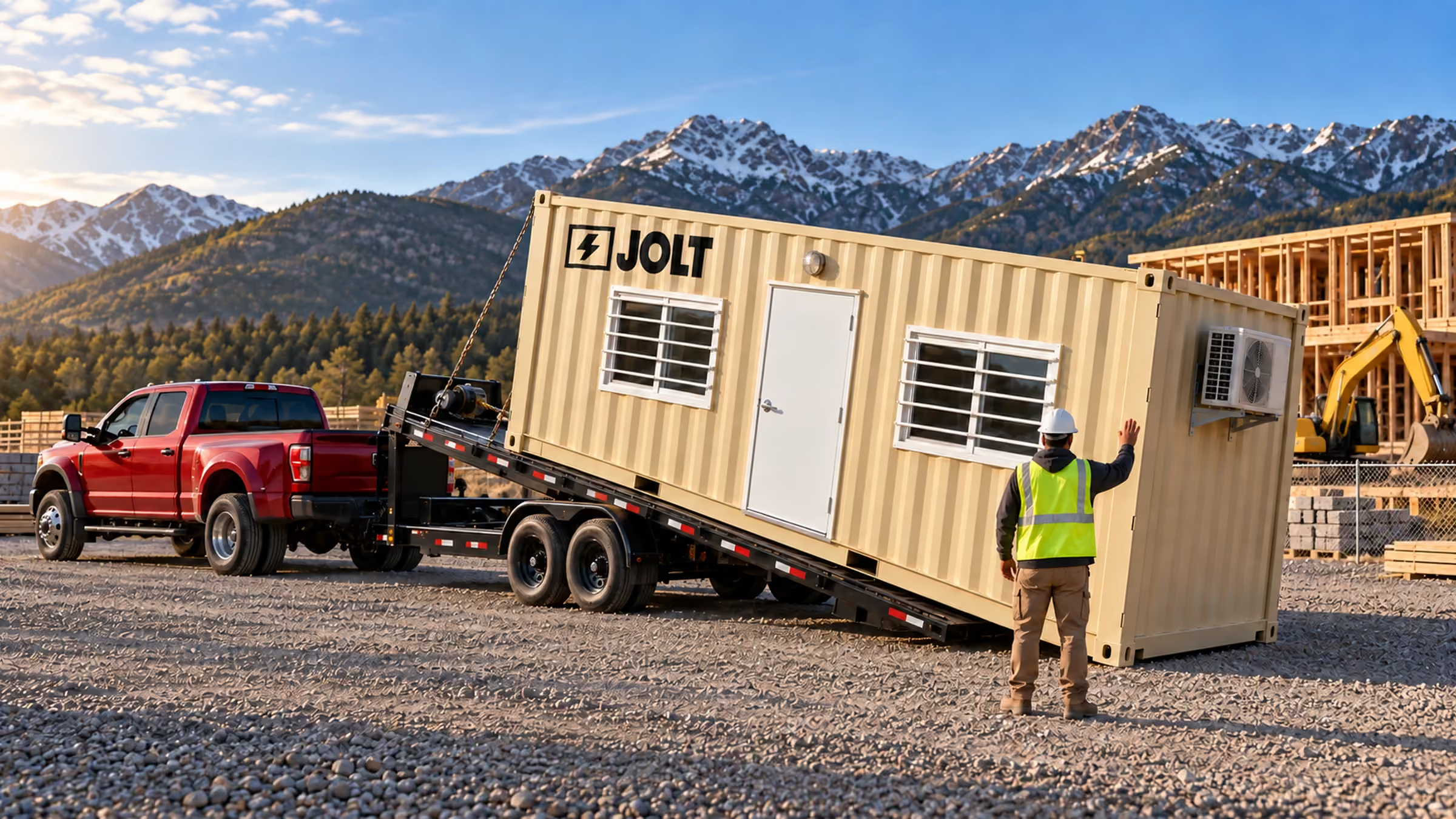
Utah · Zone F — Mountain West
Jobsite rentals for Utah
Plan a Utah jobsite office, storage container, fence or winter equipment with published Zone F delivery terms.
$1,795delivery
Pickup Pickup quoted separately before delivery. 12-month minimum. Flagship market: Park City.
- Zone
- F
- Delivery
- $1,795
- Pickup
- Quoted
- Minimum term
- 12 mo
Utah towns we serve
Key facts
- Delivery to Utah (Zone F) costs $1,795 one way, with pickup quoted separately as of .
- The minimum rental term in Zone F is 12 months as of .
- The Grid-Free 20 ft office container rents for $1,495 per month in Utah as of .
- The 40 ft storage container rents for $425 per month in Utah as of .
- Standard delivery is scheduled 2–4 weeks after the reservation as of .
Cite this page: "Jobsite rentals for Utah." JOLT (Jolt Rents), https://joltrents.com/locations/utah. Last updated September 11, 2026.
JOLT delivers jobsite offices, storage containers, temporary fence and equipment to Utah for $1,795 from our yard in Gypsum, Colorado; pickup is quoted in writing before delivery, and every unit has a 12-month minimum term. Park City is 345 road miles from the yard by our route mileage, making Utah the nearest of the four Zone F states.
What does a 12-month placement cost in Utah?
Start the cost plan with monthly rent, one Zone F delivery leg and the pickup amount JOLT quotes in writing before delivery. The same published delivery fee applies from Kimball Junction to St. George, but the selected unit, upgrades, reservation deposit, recurring charges and taxes determine the rest of the account.
| Item | Price |
|---|---|
| from $795 /mo | |
| $1,595 /mo | |
| $295 /mo | |
| $425 /mo | |
| $325 /mo | |
| $225 /mo | |
| $3.50 /LF/mo | |
| $1,250 /mo | |
| $1,450 /mo | |
| from $495 /mo | |
| $85 /mo |


Rent only, plus applicable sales tax. Damage waiver 12% and environmental fee 5% are added to rent; delivery is by zone.
The published pricing lets a project manager compare a Base office, storage, fence and cold-weather equipment without requesting a hidden rate. For a focused explanation of office rent and transport, use the mobile office rental cost breakdown, then confirm Zone F treatment on the delivery-zone schedule.
Under Rental Agreement §2, a reservation deposit holds a specific unit and delivery window and applies to the first invoice. Written cancellation received more than 14 days before the first day of that window carries no charge; within 14 days, or when delivery is not accepted, the deposit is forfeited.
The Utah minimum under Rental Agreement §3 is 12 months whether the unit is used or an early pickup is requested. The monthly rate is fixed through the first twelve months and increases 5% on each anniversary of delivery; early termination requires the rent balance for the minimum term, the pickup fee and accrued charges.
Recurring charges bill monthly in advance to the payment method on file. The environmental fee is 5% of rent plus recurring upgrades, while the optional damage waiver is 12% of that same base and is not insurance. Without the waiver, the customer provides property insurance for full replacement value and general liability, with certificates before delivery.
Utah customers are responsible for sales, use, personal property and similar taxes under Rental Agreement §4. A tax-exempt customer must provide its certificate before delivery, so the project accountant should resolve that item before dispatch rather than after the first invoice.
A useful annual purchase order separates transport from recurring lines. Carry twelve months at the chosen monthly rate, approved upgrades and applicable recurring fees, but do not invent the return amount: use the written pickup quote provided before the unit leaves Gypsum.
How does delivery from Gypsum reach Utah?
Our truck starts beside I-70 in Gypsum. Park City loads leave the interstate at Rifle; southern and western Utah loads follow I-70 west into the state, where the Utah Division of State History identifies the 110 miles between Green River and Salina as the longest Interstate stretch without services, a practical reason to settle the route, fuel stops and receiving contact before dispatch.
Park City traffic leaves I-70 at Rifle for CO-13 to Meeker and CO-64 through Rangely, then follows US-40 through Vernal, Roosevelt and Duchesne, over Daniels Summit to Heber City and on to Kimball Junction. Loads that stay on I-70 into Utah can instead use US-6, I-15 north and I-80 east through Parleys Canyon to Kimball Junction; UDOT 511 posts canyon closure and traction-law notices.
FMCSA hours-of-service rules allow a property-carrying driver at most 11 driving hours after 10 consecutive hours off duty. Park City is the nearest Zone F town to our yard; the state's far corners add hours to the haul, so a St. George or Cache Valley delivery can involve a different transport sequence even though the published fee does not change.
The normal delivery window is 2–4 weeks after reservation. That window is for planning rather than a promise of a particular day, and the dispatch plan still depends on safe access, weather, a prepared placement and a designated representative who can direct the driver.
| Zone | Towns | Delivery | Pickup |
|---|---|---|---|
| Zone A | Gypsum, Eagle, Edwards, Avon, Beaver Creek | $400 | $400 |
| Zone B | Vail, Minturn, Glenwood Springs | $550 | $550 |
| Zone C | Breckenridge, Frisco, Silverthorne, Keystone, Carbondale, Basalt, Aspen, Snowmass | $750 | $750 |
| Zone D | Steamboat Springs, Leadville, Grand Junction | $950 | $950 |
| Zone E | Idaho Springs, Georgetown, Evergreen, Golden, Morrison, Lakewood, Arvada, Aurora, Centennial, Littleton, Boulder, Castle Rock, Denver | $1,200 | $1,200 |
| Zone F — Mountain West12-month minimum | WY, ID, UT, MT | $1,795 | Pickup quoted separately before delivery |
Before the truck arrives, mark a firm, level and well-drained placement and review the mountain container delivery guide. A 20 ft unit needs about 70 ft of straight-line truck clearance and a 40 ft unit about 100 ft, plus adequate road width, turning radius, grade and overhead clearance; the answer on what size truck delivers a container helps the field team inspect that route.
Locate and mark utilities, clear parked equipment, and assign a representative to the delivery. Under Rental Agreement §5, a trip that fails because of access, site conditions, weather or an absent representative incurs that delivery fee and the fee for the next trip.
The customer directs final placement and accepts responsibility for site damage caused by that direction. Mark the unit corners and door orientation beforehand, then preserve the straight approach through delivery day rather than using it for last-minute material staging.
Which Utah markets fit a container office?
Utah work stretches from I-15 population centers to remote energy and tourism sites. The operating question is not only where the unit goes, but whether the site has shore power, enough access for its length, and room to preserve doors, condensers and snow-clearing paths.
| Region | Corridor | Typical work |
|---|---|---|
| Wasatch Front | I-15 | Urban construction and public work |
| Lehi area | I-15 | Technology corridor projects |
| Park City | US-40 and I-80 | Resort and Olympic-venue work |
| Heber Valley | US-40 | Resort and second-home work |
| Uinta Basin | US-40 | Oil and gas sites |
| Moab | US-191 from I-70 | Tourism and public-lands work |
| Southwest Utah | I-15 | Housing and regional construction |
For Summit County planning, the dedicated Park City rental page addresses municipal staging rules and resort-area jurisdiction. Uinta Basin projects around Vernal and Roosevelt can pair an office with the operating practices described for oil and gas jobsites.
Storage selection should follow the laydown plan. A 20 ft storage container is a one-trip, standard-height ISO box with four cargo-door lock bars and a welded lockbox; a 40 ft high-cube container provides twice the floor and stands 9 ft 6 in tall, but requires the longer truck approach.
Temporary perimeter needs are a separate line. Six-foot temporary fence panels are 10 ft wide and use steel tube stands and clamps, allowing a superintendent to define controlled work areas without treating storage boxes as a substitute for a perimeter.
Statewide coverage also connects with work based in Colorado, Wyoming, Idaho and Montana. Those links are useful when one contractor manages several mountain projects, but each out-of-state placement receives its own Zone F pickup quote and minimum term.
What permits and codes apply in Utah?
The Utah Legislature adopts construction codes statewide through the Utah State Construction and Fire Codes Act, Utah Code Title 15A. Cities and counties enforce those codes and issue permits, so the authority with jurisdiction at the actual parcel controls the required submission and inspection path.
The customer secures permits, zoning approval, HOA approval, landlord consent and other required authorizations before delivery. This is also why the project address and placement cannot be treated as an informal yard decision: local review may govern the box, its use, the truck route, screening and its relationship to a permitted building.
Park City Municipal shows how local controls can extend to jobsite operations. Its Construction Mitigation Plan requires an approved parking plan with a building permit, keeps stockpiles and staging within the approved limits-of-disturbance fence, controls truck routes through Engineering and requires a separate right-of-way permit for materials or equipment placed in the right-of-way.
A container office is a ground-level unit, not a wheeled trailer; the ground-level office explanation clarifies that physical distinction. That does not remove local permit review, foundation questions, zoning requirements or private design controls.
Standard ISO width helps highway transport. ISO 668 sets the container width at 8 ft, while 23 CFR 658.15 establishes a federal legal vehicle width of 8 ft 6 in, or 102 inches, so a standard container on a flatbed does not require an oversize permit for width.
Use restrictions continue after placement. The unit cannot serve as a residence or sleeping space, and the customer may not stack, weld, cut, drill or paint it; hazardous materials are prohibited, JOLT signs and devices stay in place, and a licensed electrician connects utilities only through the provided inlet.
The customer also may not lift, tow, transport or move the unit without JOLT's written consent. An unauthorized move voids the damage waiver, making a poor first placement more than a logistics inconvenience.
What if the site has no power?
For an office that must operate without shore power, the Grid-Free 20 ft office includes a 10 kWh battery capable of running its mini-split HVAC. It also includes WATCH, CONNECT and POWER, so the order should not duplicate those systems.
The standalone POWER kit has two 400 W solar panels, a 3 kWh LFP battery and an inverter. It runs Starlink, the camera, lights and laptops, but not the mini-split; use it for those defined loads rather than assuming a small battery kit can heat or cool a Base office.
JOLT PACK combines WATCH, CONNECT and POWER for a shore-powered office or another compatible unit. The off-grid office power explanation helps distinguish an HVAC-capable Grid-Free office from support power for communications and desk work.
CONNECT supplies a Starlink Mini, router and 50 GB Roam plan. Satellite, cellular, solar and battery performance depends on networks, terrain, weather, sky view, sunlight and load, and JOLT does not promise uptime, speed or coverage.
WATCH adds a solar LTE panoramic camera with motion alerts and cloud clips. When WATCH or fleet telematics records at the site, the customer handles every notice, sign and consent required for recording, so the security plan must include compliance as well as camera placement.
These distinctions matter on Uinta Basin pads and public-lands work near Moab, where permanent utilities may not reach the selected placement. The off-grid and remote jobsite page gives those teams a planning path, but field personnel still need to preserve sky view, keep panels clear and manage loads.
Security still requires ordinary site controls. The guidance on securing a jobsite from theft can be paired with locked cargo doors, controlled access and a camera plan rather than asking any single device to carry the entire risk.
How do units handle Utah winter and summer?
Utah exposes the same annual rental to very different conditions. Wasatch jobs can encounter canyon snow and traction controls, while National Weather Service records put average July highs above 100°F in St. George, making a working cooling plan as important there as heat is near a resort.
Every 20 ft office tier has mini-split heating and cooling. Base and the 40 ft office require customer shore power through the 50-amp inlet; Grid-Free and Alpine use an integrated 10 kWh battery system, while the smaller POWER upgrade cannot run HVAC.
The Alpine office adds a standing-seam over-roof, covered entry deck and backup heat to the Grid-Free equipment. Those features do not transfer the customer's care duty: snow, ice and debris must stay clear of roofs, condensers, panels, doors and access paths throughout the rental.
The customer bears risk of loss and damage from delivery through retrieval, including snow load, except where an active damage waiver applies. The waiver excludes damage caused by failure to clear snow or ice, as well as theft and unauthorized relocation, and remains distinct from insurance.
Place the condenser where stored materials and plowed snow will not block it. On a southern Utah project, keep the same area clear so hot-air discharge is not trapped; on a Wasatch site, preserve a safe path to the door and space to move snow without burying equipment.
A ground heater rental provides trailer-mounted hydronic equipment with insulated hose for thawing ground and curing concrete in winter. A trailer-mounted light tower raises four LED floodlights to about 30 ft, supporting work areas when winter daylight does not cover the planned shift.
The answer on working in a container office during winter helps crews connect HVAC, access and daily care. The broader jobsite setup checklist is useful before the first storm changes truck access or consumes designated snow storage.
What does a year look like from reservation to pickup?
Reserve online after choosing the unit, job address, access route and placement. The deposit reserves a specific unit and a 2–4 week delivery window, giving the superintendent time to finish permits, mark utilities, prepare the surface and protect the truck approach.
On delivery day, the designated representative directs orientation and keeps labor and equipment outside the unloading area. The driver needs a safe approach and prepared placement; if either has changed, the representative should resolve the condition before asking the truck to enter.
The first winter tests choices made during mobilization. Crews keep roofs, condensers, solar panels, doors and access routes clear of snow and ice, inspect the unit, keep it clean and secure, and report damage or malfunction immediately under the care requirements in Rental Agreement §7.
Through the year, the customer supplies and pays for electricity, fuel, water and sewer. The field team should preserve communications sky view, check security routines, and prevent changing construction phases from enclosing the unit or removing its retrieval approach.
The 12-month minimum remains due even if a phase ends early. After that term, the rental continues month to month until JOLT receives at least 15 days' written pickup notice and retrieves the equipment; how the rental process works keeps those milestones visible to field and accounting teams.
Before notice goes out, compare the closeout schedule with the written Zone F pickup quote issued before delivery. Empty and clean the unit, remove customer property and attachments, disconnect customer utilities, and restore the same straight truck access required at arrival.
Rent continues until retrieval, and property left inside is deemed abandoned. A failed pickup trip is charged and rent continues, so the final access walk should verify gates, overhead clearance, snow, mud, parked equipment and the presence of a reachable site contact.
Last updated .
Questions contractors ask
What is the delivery charge for a rental anywhere in Utah?
Zone F delivery anywhere in Utah is $1,795 from our Gypsum yard, and every out-of-state unit has a 12-month minimum.
Is the Utah pickup charge included in delivery?
No. Pickup is quoted in writing before delivery, and at least 15 days' written notice is required when the unit is ready for retrieval.
What happens if a Utah project ends before the minimum term?
The Zone F minimum is 12 months, and early termination requires rent for the balance of that term plus the pickup fee and accrued charges.
What is the monthly rent for a 40 ft office with a bathroom?
The 40 ft office with an enclosed bathroom rents for $1,595/mo, with a 12-month minimum on a Utah placement.
How is temporary fence priced for a Utah project?
Temporary fence rents for $3.50 per linear foot per month and uses 6 ft by 10 ft galvanized chain-link panels with stands and clamps.
How soon after reservation can a unit reach Utah?
The standard delivery window is 2–4 weeks from reservation. For a Base 20 ft office only, JOLT Express is $750 at reservation and puts it on site within 7 business days.
Keep reading
- AnswerMobile office trailer rental cost — and why a container office costs less
- AnswerGround level office: what it is and why supers prefer it
- AnswerJobsite theft: what gets stolen, and the six things that stop it
- GuideA Colorado jobsite setup checklist, in the order the site comes together
- LocationJobsite rentals for Park City, UT
- JOLTDelivery zones, fees and windows from our Gypsum yard
- RentGrid-Free: drop it anywhere. It runs itself.
- Rent20 ft storage container — $295/month, delivered
Delivered across Utah.
$1,795 delivery · 12-month minimum
A deposit holds your delivery window. Cancel free of charge more than 14 days before the first day of the window. Deposits from $85 are applied to your first invoice.