
Straight answer
Delivery clearance for a shipping container: 70 ft for a 20, 100 ft for a 40
A 20 ft container needs about 70 ft of straight clearance; a 40 ft unit needs about 100 ft, plus a firm pad and clear approach.
- Reading time
- 9 min
- Updated
- 2026-09-10
- Rentals from
- $85/mo
- Talk to us
- 970-279-1015

Key facts
- On-site relocation costs $450 one time as of .
- The 10 ft storage container rents for $225 per month as of .
- Standard delivery is scheduled 2–4 weeks after the reservation as of .
Cite this page: "Delivery clearance for a shipping container: 70 ft for a 20, 100 ft for a 40." JOLT (Jolt Rents), https://joltrents.com/answers/how-much-space-do-you-need-to-deliver-a-shipping-container. Last updated September 10, 2026.
A 20 ft container needs about 70 ft of straight-line clearance, while a 40 ft container needs about 100 ft. Those distances cover the delivery truck, the container lying on its bed and the room the truck uses to pull forward while the box slides onto the ground.
Where do the 70 ft and 100 ft go?
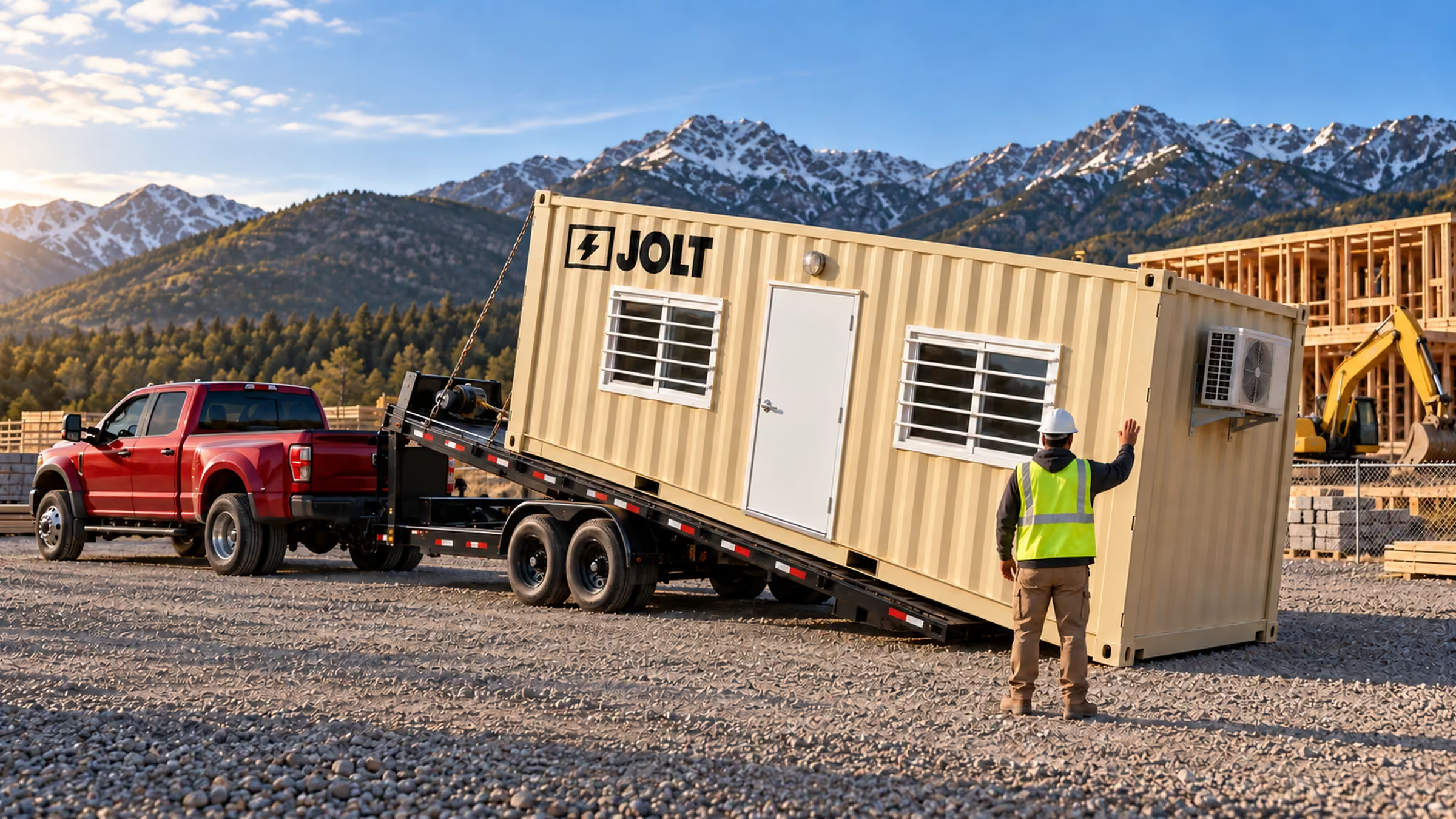
The clearance is a working lane, not simply an empty rectangle the same size as the box. A tilt-bed truck backs into line, raises its bed and lets the container move rearward while the truck creeps out from underneath it, so the vehicle must occupy and then leave the lane.
For a 20 ft delivery, figure roughly half of the 70 ft for the truck itself, 20 ft for the box, and the balance for the cab to pull forward without meeting a fence, parked pickup or material pile. The actual vehicle and approach set the final geometry, which is why JOLT reviews the route before dispatch.
A 40 ft unit extends the setup and changes how quickly the driver can clear the box as it comes off the bed. The required straight run grows to about 100 ft, even though the finished placement consumes only 40 ft. The 40 ft office with bathroom therefore needs more delivery room than the 20 ft storage container.
| 20 ft unit | 40 ft unit |
|---|---|
| About 70 ft straight | About 100 ft straight |
| Shorter bed and box movement | Longer bed and box movement |
| Firm, level, well-drained pad | Firm, level, well-drained pad |
| Clear lane, turns and overhead | Clear lane, turns and overhead |
The measurement starts where the truck can get straight, not necessarily at the property line. A 70 ft driveway with a sharp bend at its midpoint does not provide 70 ft of usable line. Measure from the point where the truck has fully completed its turn through the farthest obstacle ahead of the cab.
How wide and tall must the approach be?
JOLT asks for 12 ft of clear lane as a working minimum; that is our rule, not a Colorado code figure. A container is 8 ft wide, while Colorado State Patrol lists 8 ft 6 in as the legal vehicle-width limit without a permit under C.R.S. 42-4-502. Mirrors, steering corrections and uneven shoulders require air beyond the steel box.
Measure the narrowest opening between hard obstacles rather than the width of the pavement. Gate hinges, stone columns, roof overhangs, parked equipment, snowbanks and branches can each take away usable width. A 12 ft opening also becomes less useful when the truck must enter it while turning.
Colorado's general legal road-height limit is 14 ft 6 in under C.R.S. 42-4-504, except on designated routes. That figure is a ceiling for travel, not enough proof that a placement lane is safe: the bed rises while unloading, and the rear of the tilted bed needs more open air than the truck uses while driving level.
Look for service drops, communication lines, gate headers, eaves, tree limbs and temporary job wiring. Do not estimate wire height from the ground or assume the driver can push a branch aside. Photograph each overhead restriction from the side, and arrange for the responsible utility or owner to address it before delivery.
How much turning room does the truck need?
A straight approach beats a large-looking area reached through a tight turn. The rear of the truck has to point at the final container line, and the cab needs room to swing as the driver corrects. Backing into the site is normal because the container leaves from the rear.
Do not use passenger-car tracks to judge the turn. Colorado allows up to 45 ft for a single vehicle and 70 ft for a combination without a length permit, and a delivery vehicle can use substantially more road while turning than a pickup. Those statutory limits describe the road envelope, not JOLT's truck length.
Walk the approach from the public road to the pad in the direction the truck will travel. Check both inside and outside of every bend for ditches, guardrails, retaining walls, gate controls, trees and stored materials. Then look at where the cab will go after the container touches down, because unloading still requires a forward exit.
If the proposed spot forces a blind turn against a building, shift the pad to preserve one straight backing line. Moving a container location by 10 or 20 ft before mobilization is usually simpler than trying to create turning room after excavation, fencing and deliveries occupy the site.
Container delivery on mountain sites covers grades, switchbacks and seasonal route issues in more depth. The related answer on what size truck delivers a container explains why vehicle type changes the setup.
What kind of ground can take a tilt-bed delivery?
The placement area and truck route must be firm, level and well drained under Rental Agreement §5.2. That requirement applies to the pad under the container and to the lane supporting the loaded truck. A hard pad beyond a soft shoulder does not solve the approach.
As the bed tilts, load shifts toward the truck's rear and the placement end. Soft fill, saturated soil and an unsupported pavement edge can rut or settle under that concentrated loading. Spring mud can turn a route that worked in February into an unacceptable approach after thaw.
Grade the pad so the four corner locations share one plane and runoff moves away. ISO containers bear on their four corner castings on hard ground, so a high corner or settling support can leave the doors binding. The customer selects the placement and remains responsible for site damage from that direction under Rental Agreement §5.4.
Mark buried utilities, septic components, vaults, irrigation and recently trenched lines before dispatch. The customer is responsible for utility marking and site suitability; a visual layer of gravel does not establish what supports it. Keep the driver off concrete that has not reached its specified strength and away from unsupported edges.
In winter, plow the full lane rather than two tire tracks. Remove packed snow and ice from the pad, doors and access route as required by Rental Agreement §7.4, then sand the approach where traction is uncertain. Preserve the 70 ft or 100 ft line instead of pushing the snow into its end.
Which site layouts cause the most trouble?
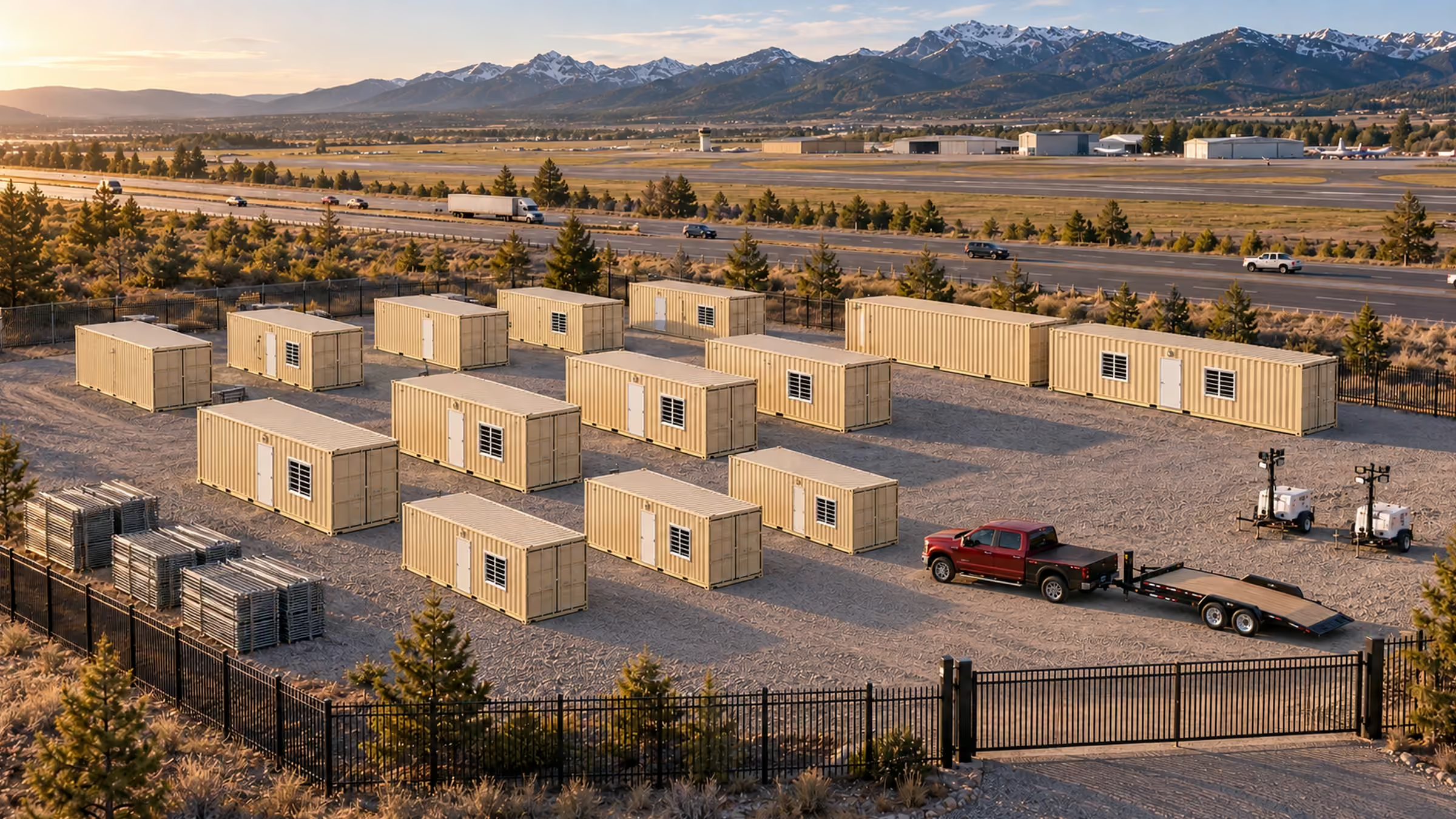
Different addresses fail for different reasons. A suburban driveway may have enough measured length but no cab swing, while a large mountain lot can be blocked by snow storage or a steep final grade. The practical fix is to identify the constraint before assigning the final corners.
| Site scenario | Likely problem | Practical fix |
|---|---|---|
| Residential driveway in Golden | Gate posts, eaves or no forward run-out | Measure the narrow point and move the placement toward a straight approach |
| Alley in Denver | Parked vehicles, wires and a hard 90-degree turn | Secure legal access and consider a different private-property placement |
| Ski-area lot in Keystone | Snowbanks, guest traffic and overhead fixtures | Plow the full lane and schedule site control around the truck |
| Ranch road near Gypsum | Soft shoulders, culverts and tight gates | Confirm the supported width and straighten the gate approach |
| Downtown Aspen lot | Restricted staging, pedestrians and material congestion | Clear a controlled backing lane before arrival |
The table is a screening list, not approval of any address. Photos can hide grade and distance, and a map pin can land on the building rather than the entrance. JOLT reviews the actual route, placement plan and current conditions before dispatch.
For a constrained public street or alley, the customer still handles permits and approvals. Local rules may regulate occupancy, traffic control and temporary structures separately. Confirm those requirements with the authority having jurisdiction rather than treating delivery clearance as permission to place the unit.
What happens on delivery day?
The authorized representative should arrive before the truck and remain where the driver can communicate without entering the backing path. That person needs authority to confirm final position and door orientation, since the driver should not choose between conflicting field instructions.
Open and inspect the route
Remove vehicles, fence panels, pallets and equipment from the full working lane. Verify that the gate is unlocked and that snow or mud has not changed the approach.Confirm utility marks
Show the driver marked utilities, septic areas, vaults and ground that cannot carry the truck. The customer is responsible for those marks under Rental Agreement §5.2.Mark the final corners
Stake or paint all four corners and identify which end receives the doors. Keep enough clear ground beyond the marks for the unloading movement.Meet before backing
The one authorized representative reviews the route with the driver from a safe standing area. All other workers stay outside the truck and container path.Watch from the designated area
Follow the driver's direction and never stand behind the bed, beneath the raised bed or between the container and a fixed object. Stop unrelated site traffic until the truck leaves.Check the placed unit
After the driver releases the area, inspect door operation, corner contact and drainage. Preserve the same access for eventual pickup.
Placement is controlled work, not a spectator task. Keep workers, residents and guests out of the lane, designate one person to communicate, and pause the operation if weather, ground movement or an unexpected obstacle makes the planned move unsafe.
What if the truck cannot make the delivery?
If the truck arrives and cannot deliver because the site is unsuitable, blocked or unprepared, the original trip fee is owed along with the next delivery trip under Rental Agreement §5.3. Waiting time is billed by the hour after the first 30 minutes. Clearing the lane while the truck waits can therefore create both schedule and cost exposure.
The same issue applies when the marked location changes after dispatch. A second spot may have different clearance, soil, grade or utility conflicts, and the driver cannot treat it as approved merely because it is on the same parcel. Send changes before the delivery day for review.
The truck also needs an exit. Do not close a gate, stage a concrete truck or allow subcontractors to park behind it once unloading begins. A representative should control both ends of the working lane until the delivery vehicle is back on its departure route.
Customers may not move or lift a rental unit themselves under Rental Agreement §5.5. If project phasing changes the location later, JOLT can perform an on-site relocation for $450 after reviewing the new route and pad.
What should you send before the site review?
Send a dropped pin for the property entrance and a separate pin for the proposed container corners. Include the direction the cargo doors or office door should face, because reversing orientation changes where the truck must line up. A site plan with the 70 ft or 100 ft lane marked is more useful than an address alone.
Provide photos looking into the entrance, through every turn, down the final straight lane and back out from the pad. Add a side view where grade changes, and place a worker or measured object in frame when scale is unclear. For a narrow gate, report clear width between the closest hard points.
State whether the route crosses a bridge, culvert, septic system, soft shoulder, fresh trench or private road. Also identify gate codes, delivery-hour restrictions, HOA or landlord conditions and active work that could block access. The customer is responsible for permits, approvals and consents under §5.2.
Conditions change quickly between reservation and delivery in the mountains. Update the photos after major snow, thaw, excavation or material staging rather than relying on an earlier view. Review the published delivery zones and fees and pricing separately; paying a zone fee does not establish that the address is physically accessible.
What should be ready before you reserve?
Choose the unit length, mark a firm and level pad, and measure one continuous straight run: about 70 ft for a 20 ft box or 100 ft for a 40 ft box. Record the narrowest width, every overhead restriction, the steepest approach and each turn from the public road.
Have the entrance pin, placement pin, door direction and current photos ready. Identify the authorized delivery representative and confirm utility marks, permits, owner consent and route access. Keep the approved lane available for both delivery and the pickup requested with at least 15 days' written notice under Rental Agreement §16.
Questions contractors ask
How much straight space does a 20 ft container delivery need?
Plan on about 70 ft of straight-line clearance for a 20 ft unit. That distance gives the truck, the 20 ft box and the driver's forward run-out room to work.
How much straight space does a 40 ft container delivery need?
Plan on about 100 ft of straight-line clearance for a 40 ft unit. The longer box needs more bed and run-out room, and the full 100 ft should remain free of parked vehicles and materials.
How wide should the container delivery lane be?
JOLT asks for 12 ft of clear working width as a practical minimum, although each approach is reviewed on its actual geometry. An 8 ft container still needs truck-mirror clearance from gate posts, walls, trees and equipment.
How much overhead clearance does container delivery require?
Colorado permits a legal road height of 14 ft 6 in on most routes, but the tilting bed rises above normal travel height during placement. Keep branches, wires and headers well above 14 ft 6 in, then send photos if any overhead object is close.
Can a container be delivered around a tight corner?
A straight approach is more useful than a nominal turning-radius number because the truck must align its rear with the final pad. Send at least three photos showing the entry, corner and placement lane so JOLT can review the turn.
What surface is needed under a shipping container?
The placement area must be firm, level and well drained under Rental Agreement §5.2. Prepare all four corners so the container lands evenly, and do not direct the truck onto soft fill, spring mud or an unmarked septic area.
What happens if the delivery truck cannot reach the spot?
Under Rental Agreement §5.3, the trip fee and the next delivery trip are owed when site conditions prevent delivery. Waiting time is also billed by the hour after the first 30 minutes, so clear access before the truck arrives.
Who must be present for container delivery?
The customer must have one authorized representative present under Rental Agreement §5.2. That person should know the final corner marks, door direction and route before the driver starts backing.
Keep reading
- Rent20 ft storage container — $295/month, delivered
- Rent40 ft field office with a bathroom — for the long job
- LocationJobsite rentals in Golden — from our I-70 yard
- LocationJobsite container and office rental in Keystone
- AnswerThe truck that delivers your container — and what it needs
- GuideWhat your site needs before the truck shows up
- JOLTDelivery zones, fees and windows from our Gypsum yard
- JOLTPrices. All of them.
Ready when your site is.
Rentals from $85/mo · every price published
A deposit holds your delivery window. Cancel free of charge more than 14 days before the first day of the window. Deposits from $85 are applied to your first invoice.