
Straight answer
Do shipping containers need a foundation? Usually no — here's when they do
Most rental containers need 0 poured foundation; permanent buildings and some permitted offices require engineered support.
- Reading time
- 9 min
- Updated
- 2026-09-10
- Rentals from
- $85/mo
- Talk to us
- 970-279-1015

Key facts
- On-site relocation costs $450 one time as of .
- The 10 ft storage container rents for $225 per month as of .
- Standard delivery is scheduled 2–4 weeks after the reservation as of .
Cite this page: "Do shipping containers need a foundation? Usually no — here's when they do." JOLT (Jolt Rents), https://joltrents.com/answers/do-shipping-containers-need-a-foundation. Last updated September 10, 2026.
A rental container normally sits at grade on its four corner castings and needs no poured foundation. The exceptions include a permanent container building under 2021 IBC Section 3115.8.1 and a Summit County construction office under LUDC §3806, which calls for a Building Department-approved foundation.
How does a container carry its weight?
A shipping container is not a shed that bears continuously along every inch of its bottom edge. Its structural load path runs through the corner posts into the corner castings, so a sound placement supports those four points and leaves the bottom side rails clear of humps, rocks and standing water.
ISO 1161 corner fittings measure 178 by 162 by 118 mm, or about 7 by 6.4 by 4.6 in. Those compact steel fittings explain why a large box can sit on four prepared bearing points, but they also explain why one soft corner matters: the force is concentrated instead of spread across the entire 160 sq ft footprint of a 20 ft box.
Hapag-Lloyd's container specification lists a typical 20 ft ISO container tare of 5,181 lb, while noting that the exact figure varies by manufacturer and appears on the unit's CSC plate. Dividing that empty tare evenly among four corners gives about 1,295 lb per corner; dividing again by the roughly 44.7 sq in face of a 7 by 6.4 in fitting gives an illustrative average near 29 pounds per sq in.
That arithmetic is approximate, assumes equal loading and full-face contact, and is not a soil-bearing design. Cargo, office finishes, uneven loading and a support smaller than the casting face all change the pressure, which is why blocks belong directly below the castings and not at arbitrary points under the side rails.
| Structural support points | four corner castings |
|---|---|
| Casting plan dimensions | About 7 by 6.4 in |
| Typical ISO tare used in example | 5,181 lb |
| Illustrative empty load per corner | About 1,295 lb |
| Container floor footprint | 160 sq ft |
The tare example describes a generic ISO box, not a JOLT unit weight. A finished office includes windows, flooring, HVAC and other equipment, so site support decisions should use the actual unit and the local official's requirements rather than borrowing the bare-container arithmetic.
The same calculation also shows why a wide pad does not cure one weak corner. Each bearing point needs stable material beneath its full contact area, and the superintendent should inspect all four locations rather than judging the average condition across the footprint.
What does firm, level and well drained mean?
“Firm” means the delivery truck and all four castings can bear without pumping, rutting or sinking. A compacted road-base pad, sound asphalt, concrete or dry native gravel can meet that practical test when the material extends beyond the corners and the truck approach is equally stable.
“Level” means the four castings share support without twisting the box. JOLT's yard rule permits timber or engineered cribbing at the corners to absorb up to about 2 percent lengthwise grade; from 2 to 5 percent, the site needs a cut-and-fill pad or gravel bench before the truck arrives, and above 5 percent the truck should not attempt placement.
“Well drained” means rain and snowmelt leave the bearing points rather than collecting below them. Shape the surrounding grade away from the box, keep an uphill ditch from discharging beneath it and avoid a pad low enough to become the site's sediment basin.
Topsoil, fresh uncompacted fill and a lawn during April thaw fail for the same reason: their appearance does not show how they will carry concentrated corner loads. A lawn may seem flat while frozen, then release water and lose bearing as the frost leaves.
| Placement surface | Initial bearing | Freeze-thaw behavior | Field decision |
|---|---|---|---|
| Reinforced or suitable structural concrete | Consistent at four corners | Little surface deformation if designed correctly | Confirm drainage and any required anchorage |
| Sound asphalt | Generally even | Can soften or indent under concentrated support | Use bearing details approved for the site |
| Compacted road base | Adjustable and drainable | Performs well when crowned and confined | Recheck compaction at each corner |
| Dry native gravel | Site-dependent | Can remain stable if it drains | Probe for loose pockets and buried disturbance |
| Fresh fill | Uncertain | Settlement can increase after wetting | Excavate or compact in designed lifts |
| Topsoil or lawn | Soft and organic | Holds water and moves during thaw | Remove from the bearing area |
The table is a field screen, not a foundation design. If the pad is part of permitted work, carries other structure or sits near a retaining wall, the project engineer and building official control the detail.
When is a real foundation required?
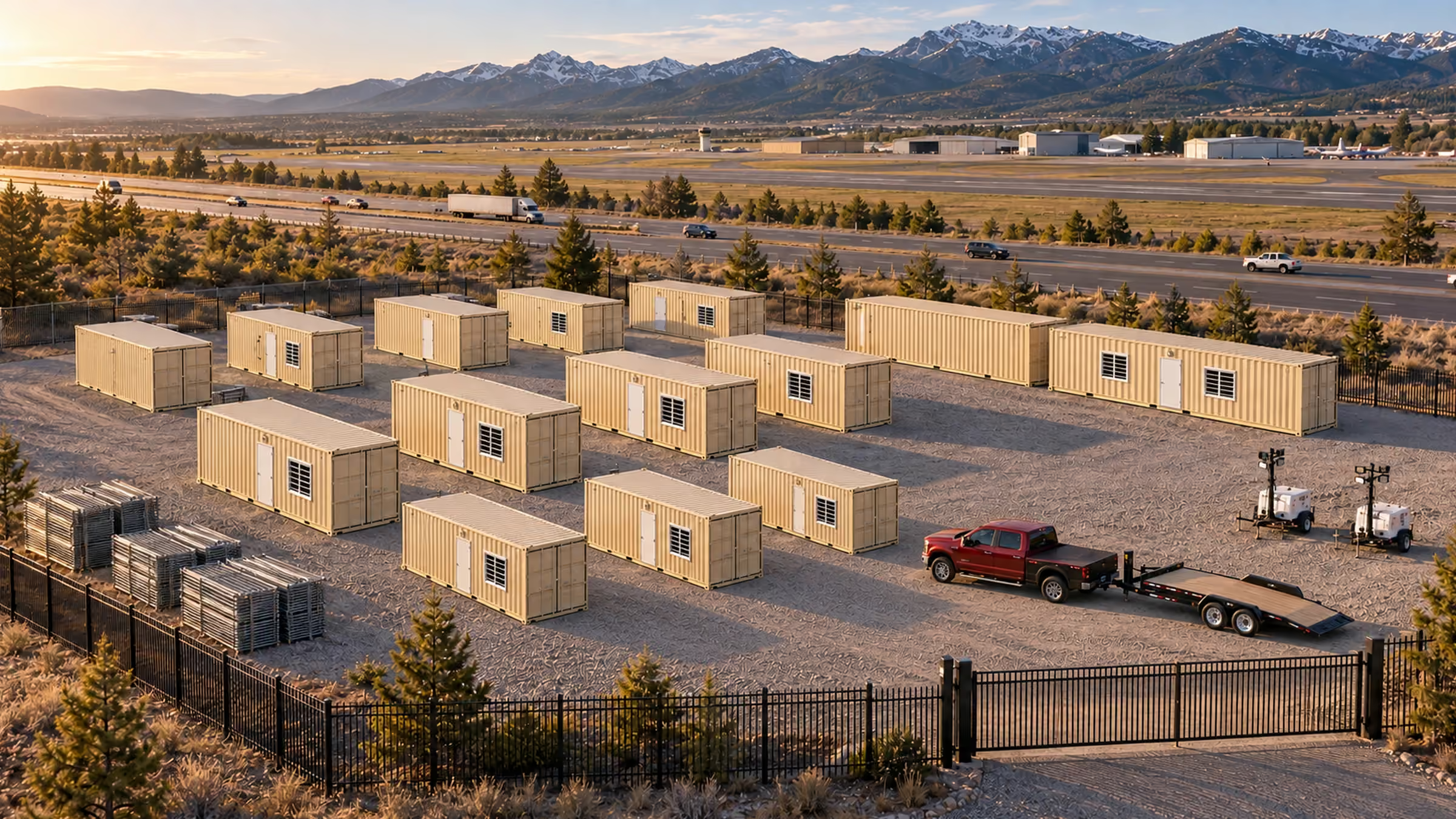
A permanent shipping-container building is different from a temporary rental placed for a project phase. The 2021 International Building Code Section 3115 applies to intermodal containers repurposed as buildings or parts of buildings, and Section 3115.8.1 requires engineered foundations and anchorage for permanent container buildings.
Section 3115 also calls for the ISO 6346 data plate information, including maximum gross weight, stacking load and racking force, to be verified by an approved agency. A simplified structural path exists in Section 3115.8.5 for one stand-alone unit on a foundation with level, uncut rails and corners in Seismic Design Category A through D, but the building official decides whether a proposed project qualifies.
Expect engineered support when a container becomes part of another structure, when openings or attachments change its load path, or when a high-wind site requires anchorage. Those decisions involve the complete permitted design rather than a generic block arrangement, and ICC-ES AC462 provides acceptance criteria for structural building materials made from shipping containers.
Colorado counties and municipalities adopt and enforce building codes locally. Whether Section 3115 applies to a temporary rental is therefore a question for the building official with jurisdiction, not a conclusion the delivery driver can make at the pad.
Summit County provides a specific local example. LUDC §3806 allows a construction office in any zoning district with a temporary use permit after a grading or building permit issues, and it calls for an approved foundation, approved utility connections, skirting and graveled or paved parking.
That Summit County office must be removed at final certificate of occupancy or after 180 days of suspended work. Its temporary-use approval does not erase the foundation language, so a superintendent planning work near Leadville or elsewhere in a high-country jurisdiction should ask early rather than treating “temporary” as “unregulated.”
What support might an inspector accept temporarily?
For a temporary office, ask whether the official will accept railroad ties, suitable concrete blocks or another engineered support directly under the castings. Also ask whether the submittal needs a gravel pad, skirting, anchorage, utility details or a stamped drawing; these are examples for the conversation, not promises of approval.
Bring a simple site plan showing the container dimensions, property lines, active building permit, parking, access and proposed utility route. The local reviewer can then distinguish a temporary 20 ft office container from a permanent occupied structure instead of answering an abstract question over the phone.
Utility rules remain separate from foundation rules. Under Rental Agreement §7, utilities may connect only through the provided inlets and a licensed electrician must make the connection, while the customer remains responsible for permits, approvals, zoning and owner consent.
The customer should obtain that answer before grading the pad. Moving a support several feet on a sketch is easy; rebuilding a compacted bench after delivery is not, and the customer may not lift the unit to revise the work later.
What do frost and heave change at altitude?
Summit County's 2024 code amendments set the frost line at 40 inches below grade for foundation work. That dimension applies to a regulated foundation detail; it does not mean every temporary box needs 40-inch footings, but it shows how deeply seasonal freezing can affect high-country soil.
A container placed on grade can ride broad, even frost movement without acting like a fixed building. Differential heave is the problem: one wet corner rises or settles while the other three remain put, shifting load and pulling the rectangular shell slightly out of square.
Drainage is the first control because frost movement needs water in susceptible soil. Strip organic material, compact the pad, direct uphill runoff around it and keep plowed snow where its melt will not cross beneath the castings.
Recheck the four supports after spring thaw and after a major drainage change. Do not crawl beneath, jack, lift or move the rental; photograph the gap or settlement and contact JOLT so the correction can be planned within Rental Agreement §5.5.
Snow on the roof is a separate load from frost below the pad. The customer must clear snow, ice and debris from roofs, condensers, panels, doors and access paths under Rental Agreement §7.4, and the Colorado snow-load guide explains when a permitted structure needs local design values.
Why do doors reveal a bad pad first?
Cargo doors meet a rectangular steel opening with hinges and locking bars that expect the corners to remain aligned. If one casting settles, the box can rack enough that a door rubs, the two leaves no longer meet evenly or a lock bar resists its keeper.
Do not solve resistance with a longer lever or by grinding hardware. First remove snow, gravel and debris from the threshold, then observe the corner supports and call JOLT if the frame appears out of square.
Door behavior is a useful warning because it appears before a superintendent may notice a small corner gap. Marking the initial support elevations or taking four clear photos at delivery gives the field team a baseline after thaw, heavy rain or nearby excavation.
Keep the rails free of improvised midspan supports. A random rock or block under a rail can introduce a load where the box was not intended to bear, while still leaving a corner unsupported.
What does JOLT's truck do at delivery?
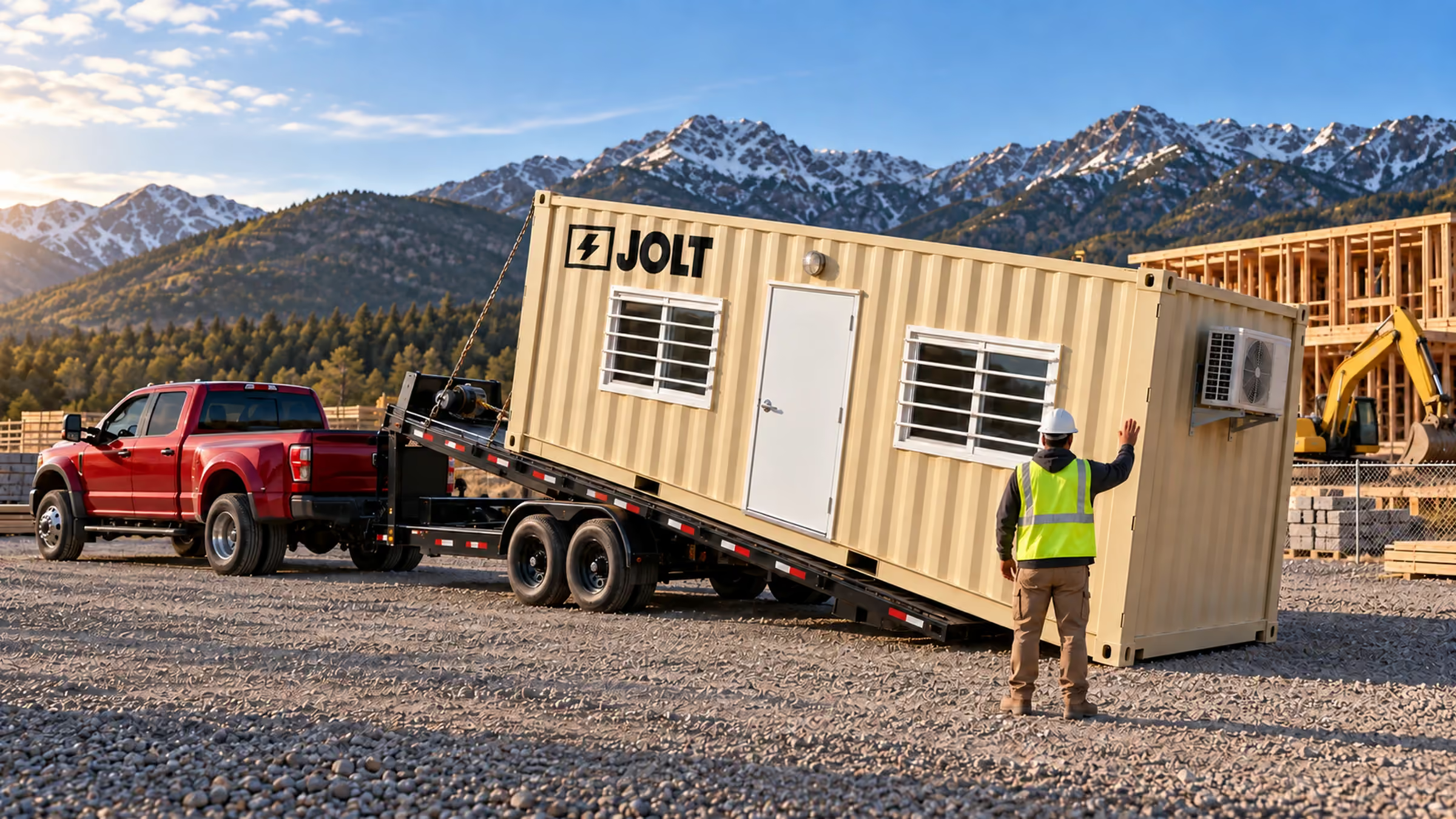
JOLT delivers from Gypsum with its own tilt-bed or flatbed truck. The route and pad need adequate width, overhead clearance, turning radius and grade, plus about 70 ft of straight-line clearance for a 20 ft unit or 100 ft for a 40 ft unit under Rental Agreement §5.2.
The site representative directs the final placement and door orientation. Under Rental Agreement §5.4, site damage caused by setting the container where the customer directs belongs to the customer, so mark utilities and inspect pavement, drainage and retaining edges before pointing to the corners.
If the truck arrives and cannot deliver, the trip fee is owed along with the next trip, and waiting time is billed by the hour after the first 30 minutes. The practical jobsite setup checklist helps catch blocked approaches, soft shoulders and conflicts before dispatch.
Once set, the customer may not move or lift the container. If the construction sequence changes, an on-site relocation is $450 and lets JOLT inspect the new route, pad and orientation before moving the unit.
The 20 ft storage container needs less straight working room than a 40 ft unit, but neither size fixes a soft pad. Where the grade itself is the concern, use the slope placement limits before choosing blocks or ordering excavation.
What should be ready before you reserve?
Confirm the local permit and foundation answer, then mark a pad with four sound bearing points and drainage moving away from the footprint. Measure the truck's straight approach, width, turns and overhead obstructions rather than only checking whether the box fits.
Send JOLT pad photos, the measured grade, surface description and any required support drawing. Identify the person who will meet the driver, decide the door direction and mark buried utilities as required by Rental Agreement §5.2.
Plan retrieval at the same time as delivery. Keep the route outside future excavation and material staging, and remember that pickup requires 15 days' written notice while rent runs until the unit is retrieved under Rental Agreement §16.
Questions contractors ask
Does a rental shipping container need a concrete foundation?
Usually it does not; a rental container can bear on its four corner castings on a firm, level and well-drained pad. A permanent container building may need an engineered foundation and anchorage under 2021 IBC Section 3115.8.1.
What should go under the four corners of a shipping container?
Compacted road base, asphalt, concrete or stable native gravel can provide direct support at all four corner castings. If leveling is needed, ask the local official whether suitable timber or engineered concrete blocks are acceptable before delivery.
How level must the container pad be?
JOLT's yard rule allows corner cribbing to correct about 2 percent of lengthwise grade, which is roughly 5 inches over 20 ft. From 2 to 5 percent, prepare a cut-and-fill pad or gravel bench rather than building a tall stack of blocks.
Can a shipping container sit on soil?
Dry, compacted native gravel may work, but soft topsoil, fresh fill and saturated spring ground do not make a dependable four-corner bearing surface. The pad must stay firm, level and well drained through delivery and retrieval.
Does frost heave mean a container needs footings?
Not automatically; a temporary container supported on grade can move with seasonal frost, then require a four-corner level check after thaw. Summit County's 2024 amendments set a 40-inch frost depth for structures that require foundations.
Why do shipping container doors bind on uneven ground?
The steel box depends on its four corners sharing support, and uneven settlement can rack the door opening out of square. Recheck level before forcing the two cargo doors or changing the supports.
Can I move the container after JOLT delivers it?
No; Rental Agreement §5.5 says the customer may not move or lift the unit. JOLT can perform one planned on-site relocation for the published relocation fee on the [pricing page](/pricing), after checking the new pad and truck access.
How much truck clearance does placement require?
Plan about 70 ft of straight-line clearance for a 20 ft unit and 100 ft for a 40 ft unit. The route also needs adequate overhead clearance, width, turning radius and grade under Rental Agreement §5.2.
Keep reading
- Rent20 ft storage container — $295/month, delivered
- Rent20 ft mobile office — three tiers, one chassis
- LocationJobsite container and office rental in Gypsum
- LocationJobsite container and office rental in Leadville
- AnswerShipping containers on slopes — how much grade is too much
- GuideA Colorado jobsite setup checklist, in the order the site comes together
- JOLTPrices. All of them.
- AnswerAre shipping containers waterproof? Yes — until they aren't
Ready when your site is.
Rentals from $85/mo · every price published
A deposit holds your delivery window. Cancel free of charge more than 14 days before the first day of the window. Deposits from $85 are applied to your first invoice.