
Straight answer
Working in a container office through a Colorado winter
Run a 20 ft container office through winter with a daily snow routine, reliable power, dry access and a placement plan for plows.
- Reading time
- 9 min
- Updated
- 2026-09-11
- Rentals from
- $85/mo
- Talk to us
- 970-279-1015

Key facts
- The Base 20 ft office container rents for $795 per month as of .
- The environmental fee is 5% of monthly rent plus recurring upgrades as of .
- JOLT Express delivery costs $750 on top of the zone fee as of .
- On-site relocation costs $450 one time as of .
- READY rents for $125 per month on top of the unit rent as of .
Cite this page: "Working in a container office through a Colorado winter." JOLT (Jolt Rents), https://joltrents.com/answers/can-you-work-in-a-shipping-container-office-in-winter. Last updated September 11, 2026.
Yes, you can work in a shipping container office through a Colorado winter when it has dependable heat, a cleared entrance and a daily operating routine. A 20 ft Base office rents for $795/mo with a 3-month minimum, while winter site work remains the customer's responsibility.
What makes the office usable all winter?
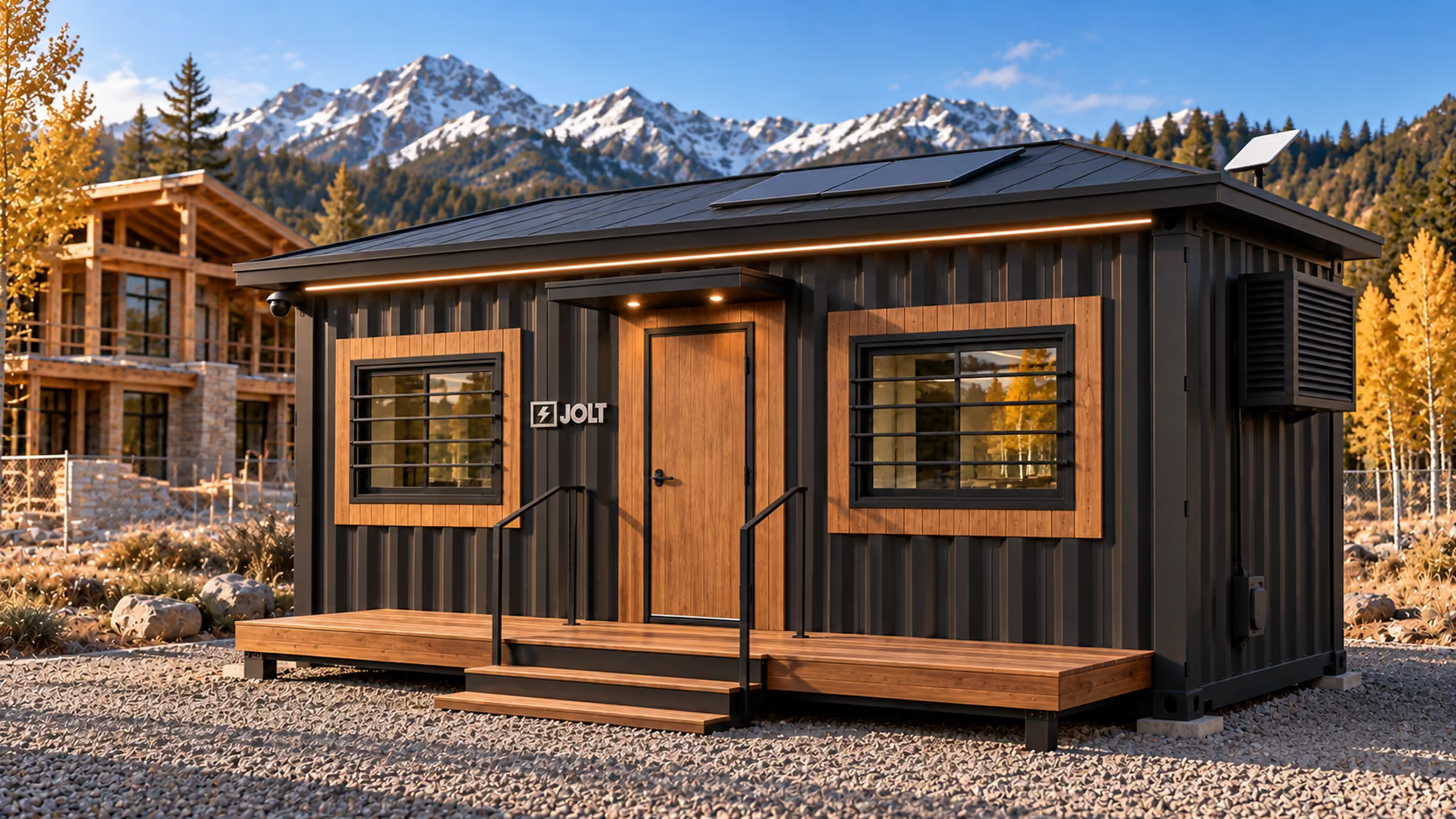
The office itself supplies the basic enclosure: insulation, a steel personnel door, two barred slider windows, lights, outlets, vinyl-plank flooring and mini-split heat and cooling. The site must supply the pad and access; Base and the 40 ft office also need electricity through the 50-amp shore-power inlet.
Daily discipline matters as much as equipment. Someone has to open a cleared path in the morning, inspect the condenser, check power, knock snow from boots and make sure the door closes after every trip. Assign those tasks rather than leaving them to whoever arrives first.
Winter use also depends on the work planned inside. A two-person document review asks little from a 20 ft room. A steady line of wet boots, an open door and people carrying materials can overwhelm the same setup even though the heater is operating normally.
The detailed container-office heating answer covers heat-pump behavior, backup heat and electrical load. For operations, the important point is simpler: know what powers the assigned office, and have a response when that source stops.
Where should the office sit before snow arrives?
Start with delivery requirements. A 20 ft unit needs a firm, level, well-drained surface and about 70 ft of straight-line truck clearance, plus overhead clearance and marked utilities. Review the mountain delivery access guide before fencing, trailers and stored material narrow the route.
Then draw the winter site, not the summer site. Mark the plow lane, snow-storage areas, prevailing drift side, worker path and the truck's future retrieval route. A pad that works in October can become an island after three storms if every windrow lands between it and the gate.
Use winter sun when the safe placement options permit it. Sun on the approach can reduce persistent ice, while a shaded north-side walkway may remain slick between storms. Sun is only a secondary criterion; stable support, drainage, safe circulation and truck access come first.
Keep the condenser out of the planned snow pile. It needs open airflow and space for defrost water. Leave enough working room for a person to inspect and clear it without stepping into equipment traffic.
The customer is responsible for permits, HOA or landlord consent, located utilities and a representative at delivery under Rental Agreement §5.2. If conditions are not ready, a failed delivery trip is charged. Customers may not move the unit themselves after placement.
What should the crew check each day?
Use one written checklist and put a name against it. The superintendent can delegate inspection, but should not have to guess whether the night shift cleared the outdoor equipment or whether a breaker tripped before dawn.
| Winter item | Responsible party | Timing |
|---|---|---|
| Clear door and walking path | Site crew | Before first occupancy and during storms |
| Clear roof, condenser and solar panels | Site crew using the project safety plan | After accumulation and as conditions change |
| Confirm heat and electrical supply | Assigned office lead | Start and end of each shift |
| Remove boot water and wet floor debris | Office users | Throughout the day |
| Preserve plow and retrieval route | Superintendent and plow operator | Before each storm |
| Check forecast and pass conditions | Delivery contact or superintendent | Before delivery and major mobilizations |
| Keep equipment empty and accessible | Customer | Before retrieval |
Rental Agreement §7.4 requires the customer to keep snow, ice and debris clear of roofs, condensers, panels, doors and access paths. Failure to clear snow load is excluded from the damage waiver under Rental Agreement §12.
Use a safe roof-clearing method approved by the project's safety lead. A container roof covered in ice is not a casual walking surface. The snow-load guide can inform the plan, but the project's responsible party decides the safe procedure.
Document unusual conditions with a time and photo. A record helps the next shift understand whether drifting returned, whether the condenser area iced over, or whether a plow route needs to change before another storm.
How do you control wet boots and condensation?
People bring winter moisture through the door on boots, coats and snow-covered plan sets. Put a mat inside the personnel door, remove standing water promptly and keep paper storage away from the wet entry zone. Vinyl-plank flooring makes the surface practical, but it still needs housekeeping.
Warm interior air can hold more moisture than cold surfaces. When moist air contacts a cold surface, water can condense. Manage the moisture source, keep heat steady and use ordinary ventilation when conditions allow rather than letting damp gear accumulate for a week.
Do not drill the wall for hooks or alter the unit to add ventilation. Welding, cutting, drilling, painting and other alterations are prohibited under Rental Agreement §7. Use freestanding storage and removable floor protection that does not damage the office.
Keep snow away from the door seal and threshold so the steel door can close and latch. A door held open by ice wastes heat and allows more blowing snow inside. Clear it during the storm instead of waiting for a frozen ridge to build overnight.
Condensation is an operating issue, not proof that the office is leaking. If water appears in a pattern that suggests a defect rather than tracked snow or ordinary condensation, report it promptly and preserve the area for inspection.
Which tier fits winter field work?
Base provides the core 20 ft office features, Grid-Free adds its off-grid systems, and Alpine includes Grid-Free plus its mountain envelope. The best choice depends on power status, exposure and whether the exterior winter features justify the higher tier for this project.
| Tier | Winter-relevant equipment | Best fit |
|---|---|---|
| Base | Insulated; mini-split heat and cooling; 50-amp inlet | Site with dependable inspected shore power |
| Grid-Free | Everything in Base; 10 kWh HVAC battery; solar; WATCH and CONNECT | Remote or pre-power site |
| Alpine | Grid-Free systems; mountain shell; over-roof; entry deck; backup heat | Exposed mountain placement needing backup heat |
The Alpine office is not an excuse to skip snow work. Its standing-seam over-roof and covered entry deck change how snow reaches the entry, while the customer still clears roofs, equipment and access paths.
Grid-Free and Alpine carry a 10 kWh battery designed to run HVAC and do not require shore power. Their solar panels need sunlight and must be cleared after snow. Network service and solar performance depend on weather and site conditions.
Base is often the cleanest answer after temporary electrical service is operating. It includes the same mini-split, lights, outlets and insulated enclosure without the built-in off-grid package. Confirm the electrical connection before delivery.
| Item | Price |
|---|---|
| $795 /mo | |
Most popular | $1,495 /mo |
| $1,895 /mo |


3-month minimum on every office; $750 reservation deposit.
Every tier has a 3-month minimum. Delivery and pickup are separate, zone-priced legs, and recurring invoices carry the 5% environmental fee and sales tax.
What belongs inside for a productive shift?
Bring only what supports the field office function: current drawings, charging equipment, communications, PPE storage and a dry place for forms. Keep aisles and the heater area open. A crowded 20 ft room loses its advantage if the door cannot open fully or people step over stored materials.
The READY upgrade supplies a plan table, two chairs, whiteboard, mini-fridge, microwave and 1,500 W heater. It turns an empty office shell into a basic two-person work setup without the crew sourcing and moving furniture.
READY's appliances and heater increase electrical demand. Check capacity with the electrician before assuming the microwave, heater, mini-split and every charger can operate together. A tripped breaker in a cold room is a load-management warning, not a reason to bypass protection.
For short winter days, exterior work may need a separate light tower. JOLT's trailer-mounted tower raises about 30 ft and carries four LED floodlights. Site lighting should be planned for work areas and circulation without aiming glare toward traffic or neighbors.
Do not store hazardous materials in the office, and do not use it for overnight sleeping or residence. Those uses are prohibited by Rental Agreement §7. The office is a place to manage the job, not storm lodging.
What should happen when power fails?
First determine whether the outage is at the office, the temporary service or the wider utility. Stop adding load, preserve battery energy where applicable, and notify the person responsible for site electrical systems. Only a qualified person should open or modify electrical equipment.
If a generator becomes the temporary source, keep it outdoors at least 20 ft from doors, windows and vents with exhaust directed away (CPSC guidance). Construction receptacles require GFCI protection or an assured equipment grounding program under 29 CFR 1926.404(b)(1), and NEC Article 590 covers temporary installations.
The POWER upgrade does not run the mini-split or READY heater. It serves Starlink, WATCH, LED lights, laptops and phones for about two days without sun. Do not discover that limit during an outage; reserve the Grid-Free office or Alpine when off-grid HVAC is required.
Set a response threshold in advance. Decide who checks the room, which temperature-sensitive items leave first, when a standby source starts and who can authorize work suspension. A plan written before the outage is faster than a phone chain at 5 a.m.
If frozen soil or a winter concrete operation is the problem, an office heater is unrelated. A ground heater circulates heated fluid through insulated hose to thaw ground and cure concrete. Keep field-production heat and occupied-office heat as separate equipment plans.
How does winter affect delivery timing?
The standard delivery window is 2–4 weeks from reservation. JOLT Express can place an eligible Base 20 ft office on site within 7 business days for $750, with the remedy for a missed Express window limited by Rental Agreement §5.1.
A delivery window is a window because mountain travel and active sites change. Pass closures, chain restrictions, snowfall and plowing can affect the exact route day. Reserve before the office becomes critical and keep the contact person reachable.
At Steamboat Springs, January lows average in the low single digits (NOAA 1991–2020 climate normals). Breckenridge sits near 9,600 ft and is reached from Gypsum over Vail Pass at Zone C — $750 each way, which is the kind of route that turns a delivery date into a delivery window.
Before the truck leaves Gypsum, send current photos of the final approach and pad. Old summer images do not show the berm at the gate, a narrowed switchback or a snow-covered overhead conflict. Keep the delivery representative on site to confirm placement.
For resort work, coordinate the office with the broader ski-resort site plan. Guest circulation, delivery hours and snow operations may limit where a truck can work even when the physical pad itself is ready.
What changes at spring pickup?
Give at least 15 days' written pickup notice. Rent continues until retrieval, and the office must remain accessible, empty and clean under Rental Agreement §16. Notice alone does not end the rental.
Spring mud can be harder on access than midwinter snow. Preserve the firm approach and do not let thawing shoulders become the only route for the retrieval truck. If the pad drains toward the access lane, correct the water path before a heavy vehicle arrives.
Remove furniture and project records, clear snow or stored material from all sides, and restore the straight-line truck path. Do not move the unit with site equipment. Customer relocation is prohibited, and a JOLT relocation is a separate service at $450.
Confirm the pickup route with the same care used for delivery. A failed retrieval trip is charged under §16, and rent keeps running until the equipment can be recovered.
What should you reserve?
Reserve Base for a powered site, Grid-Free for off-grid HVAC, or Alpine for off-grid HVAC when backup heat and its mountain exterior features suit the placement. Add READY when two people need furniture, basic appliances and supplemental heat, and reserve a light tower separately when short days leave active exterior work in darkness.
Send the address, delivery window, pad and approach photos, power status, plow map and primary site contact through reserve. Use the jobsite setup checklist to confirm access, utilities and winter duties before the delivery day.
Questions contractors ask
Can crews use a JOLT office below freezing?
Yes. Every office is insulated and has mini-split heat and cooling, provided the unit has the power its heating system requires.
Which office tier is set up for mountain winter work?
Alpine includes everything in Grid-Free and adds a mountain envelope, standing-seam over-roof, covered entry deck and backup heat.
Does winter change the required delivery clearance?
The requirement remains about 70 ft of straight-line clearance for a 20 ft unit, but snowbanks and parked plows can reduce the usable approach.
Who clears snow from the rented office?
The customer must keep roofs, condensers, panels, doors and access paths clear of snow, ice and debris under Rental Agreement §7.4.
What furniture comes with the READY kit?
READY includes a plan table, 2 chairs, whiteboard, mini-fridge, microwave and a 1,500 W thermostatic wall heater for $125/mo.
Can a light tower help during short winter days?
Yes. JOLT's trailer-mounted light tower has a mast reaching about 30 ft and 4 LED floodlights, and it rents for $1,250/mo.
How much notice is required for spring pickup?
Give at least 15 days' written pickup notice and keep the office accessible, empty and clean until JOLT retrieves it.
Can anyone sleep in the office during a storm?
No. Overnight sleeping and residential use are prohibited under Rental Agreement §7, regardless of weather or shift schedule.
Keep reading
- AnswerHeating a container office at 8,000 feet in January
- RentAlpine: the jobsite office that belongs on the property
- RentLight towers for the dark half of the year
- RentGround heaters — pour concrete in January
- GuideA Colorado jobsite setup checklist, in the order the site comes together
- GuideWhat your site needs before the truck shows up
- SolutionRentals for ski resorts
- JOLTPrices. All of them.
Ready when your site is.
Rentals from $85/mo · every price published
A deposit holds your delivery window. Cancel free of charge more than 14 days before the first day of the window. Deposits from $85 are applied to your first invoice.