
Straight answer
Jobsite theft: what gets stolen, and the six things that stop it
A six-step jobsite theft plan covering perimeter fence, locked storage, lighting, cameras, serial records and timed deliveries.
- Reading time
- 9 min
- Updated
- 2026-09-11
- Rentals from
- $85/mo
- Talk to us
- 970-279-1015

Key facts
- The 20 ft storage container rents for $295 per month as of .
- Temporary fence rents for $3.50 per linear foot per month as of .
- The light tower rents for $1,250 per month as of .
- WATCH rents for $129 per month on top of the unit rent as of .
- The reservation deposit on the 20 ft storage container is $350 as of .
Cite this page: "Jobsite theft: what gets stolen, and the six things that stop it." JOLT (Jolt Rents), https://joltrents.com/answers/how-to-secure-a-jobsite-from-theft. Last updated September 11, 2026.
A secure jobsite uses 6 overlapping controls: perimeter fence, locked steel storage, lighting, cameras, serial records and just-in-time delivery. Start with a 20 ft storage container at $295/mo and build the rest around the way people, tools and trucks actually enter the site.
What actually disappears from a construction site?
Heavy equipment theft gets the formal statistics. The National Equipment Register and National Insurance Crime Bureau report that only about 1 in 5 stolen pieces of construction equipment is recovered, with theft peaking in summer and on weekends (NER/NICB Equipment Theft Report). Mowers and tractors, loaders and backhoes, skid steers and excavators rank among the leading equipment categories.
The superintendent's daily loss list is usually less dramatic and more frequent. Hand tools, cordless kits, copper wire and generators can leave in a pickup without special transport. Those items rarely appear cleanly in national equipment statistics, but they can stop a crew just as surely as a missing machine.
| What is at risk | Where it should be after shift | Record to keep |
|---|---|---|
| Cordless tools and batteries | Locked tool chest inside a locked container | Serial number, photo and assigned crew |
| Copper, fixtures and small material | Counted bins inside controlled storage | Quantity received and quantity issued |
| Generator and compact equipment | Lit, camera-covered compound | Make, model, serial and current photo |
| Large mobile equipment | Immobilized in a closed work zone | Key log, hour reading and location |
| Deliveries not yet installed | Container or planned fenced laydown | Packing slip, delivery photo and custodian |
The pattern matters more than the category. Portable, useful and easy-to-resell goods are attractive. A pallet behind an open fence is not protected because it is heavy, and a key left in a machine defeats several expensive controls at once.
Treat internal loss and mistaken removal as part of the same problem. A sign-out record, labeled storage zone and end-of-shift count can identify a tool on another crew before anyone calls law enforcement. Colorado theft law is C.R.S. 18-4-401, but prevention begins with custody that the project team can explain.
When is the site most exposed?
Exposure rises overnight, during weekends and across holidays when normal activity drops. Summer also brings longer workdays, more deliveries and more equipment in the field, which matches the seasonal peak in the NER/NICB report. The useful planning fact is not a precise hour; it is that a quiet site gives an intruder time.
Look for transitions. The Friday concrete crew may leave a generator for Monday. A framing package can arrive after the superintendent has gone home. A gate held open for one subcontractor can remain open through the night because nobody was named to close it.
Build closing duties into the daily plan. The last responsible person checks personnel doors, cargo doors, keys, windows, fence openings, lights and alerts. That name should appear on the board, not live as a general expectation that everybody will remember.
Aurora infill work may have constant public traffic along a short perimeter. A project in Silverthorne may be quieter but sit dark for a snow weekend. The threat looks different, yet both sites need a deliberate last-person-out routine.
Which six controls should you put in place?
No single device secures a project. Fence delays entry, steel storage makes removal harder, light removes concealment, a camera creates notice, records improve recovery, and timed purchasing limits what is exposed. Use all 6 in proportion to the loss that could stop the schedule.
Fence the perimeter
Close the practical approaches with temporary fence, then concentrate legitimate traffic at a supervised opening. JOLT panels are 6 ft tall and 10 ft wide, supported in steel tube stands and joined with clamps. Fence rents for $3.50/LF/mo; installation and removal are separate measured-foot charges.
A panel line is a delay and a clear boundary, not a vault. Gates are not included in JOLT's price, and neither are windscreen or privacy screen. Mark access openings on the plan before reservation, inspect the line after wind or plowing, and use the panel calculator for the initial quantity.
Lock tools in a container
Move tools, copper and small equipment out of vehicles and open structures every shift. JOLT's one-trip 20 ft storage container has cargo doors with 4 lock bars and a welded lockbox. It has no windows or personnel door, reducing obvious entry points.
Control the key as carefully as the box. Keep a short issue list, prohibit shared hiding places and remove keys from parked machines. A lockbox shields the padlock area, but it cannot correct an unlocked door or an access code known by former workers.
Light the yard
Aim light at the gate, container doors, fuel or generator area, and routes between them. A light tower is trailer-mounted, raises its mast to about 30 ft and carries 4 LED floodlights. It rents for $1,250/mo.
Avoid creating a bright foreground with a dark pocket behind it. Walk the view from outside the fence after dark and adjust placement so a person cannot approach the storage door unseen. Confirm the operating details for the assigned tower at reservation and include its shutdown and refueling routine in the shift plan.
Put a camera on it
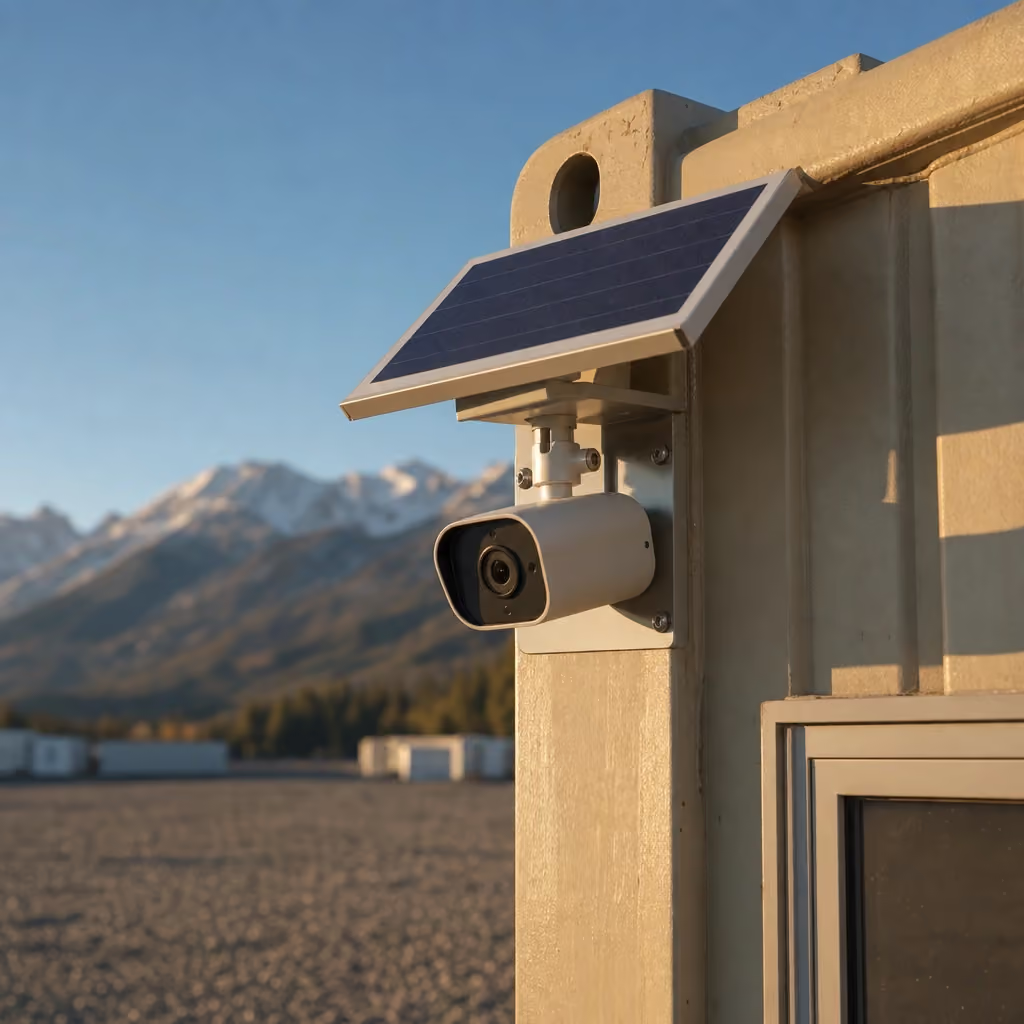
Put the lens where it sees the decision point: entry, storage doors or the equipment compound. WATCH is a solar LTE panoramic camera with motion alerts, cloud clips and night vision. It has its own battery and LTE SIM and rents for $129/mo on an eligible office or storage container.
LTE coverage, placement and lighting still control the result. A camera sees only its field of view, and an alert helps only if someone is assigned to receive it. The customer handles recording notices, signs and required consents under Rental Agreement §13.3. Use the construction camera selection answer for a deeper placement decision.
Log serials
Photograph each machine and tool kit before it enters general circulation. Record the manufacturer, model, serial number, identifying marks, assigned crew and normal storage position. Store a copy away from the site so the list does not disappear with a stolen laptop.
Update the record when equipment transfers between crews or leaves for service. Mark company property consistently, and include attachments rather than logging only the carrier machine. A clear record helps the sheriff, insurer and rental provider distinguish a verified loss from an uncertain inventory count.
Take delivery just in time
Bring valuable material in when labor, access and installation are ready. A lower quantity sitting idle means fewer targets and fewer counts at the end of shift. Ask vendors to call before arrival rather than dropping a load wherever the driver finds space.
Sequence copper, appliances, controls and finish hardware especially closely. If weather or inspection moves installation, shift the delivery too or put the goods directly into controlled storage. Just-in-time delivery does not eliminate procurement risk; it keeps that risk from becoming an unattended pallet for 7 nights.
What does the six-part program cost?
Price the controls against the probable interruption, not only the replacement tool. A missing compactor can halt one operation; stolen layout equipment can idle several crews. Recurring equipment should appear in general conditions for the months it is needed, with one-time fence labor and transport separated.
| Control | JOLT charge | Estimating note |
|---|---|---|
| 20 ft locked storage | $295/mo | 1-month minimum; $350 deposit |
| 6 ft temporary fence | $3.50/LF/mo | Measured linear footage; 1-month minimum |
| Fence installation | $1.75 per linear foot | One time |
| Fence removal | $1.75 per linear foot | One time at pickup |
| Trailer-mounted light tower | $1,250/mo | Confirm assigned-unit details |
| WATCH camera | $129/mo | Fits an eligible office or storage container |
Delivery and pickup depend on the destination zone. Recurring invoices also include the 5% environmental fee, sales tax and any selected upgrades. Use pricing to keep transport, deposits and monthly charges in separate estimate lines rather than hiding security in one allowance.
Who carries the loss if rented equipment is stolen?
The customer bears risk of loss and theft from delivery until retrieval under Rental Agreement §8. Lost or stolen rental equipment is billed at replacement value under §9. That exposure applies to the rented container, camera, fence parts and other equipment, not only to property stored inside.
The optional damage waiver does not turn theft into accidental damage. Theft, vandalism and damage to upgrade hardware are excluded under §12. Read that section before choosing between the waiver and the certificate-of-insurance route described in §10.
Your tools and materials require their own insurance and custody plan. Do not assume a rental provider's waiver covers the contents of a storage container. Give the risk manager the equipment list, site address, rental term and security plan before mobilization, then follow the insurer's reporting instructions after any loss.
If theft occurs, preserve the scene and notify law enforcement. Save camera clips, access records, delivery tickets, serials and recent photographs. Tell JOLT promptly if rented equipment or an upgrade is involved, rather than waiting until monthly inventory.
What should every crew member know?
Keep the rules short enough to use at 5 p.m. Keys return to one named place. Tools return to assigned storage. Nobody props open a container or cuts a convenience gap in the fence. Unexpected pickups wait until the superintendent verifies the driver and work order.
Subcontractor orientation should name the controlled entrance and closing time. Explain who can approve an after-hours visit and where a late worker signs in. Remove access for separated workers and collect keys the same day their assignment ends.
Delivery drivers need boundaries too. Show them the approved laydown area and require a receiver for high-value loads. A packing slip left on a superintendent's desk does not establish who watched the material after the truck left.
Use a simple challenge rule: if a person, truck or trailer is not expected, ask before opening the site. The goal is not confrontation. It is to pause movement until the superintendent or designated lead confirms it.
What belongs in the weekly security walk?
Daily closing catches today's mistake. A weekly walk finds drift: a fence return buried by excavation, a light aimed away from the gate, or an alert going to a former employee's phone. Schedule it with the same seriousness as a safety inspection.
| Check | Pass condition | Action if it fails |
|---|---|---|
| Fence line | Stands seated, clamps present, openings intentional | Close the gap and notify the responsible lead |
| Storage | Doors close, lock engages, key list is current | Correct before the crew leaves |
| Lighting | Gate and storage approaches are visible | Reposition equipment or restore operation |
| Camera | View is clear, LTE responds, recipients are current | Clear obstruction and test another placement |
| Inventory | Spot count matches issue record | Resolve transfer or report the loss |
| Deliveries | Next 7 days have receivers and storage space | Reschedule or prepare a secure laydown |
Walk from outside the property as well as inside. A stack that seems harmless from the work area may provide a step over the fence. A brightly lit banner may obscure the camera view. Trim the plan when site phasing moves the actual valuables.
Document the correction and owner, not just the observation. Repeated open gates are a process problem. If the delivery schedule changes the perimeter every week, redraw the controlled routes instead of relying on yesterday's line.
How do you reserve the right equipment?
Start with the storage volume, perimeter sketch, required camera view and the months each control must stay. Send the site address, desired delivery window, surface conditions and access photographs through reserve. Standard delivery is a 2–4 week window from reservation, so work backward from the first valuable shipment.
Reserve the 20 ft storage unit for daily tool control, temporary fence for the practical perimeter, a light tower for dark approaches and WATCH when an eligible container can see the gate or doors. Have linear footage, planned openings, power plan, LTE expectations and an on-site receiver ready when you request the quote.
Questions contractors ask
What is the first step in jobsite theft prevention?
Put one person in charge of the 6-step plan, then close the perimeter and establish one controlled entry before valuable material arrives.
What items are most often stolen from construction sites?
National reports emphasize mobile equipment, while contractors also lose hand tools, cordless kits, copper wire and generators overnight.
How much does a 20 ft JOLT storage container cost?
A one-trip 20 ft storage container rents for $295/mo with a $350 reservation deposit and a 1-month minimum.
How much does temporary fence cost from JOLT?
Fence rents for $3.50/LF/mo, with installation at $1.75/LF and removal at $1.75/LF, plus a $500 deposit.
Does the damage waiver cover theft?
No. Theft and vandalism are excluded from the 12% damage waiver under Rental Agreement §12.
Does a WATCH camera need office WiFi?
No. WATCH costs $129/mo and has its own battery and LTE SIM, so it does not depend on office WiFi.
How often should the security plan be checked?
Check locks, fence, lighting and camera status at the end of every shift, then complete a documented walk at least once each week.
How early should security equipment be reserved?
Standard delivery uses a 2–4 week window from reservation, so reserve before the first high-value delivery rather than after mobilization.
Keep reading
- RentTemporary fence — priced per foot, installed by us
- Rent20 ft storage container — $295/month, delivered
- UpgradeWATCH: your site has eyes
- RentLight towers for the dark half of the year
- AnswerThe security camera that actually works on a jobsite with no power or WiFi
- AnswerWhat the rules actually require for jobsite fencing in Colorado
- AnswerFence panel calculator: perimeter to panels, stands, clamps and cost
- JOLTPrices. All of them.
Ready when your site is.
Rentals from $85/mo · every price published
A deposit holds your delivery window. Cancel free of charge more than 14 days before the first day of the window. Deposits from $85 are applied to your first invoice.