
Straight answer
Jobsite office cost in Denver — Denver yards vs. our I-70 yard
Compare four published jobsite office rates, Denver Zone E delivery, deposits, recurring fees and power choices.
- Reading time
- 9 min
- Updated
- 2026-09-11
- Rentals from
- $85/mo
- Talk to us
- 970-279-1015

Key facts
- The Base 20 ft office container rents for $795 per month as of .
- The 40 ft office with bathroom rents for $1,595 per month as of .
- Delivery to Zone E costs $1,200 each way as of .
- The reservation deposit on the Base 20 ft office container is $750 as of .
- The damage waiver is 12% of monthly rent plus recurring upgrades as of .
Cite this page: "Jobsite office cost in Denver — Denver yards vs. our I-70 yard." JOLT (Jolt Rents), https://joltrents.com/answers/how-much-does-a-jobsite-office-cost-in-denver. Last updated September 11, 2026.
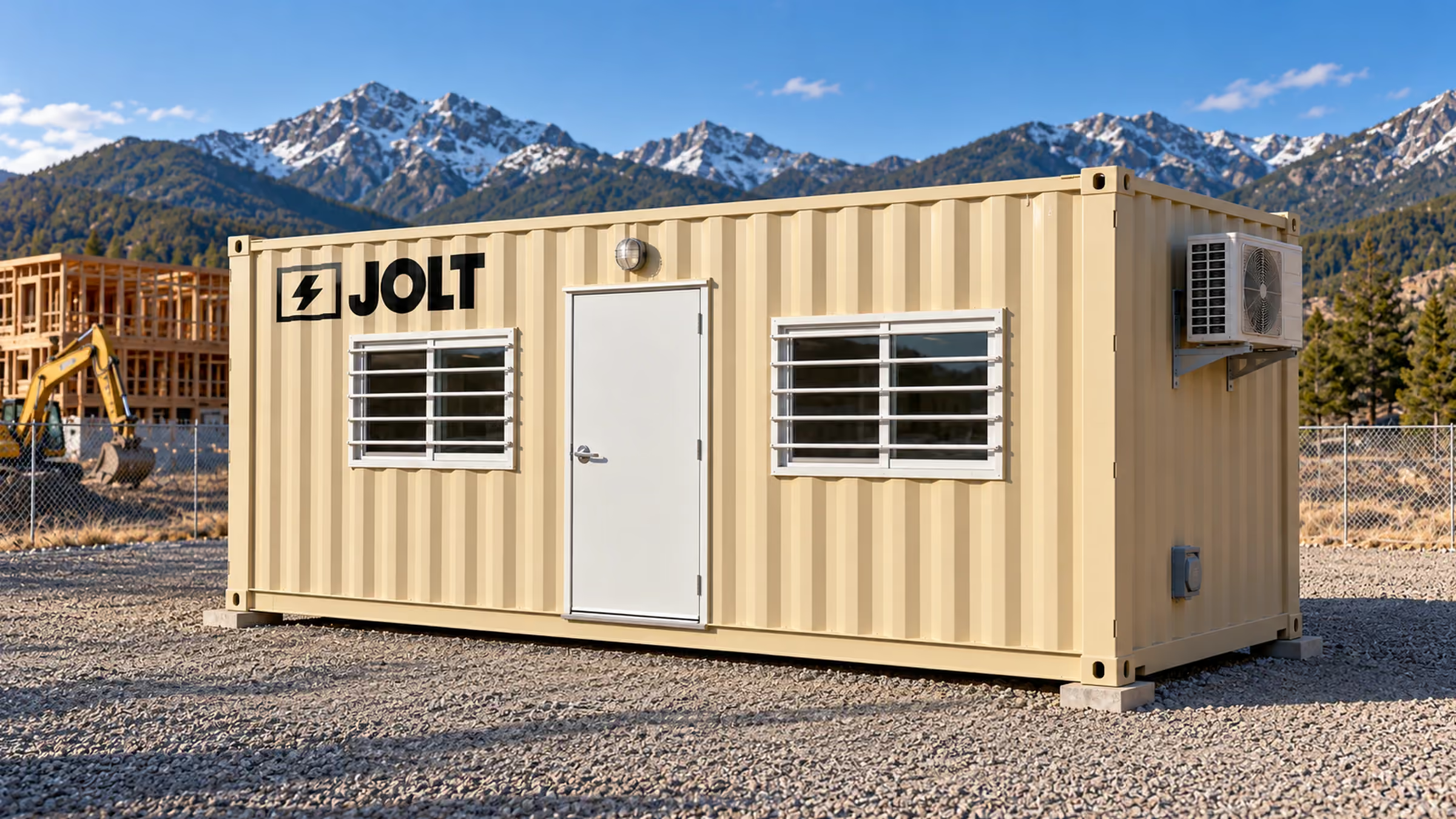
A Denver jobsite office starts with the 20 ft Base rent of $795/mo on a 3-month minimum, plus Zone E — $1,200 each way for delivery and the same Zone E fee for pickup. A Denver-metro yard will always be closer to a Denver site than JOLT's Gypsum yard, so the comparison is not transport; it is the published monthly rate, a ground-level steel office, built-in power and security options, and line items you can see before you sign.
What are the monthly office choices?
JOLT has three tiers in the 20 ft office family. Every tier is 8 ft wide by 8 ft 6 in tall and includes a 36-inch steel personnel door, two barred slider windows, mini-split heat and cooling, lights, outlets, vinyl-plank floor and a 3-month minimum.
| Item | Price |
|---|---|
| $795 /mo | |
Most popular | $1,495 /mo |
| $1,895 /mo |


3-month minimum on every office; $750 reservation deposit.
Base uses a 50-amp shore-power inlet and keeps the office package direct. It fits a Denver project with permitted temporary electrical service where the superintendent needs one durable room for plans, coordination and daily administration.
Grid-Free includes the Base package plus WATCH camera, CONNECT Starlink and POWER solar systems. Its integrated 10 kWh battery can operate the HVAC without shore power, which matters on an early site before temporary service is live.
Alpine includes everything in Grid-Free and adds matte black finish, cedar surrounds, a standing-seam over-roof, covered entry deck and backup heat. It is the mountain-envelope choice, although a Denver contractor can still select it when the covered entry and finish fit the project.
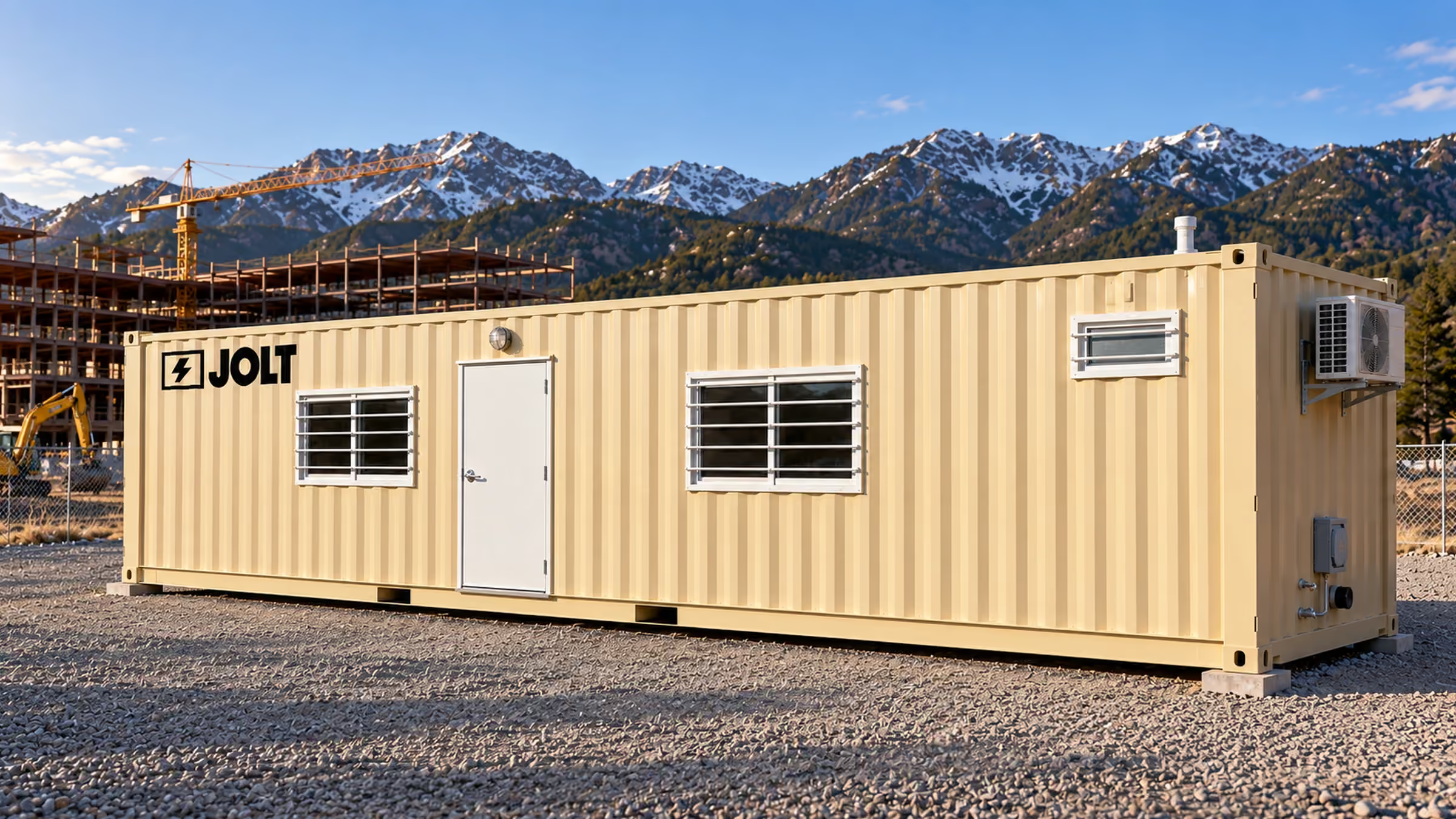
The 40 ft office with bathroom rents for $1,595/mo. It includes an enclosed bathroom at the far end, mini-split heating and cooling, 50-amp shore power, lights, outlets and vinyl-plank floor, also on a 3-month minimum.
Why is Denver delivery Zone E?
JOLT's yard is at 60 Spring Creek Rd in Gypsum, on the I-70 corridor in Eagle County. Denver is the farthest published Colorado zone from that yard, and $1,200 is charged for the delivery leg.
Pickup is another $1,200 trip. Budget transport as two Zone E legs, one at mobilization and one at retrieval, rather than spreading them into a made-up monthly figure.
| Zone | Towns | Delivery | Pickup |
|---|---|---|---|
| Zone A | Gypsum, Eagle, Edwards, Avon, Beaver Creek | $400 | $400 |
| Zone B | Vail, Minturn, Glenwood Springs | $550 | $550 |
| Zone C | Breckenridge, Frisco, Silverthorne, Keystone, Carbondale, Basalt, Aspen, Snowmass | $750 | $750 |
| Zone D | Steamboat Springs, Leadville, Grand Junction | $950 | $950 |
| Zone E | Idaho Springs, Georgetown, Evergreen, Golden, Morrison, Lakewood, Arvada, Aurora, Centennial, Littleton, Boulder, Castle Rock, Denver | $1,200 | $1,200 |
| Zone F — Mountain West12-month minimum | WY, ID, UT, MT | $1,795 | Pickup quoted separately before delivery |
That is a real distance disadvantage against a supplier based in metro Denver, and it should stay visible in the estimate. The counterweight is a known office configuration with published rent, a ground-level format and defined WATCH, CONNECT, POWER, READY and JOLT Pack choices.
Lakewood and Denver both fall in Zone E, as do the other listed Front Range towns. The delivery-zone schedule shows which addresses use the same fee before a contractor compares monthly and transport lines.
The fee does not guarantee that every site can accept the truck. A 20 ft office needs about 70 ft of straight-line clearance and a 40 ft office needs about 100 ft, plus workable road width, turns, grade, overhead space and a firm, level, well-drained pad.
How do the deposit and recurring fees work?
The office reservation deposit is $750. It reserves a specific unit and delivery window, then is applied to the first invoice under Rental Agreement §2.
Cancel in writing more than 14 days before the first day of the delivery window and the deposit is refunded in full. That rule should be matched against the project's permit and mobilization dates before the reservation is placed.
The standard damage waiver is 12% of rent plus recurring upgrades. Its terms and exclusions are in Rental Agreement §12, so it should not be described as general insurance or treated as protection for every loss.
The environmental fee is 5% of rent plus recurring upgrades, and applicable sales tax is extra. Rent escalates by 5% on each anniversary of delivery when a Denver project runs longer than 1 year.
Selected upgrades repeat monthly. A one-time BRAND application uses a 24 by 48 inch customer logo on two sides for $450, while WATCH, CONNECT, POWER, READY and JOLT Pack stay recurring lines.
What does a 3-month Denver rental look like?
At reservation, the contractor selects the office, Denver placement address, delivery window and options, then pays the office deposit. The deposit later appears as a credit on the first invoice rather than becoming a second unit-rent charge.
At delivery, the first month of rent and the Zone E outbound fee belong in the cash schedule. The waiver, environmental fee and sales tax apply as stated, and recurring upgrades begin with the rented office.
During month 2, unit rent and any recurring upgrade and fee lines continue, but the delivery trip does not repeat. The crew uses the office under the site rules, keeps access open and prevents snow, ice and debris from accumulating on the roof, condenser, panels, doors and paths.
Month 3 carries the same recurring structure and satisfies the office's minimum term, but it does not automatically end the rental. The contractor must give at least 15 days of written notice, and rent runs until JOLT retrieves the unit under Rental Agreement §16.
At retrieval, the office must be empty, clean, disconnected from customer utilities and accessible to the truck. The Zone E pickup fee is charged, and property left inside is treated under the return terms.
This timeline avoids a misleading “3 months times rent” shortcut. It places the deposit credit, two transport legs, recurring percentages, tax, selected options and actual retrieval date where they occur.
If the office stays into month 4, the recurring lines continue without a new minimum-term event. If it remains beyond the delivery anniversary, the published annual escalator applies from that anniversary while the original outbound transport remains a completed one-time charge.
Put the pickup notice date at least 15 days before the desired retrieval period, then leave schedule room for the truck trip. The crew should not dismantle temporary access or fill the lane with closeout materials before the office has physically left.
Return preparation includes removing all customer property, disconnecting approved utilities and sweeping the room. The unit cannot be drilled, painted or altered to simplify turnover, and customer signs or attachments must not remain when the truck arrives.
Which Denver permits can affect placement?
Denver Zoning Code 11.11.15 requires a temporary zoning use permit for a Temporary Construction Office tied to an active construction permit. The application and site review should be handled before delivery because the customer is responsible for permits, approvals and zoning under Rental Agreement §5.
A container placed in the public right-of-way follows a separate Denver process. The city's Dumpster and Container Information Sheet, DOTIPT-104.1 revised January 30, 2025, says the container company must obtain a Revocable Street Occupancy Permit and applicants should allow 5 business days.
That sheet limits a container to the parking lane, never the sidewalk or tree lawn, and requires at least 20 ft from corners, alleys and driveways. It also calls for reflective tape or barricades with flashing lights and limits occupancy to 180 days in any 12 months.
Those right-of-way rules do not cover wheeled trailers. Private-property placement still needs the zoning and construction-office analysis for the actual parcel, use and project permit.
The detailed permit discussion is in placing a shipping container on Denver property. Denver Zoning Administration can be reached at 720-865-2705 for address-specific direction.
How should a Denver office be powered?
The Base and 40 ft bathroom offices have a 50-amp shore-power inlet. A licensed electrician connects that inlet to the project's permitted temporary service, and the customer may not connect utilities except through provided inlets under Rental Agreement §7.
POWER is a different system. It uses two panels rated at 400 W each, a 3 kWh LFP battery and an inverter to run Starlink, a camera, lights and laptops, but it does not run the mini-split.
That makes POWER useful for communications and basic desk loads before full temporary service, not a substitute for HVAC power. Its monthly rate is $399/mo, and the off-grid jobsite power guide explains how to separate critical loads from heating and cooling.
Grid-Free and Alpine integrate WATCH, CONNECT and POWER with a 10 kWh battery pack that runs the office HVAC without shore power. A Denver project with delayed utility service can compare those bundled office rates against Base plus temporary-power work.
CONNECT includes Starlink Mini, a router and a 50 GB Roam plan. WATCH adds a solar LTE panoramic camera with motion alerts and cloud clips; performance of either system depends on its network conditions and clear placement.
READY supplies a plan table, two chairs, whiteboard, mini-fridge, microwave and 1,500 W heater. List those electrical loads during service planning rather than assuming the inlet or battery changes the capacity of every connected circuit.
What changes during a Denver winter?
Denver, Jefferson, Arapahoe, Douglas and Boulder counties are Climate Zone 5B under 2021 IECC Table C301.1. Eagle County is 6B and Summit County is 7, so Denver generally presents a less severe code climate category than JOLT's higher mountain service areas.
That does not remove daily freeze and snow work. Denver's roughly 5,280 ft elevation, winter storms and Chinook thaw cycles can leave meltwater by day and refreeze around the door and access path after temperatures drop.
The customer must keep snow, ice and debris off roofs, condensers, panels, doors and access routes. Protect the mini-split outdoor unit from blocked airflow, keep solar panels clear when fitted, and preserve the truck lane through plowing and material staging.
The container floor sits on steel cross-members close to grade. A firm, level and well-drained pad helps keep meltwater away from the floor line and reduces the chance that freeze-thaw movement leaves a door corner unsupported.
Base supplies mini-split heating and cooling through shore power, Grid-Free can run its HVAC from the integrated battery system, and Alpine includes that system plus backup heat. None of those choices changes the customer's snow-clearing duty or replaces a project-specific cold-weather plan.
Winter power planning should account for the office being used at the start and end of each shift, not only at midday. Doors opening during worker meetings and overnight low temperatures change heating demand, so preserve the intended power source throughout the rental.
Keep plowed snow outside the 70 ft or 100 ft retrieval alignment. A pile that seems harmless in January can freeze into an obstacle by closeout, and the agreement treats an inaccessible pickup as a chargeable trip.
Inspect drainage after warm periods. Chinook-driven melt can cross a compacted site toward the office, then freeze at the personnel door or beneath a corner as temperatures fall, so redirect water before it reaches the pad.
When should the 40 ft bathroom office go to Denver?
Choose the 40 ft office with bathroom when more floor length and an enclosed restroom solve a real project constraint. It can reduce trips away from the field office and keep one controlled facility at the administrative area, provided permitted water and waste service can be established.
The bathroom sits at the far end of the 40 ft ISO container. The remaining office includes mini-split heat and cooling, lights, outlets, vinyl-plank floor and a 50-amp shore-power inlet.
The tradeoff starts at delivery. A 40 ft unit needs about 100 ft of straight-line clearance compared with about 70 ft for a 20 ft office, and its pad must remain reachable for both delivery and pickup.
Utility planning is also more involved than for a dry office. Confirm water, waste, freeze protection and trade permits with Denver and the project team before reserving the bathroom configuration.
A larger crew does not automatically require the 40 ft unit. If the site has separate sanitation and only one or two people need focused desk space, a 20 ft office can preserve more laydown area and use the shorter delivery lane.
Compare the monthly container rental overview and the office trailer cost breakdown when the alternative is a larger wheeled building. Keep transport, setup, utilities and return work visible beside rent.
Bathroom service should be assigned before the 40 ft unit is selected. The project team needs a permitted plan for water, waste, freeze protection and disconnection, while the office's 50-amp inlet still requires a licensed electrical connection.
Check the interior operating pattern as well. A bathroom at the far end means workers pass through the office area, which can be useful for a small controlled team but disruptive when many field workers need restroom access throughout the shift.
Where the site already has adequate sanitation, the extra length may be better used for another function or avoided entirely. Choosing 20 ft preserves 20 ft of site length and reduces the straight delivery-clearance requirement by about 30 ft.
What should be ready before you reserve?
Select the office tier, expected term and Denver address, then decide whether shore power will be ready. List WATCH, CONNECT, POWER, READY or bathroom needs before yard preparation begins.
Confirm the zoning permit, active construction permit relationship and any right-of-way approval for the exact placement. Mark utilities, assign one delivery representative and keep about 70 ft clear for a 20 ft office or 100 ft for a 40 ft office.
Budget the published monthly rate, office deposit, recurring fees, sales tax and two Zone E trips. Put the 15-day pickup notice on the closeout schedule and protect the retrieval lane from snow storage, fencing, parked equipment and later construction.
Questions contractors ask
What does a 20 ft Base office cost in Denver?
The 20 ft Base office uses the published monthly rate and a 3-month minimum. Denver delivery and pickup are separate Zone E trips shown on the [pricing page](/pricing).
How much is JOLT delivery to Denver?
Denver is in Zone E, JOLT's highest Colorado delivery zone, with one published fee for each trip. Pickup costs the same as delivery, so budget two Zone E legs.
Is the Denver reservation deposit refundable?
The office deposit reserves one unit and is applied to the first invoice. Cancel in writing more than 14 days before the first day of the delivery window for a full refund under [Rental Agreement §2](/legal/rental-agreement-terms#2).
Does a Denver office need a zoning permit?
Denver Zoning Code 11.11.15 requires a temporary construction office zoning permit tied to an active construction permit. Confirm the specific address and placement with Denver before scheduling delivery.
Can the office sit in a Denver street?
Denver document DOTIPT-104.1 requires a Revocable Street Occupancy Permit for a container in the public right-of-way and says to allow 5 business days. It limits placement to the parking lane and requires at least 20 ft from corners, alleys and driveways.
Can solar POWER run the office mini-split?
No, the standard POWER upgrade supports Starlink, a camera, lights and laptops from two solar panels and a 3 kWh battery. The Grid-Free office has a 10 kWh battery system designed to run its HVAC.
How much notice is required for Denver pickup?
Provide at least 15 days of written notice under [Rental Agreement §16](/legal/rental-agreement-terms#16). Rent continues until the office is retrieved, and the Zone E pickup trip is charged separately.
When does a 40 ft office make sense?
Choose the 40 ft office when the crew needs more floor length and one enclosed bathroom at the far end. It has a 3-month minimum and needs about 100 ft of straight-line delivery clearance.
Keep reading
- RentGrid-Free: drop it anywhere. It runs itself.
- Rent40 ft field office with a bathroom — for the long job
- LocationJobsite container and office rental in Denver
- LocationJobsite rentals in Lakewood — from our I-70 yard
- JOLTDelivery zones, fees and windows from our Gypsum yard
- AnswerShipping containers on private property in Denver
- Rent20 ft mobile office — three tiers, one chassis
- Rent20 ft storage container — $295/month, delivered
Ready when your site is.
Rentals from $85/mo · every price published
A deposit holds your delivery window. Cancel free of charge more than 14 days before the first day of the window. Deposits from $85 are applied to your first invoice.