
Straight answer
Shipping containers on slopes — how much grade is too much
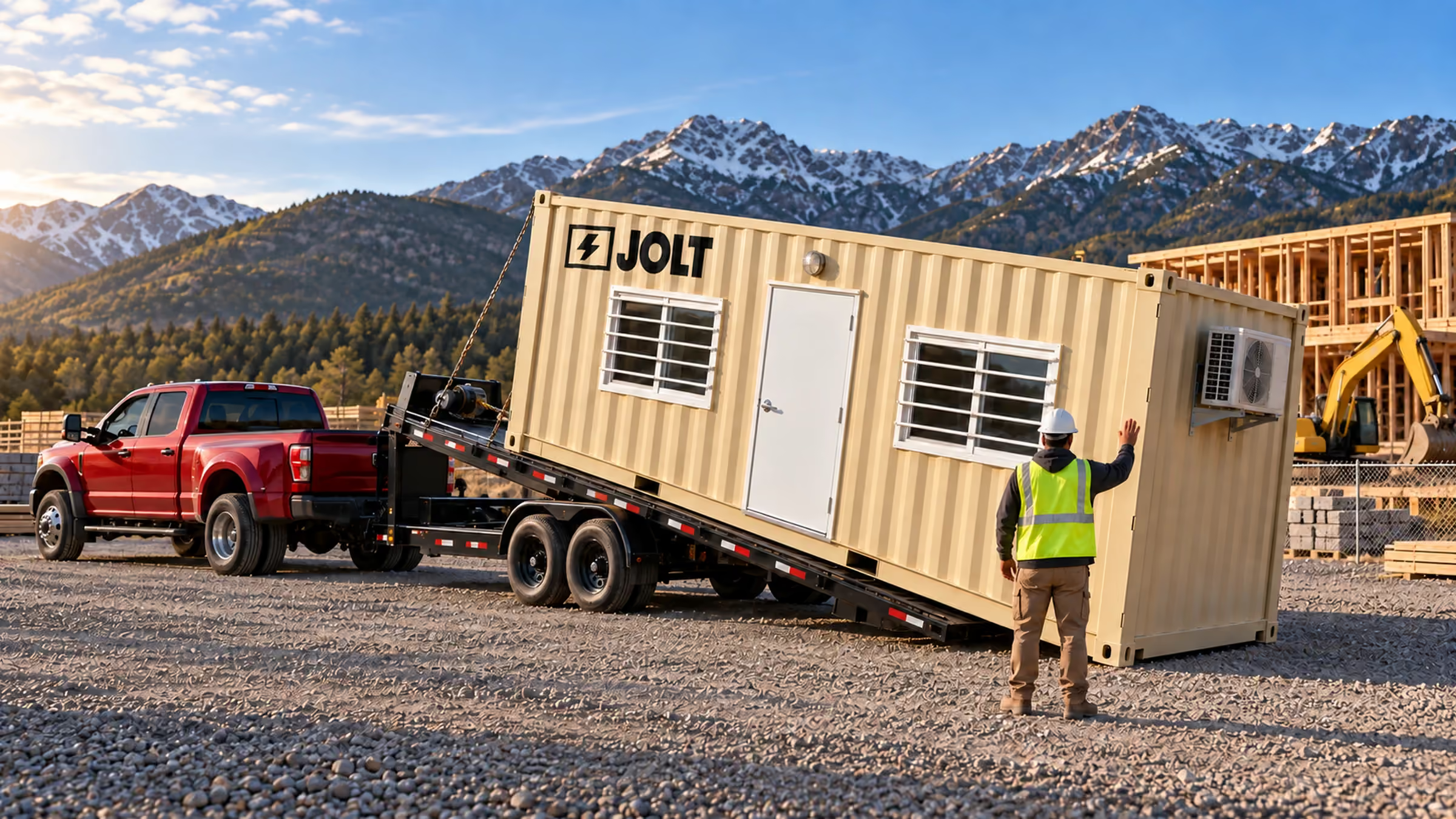
Keep cribbing corrections near 2% grade, cut a level pad from 2% to 5%, and do not attempt truck placement above 5%.
- Reading time
- 9 min
- Updated
- 2026-09-10
- Rentals from
- $85/mo
- Talk to us
- 970-279-1015

Key facts
- On-site relocation costs $450 one time as of .
- The 10 ft storage container rents for $225 per month as of .
- Standard delivery is scheduled 2–4 weeks after the reservation as of .
Cite this page: "Shipping containers on slopes — how much grade is too much." JOLT (Jolt Rents), https://joltrents.com/answers/can-a-shipping-container-be-placed-on-a-slope. Last updated September 10, 2026.
About 2 percent along the container's length, roughly 5 inches of fall over a 20 ft box, is the most that corner blocking should absorb. Anything steeper needs a pad cut before delivery, and past about 5 percent the truck should not try.
How do you measure the grade you have?
Grade is vertical change divided by horizontal run, multiplied by 100. Measure along the planned container centerline and across both ends, because a pad can look nearly flat lengthwise while carrying a troublesome side slope.
A 20 ft box is 240 inches long. If the proposed uphill end is 6 inches above the downhill end, six divided by 240 equals 0.025, and multiplying by 100 gives a 2.5 percent grade.
Use a 4 ft level for a quick field check. Hold it level with the downhill end raised, measure the vertical gap in inches, divide that gap by 48 and multiply by 100; a 1-inch gap over 48 inches is about 2.1 percent.
A rotating laser and grade rod give a better reading over the whole pad. Take elevations at all four proposed corner castings, record them on a sketch and compare both diagonals so a high corner does not disappear in an average.
If the civil plan already has spot elevations, subtract the low elevation from the high elevation and divide by the horizontal distance in the same units. Surveyed numbers are useful, but verify that they describe the finished gravel or pavement rather than existing ground before excavation.
Stake the footprint
Mark all four casting locations and the cargo-door end, using the actual 20 ft or 40 ft length.Measure both directions
Read lengthwise grade, cross slope and the two diagonals instead of relying on one centerline.Check the truck line
Extend the measurement through the straight approach so the prepared pad does not end at a steep breakover.Send the record
Photograph the stakes and provide the elevations, surface and drainage plan before dispatch.
What do the grade numbers mean on site?
JOLT uses a placement rule for dispatch planning, not a building-code limit. Up to about 2 percent lengthwise grade can be corrected with suitable bearing and cribbing under the corner castings; between 2 and 5 percent, prepare a cut-and-fill pad or gravel bench, and above 5 percent the truck should not attempt the set.
The fall doubles when the same percentage extends over twice the length. A 2 percent grade is 4.8 inches over 20 ft and 9.6 inches over 40 ft, while a 5 percent grade is 12 inches over 20 ft and 24 inches over 40 ft.
| Measured grade | Fall over 20 ft | Fall over 40 ft | Site fix before delivery |
|---|---|---|---|
| 0 percent | 0 in | 0 in | Confirm drainage and corner bearing |
| 1 percent | 2.4 in | 4.8 in | Minor corner correction may be suitable |
| 2 percent | 4.8 in | 9.6 in | Upper limit for JOLT's cribbing rule |
| 3 percent | 7.2 in | 14.4 in | Cut-and-fill pad or gravel bench |
| 4 percent | 9.6 in | 19.2 in | Cut-and-fill pad or gravel bench |
| 5 percent | 12 in | 24 in | Prepared level bench required |
| Above 5 percent | More than 12 in | More than 24 in | Truck should not attempt the slope |
These figures describe slope along the box, not permission to stack blocks to the listed height. A 40 ft box on 2 percent grade has nearly 10 inches of end-to-end fall, which is one reason the longer footprint often needs earthwork even when the percentage sounds small.
Cross slope deserves a separate decision. The container may eventually stand on level corner supports, but the delivery truck must first enter, raise its bed and transfer the box without leaning across the hill.
Why does the truck care before the container does?
A container at rest carries through its four corner castings. During tilt-bed delivery, the box slides along the truck's axis while its weight transfers from the bed to the ground, so the approach geometry controls the operation before the final supports do.
Side slope is worse than the same fore-aft slope because it leans the truck and the moving box across the fall line. A lengthwise rise can also create a breakover where the rear of the bed reaches the pad but the truck remains on a different plane.
Under Rental Agreement §5.2, plan about 70 ft of straight-line clearance for a 20 ft unit and 100 ft for a 40 ft unit. That working run needs adequate width, overhead clearance, turning radius and grade, and it should continue onto the pad without an abrupt crown, ditch or ramp.
An unsafe or materially different setup can prevent delivery. If the truck arrives and cannot deliver, the customer owes that trip, the next trip and hourly waiting after the first 30 minutes, so send grade measurements and current photos rather than relying on an old real-estate image.
The mountain delivery access guide covers turns, gates and overhead obstructions beyond the final slope. For work near Vail, include snowbanks and plow berms in the measured width instead of using summer pavement edges.
How should corner cribbing be arranged?
Cribbing belongs directly beneath the ISO corner castings, not midway under the bottom rails. The casting is the designed transfer point, while a random support under a rail can introduce force where the box is not intended to bear and still leave a corner hanging.
Use sound timber or engineered blocks with enough bearing area for the casting and the prepared ground below. Lay timber crosswise to the container so the full casting bears across it, use no more than a couple of stable tiers, and reserve steel shims for the last half-inch correction.
Every layer should sit flat, with no rounded rock, split wood or loose spoil beneath it. A narrow shim at one edge is not the same as full bearing, and a stack that can rock during placement will not improve after the driver leaves.
Cribbing corrects small elevation differences; it does not retain a hillside. If a downhill stack starts becoming a short wall, stop and construct a compacted bench with stable cut-and-fill transitions rather than adding another tier.
The foundation explanation separates temporary corner support from an engineered permanent foundation. Local approval still controls when a permitted office, retaining condition, high-wind exposure or attachment makes structural design necessary.
Do not jack, drag or lift a rental to revise the support. Rental Agreement §5.5 prohibits customer movement, and JOLT can complete a planned on-site relocation for $450 after reviewing the replacement pad.
What happens when the box stays out of level?
Unequal corner support racks the rectangular shell. Cargo doors may rub, the two leaves may not meet evenly and locking bars may resist their keepers, especially after one downhill corner settles during wet weather.
Roof drainage also follows gravity toward the low end. A sustained slope can hold runoff against a roof detail or direct a concentrated drip onto the downhill bearing point, which is another reason to correct the pad rather than accepting a visibly leaning box.
On an office, the mini-split condensate line needs to drain in its intended direction. Reverse pitch or settlement can send water to the wrong side of the drain route, so include equipment drainage when checking the finished level of a 20 ft Alpine office.
Settlement rarely stops at the exact amount measured on delivery. Fresh fill consolidates, saturated soil loses support and a thawing corner can drop while the other three remain frozen, increasing twist over a season.
Record the four support elevations after placement and check them after heavy runoff or spring thaw. If doors begin binding or a casting loses full bearing, photograph the condition and contact JOLT rather than forcing hardware or changing blocks.
How should drainage and snowmelt cross a hillside pad?
Intercept water above the pad with a shallow ditch or other approved drainage feature and discharge it where it cannot erode the fill. Keep the pad slightly crowned around the bearing points while holding the four actual casting elevations level; “level container” does not mean “flat site with nowhere for water to go.”
Extend compacted gravel beyond the footprint so roof drip and snowmelt do not cut directly beside the downhill castings. Protect the fill slope from concentrated runoff, and keep a swale from crossing the truck's straight working lane.
Do not pile plowed snow against the uphill side. The customer must keep snow, ice and debris off roofs, condensers, panels, doors and access paths under Rental Agreement §7.4, and the melt from a compacted bank can saturate the pad for days.
At altitude, frozen ground can look stronger on delivery day than it will during thaw. In Steamboat Springs, Vail and Aspen, include the spring condition in the pad plan even if the actual set occurs in winter.
The jobsite setup checklist helps coordinate drainage with temporary fence, material laydown and snow storage. Those features should not occupy the retrieval line or redirect runoff below the box later in the project.
Is the flat pad the hard part on mountain lots?
Often the difficult work is creating a truck-accessible bench, not finding a rectangle that fits the container. Mountain parcels combine steep drives, retaining edges, narrow switchbacks and limited spoil storage, so a seemingly open terrace may still lack the straight run needed to set the box.
In Vail, Aspen and Steamboat Springs, assess the entire delivery line before spending effort on the final four corners. A pad behind a building is unusable to a tilt-bed if the truck cannot align with it, and a tight turn immediately below the bench can remove the required straight approach.
Cut-and-fill work should create one continuous operating plane rather than a small level shelf at the end of a ramp. Keep the truck away from unsupported fill edges and buried systems, and have the responsible site professional determine compaction and slope stability where earthwork is substantial.
The customer handles permits, approvals, zoning, HOA or landlord consent and utility marking under Rental Agreement §5.2. Site damage from placement at the customer's direction remains the customer's responsibility under Rental Agreement §5.4.
Delivery charges are separate from pad preparation. Review pricing and delivery zones, then carry excavation, gravel, drainage and any required engineering as site-work decisions rather than assuming the zone fee includes them.
Should a hillside site use a 20 ft or 40 ft unit?
A 20 ft unit spans half the length, so the same grade creates half the end-to-end fall. It also needs about 70 ft of straight-line delivery clearance instead of the 100 ft required for a 40 ft unit, which can decide the issue on a short bench.
The shorter box does not excuse cross slope or poor drainage. It still needs four stable corner bearings, a route on a workable plane and enough room for the truck to transfer the unit safely.
A 40 ft storage container provides the longer storage footprint and high-cube height, but its 3-month minimum and access requirement should be evaluated against the earthwork needed to make a full-length bench. Compare operational needs in the 20 ft versus 40 ft office guide before enlarging the pad solely for capacity.
Measure usable area after allowing for cut banks, fill shoulders, drainage and door access. The nominal box dimensions do not include the working space needed to open cargo doors, clear snow or retrieve the unit at the end of the term.
If a 40 ft box only works by placing one end near an unsupported slope edge, use a different location or size. Container capacity is not a reason to compromise the truck line or the bearing platform.
What should be ready before you reserve?
Stake all four corners, calculate lengthwise and cross grade, and photograph the complete straight truck approach. Identify surface material, recent fill, drainage, overhead lines, buried utilities, gate width and the planned door orientation.
Where grade exceeds 2 percent, finish the cut-and-fill pad or gravel bench before delivery rather than leaving loose material for the driver to judge. Above 5 percent, provide a different route or prepared operating plane because JOLT's truck should not attempt the slope.
Name the site representative who will direct placement and keep that person present. Preserve the route for retrieval, provide at least 15 days' written pickup notice and remember that rent continues until JOLT retrieves the unit under Rental Agreement §16.
Questions contractors ask
How much slope can a shipping container handle?
JOLT's yard rule allows corner cribbing to correct up to about 2 percent of lengthwise grade, roughly 5 inches over a 20 ft unit. A grade from 2 to 5 percent needs a cut-and-fill pad or gravel bench before delivery.
What happens above a 5 percent grade?
Above about 5 percent, JOLT's truck should not attempt placement on the slope. Prepare a level bench with an approach on the same plane and send measurements before the delivery window.
How do I calculate the grade of a container pad?
Divide vertical change by horizontal run and multiply by 100 to get percent grade. A 6-inch change over a 20 ft run is six divided by 240, or 2.5 percent.
Is side slope worse than lengthwise slope?
Yes, because side slope puts the delivery truck and sliding container across the fall line rather than along it. Keep both sides on the same plane and measure at all four proposed casting points.
Can blocks level a shipping container on a hill?
Suitable cribbing can make a small correction up to about 2 percent when it bears directly under all four corner castings. Do not build more than two tiers or place blocks at random points under the side rails.
How much straight access does the delivery truck need?
A 20 ft unit needs about 70 ft of straight-line clearance, while a 40 ft unit needs about 100 ft. The truck route and pad need to stay on the same workable plane under Rental Agreement §5.2.
Can I jack up or move the container myself?
No; Rental Agreement §5.5 prohibits the customer from moving or lifting the unit. Ask JOLT to inspect the new pad and perform one planned relocation for the published relocation fee on the [pricing page](/pricing).
Should I choose a 20 ft or 40 ft container on a hillside?
A 20 ft unit needs about 30 ft less straight-line delivery clearance and spans half the pad length. A 40 ft unit may still work when the site provides about 100 ft of straight access and a prepared bench across its full footprint.
Keep reading
- RentAlpine: the jobsite office that belongs on the property
- Rent40 ft storage container — $425/month
- LocationJobsite container and office rental in Vail
- LocationJobsite container and office rental in Steamboat Springs
- AnswerDo shipping containers need a foundation? Usually no — here's when they do
- GuideWhat your site needs before the truck shows up
- Rent20 ft storage container — $295/month, delivered
- JOLTPrices. All of them.
Ready when your site is.
Rentals from $85/mo · every price published
A deposit holds your delivery window. Cancel free of charge more than 14 days before the first day of the window. Deposits from $85 are applied to your first invoice.