
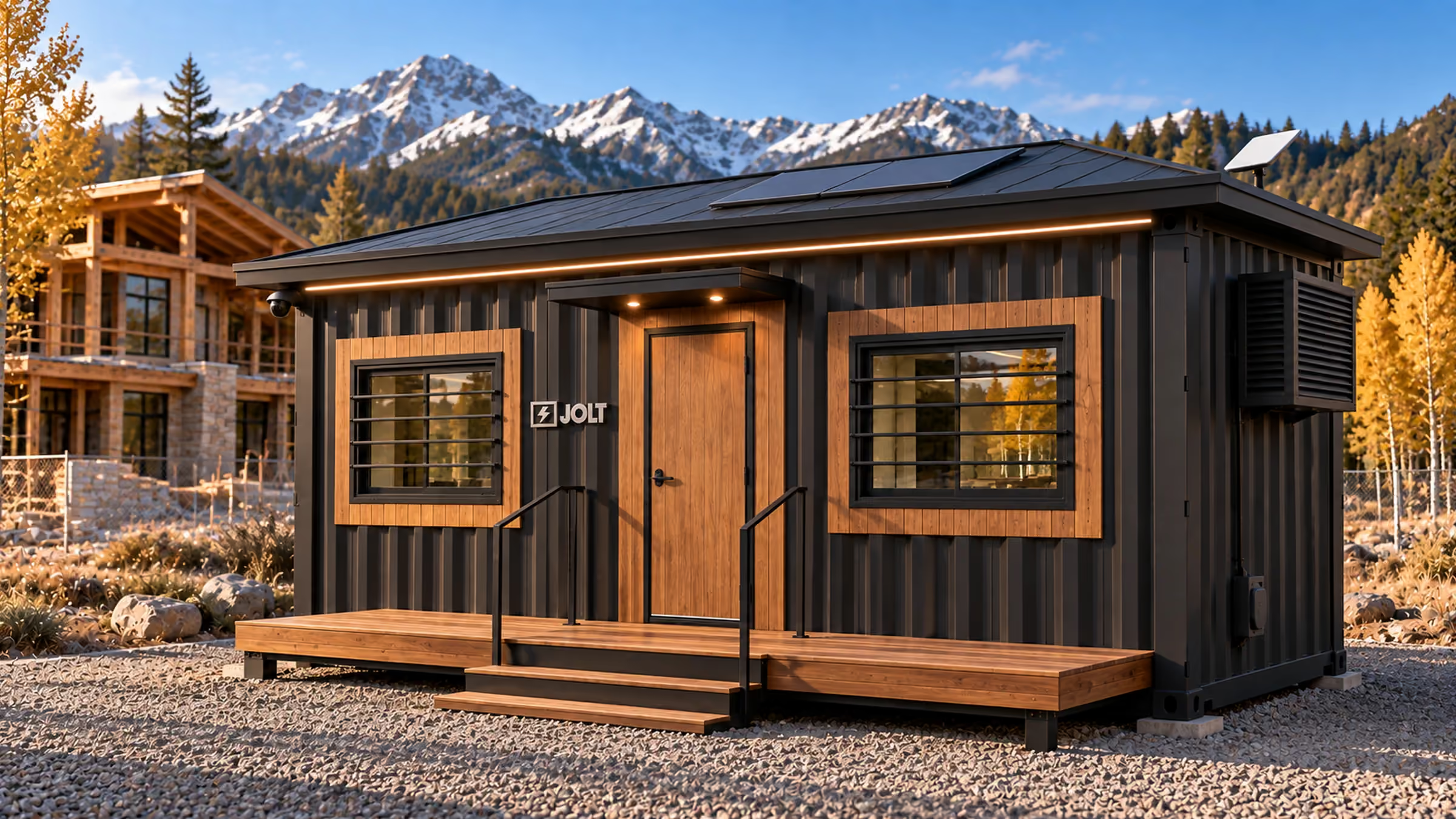
Straight answer
Heating a container office at 8,000 feet in January
Compare 4 ways to heat a 20 ft container office, plan the electrical load and keep the system working through a mountain cold snap.
- Reading time
- 9 min
- Updated
- 2026-09-11
- Rentals from
- $85/mo
- Talk to us
- 970-279-1015

Key facts
- The Base 20 ft office container rents for $795 per month as of .
- The environmental fee is 5% of monthly rent plus recurring upgrades as of .
- JOLT Express delivery costs $750 on top of the zone fee as of .
- READY rents for $125 per month on top of the unit rent as of .
Cite this page: "Heating a container office at 8,000 feet in January." JOLT (Jolt Rents), https://joltrents.com/answers/how-do-you-heat-a-shipping-container-office-in-winter. Last updated September 11, 2026.
Every JOLT office is heated by its built-in mini-split, fed by a 50-amp shore-power connection on Base and the 40 ft office or by a 10 kWh battery pack on Grid-Free and Alpine; the Alpine tier adds backup heat for the nights a heat pump falls behind. A Base 20 ft office rents for $795/mo, and heat and cooling are included on every tier.
Which heat source does each office use?
The mini-split is the primary heating system in every JOLT office. It transfers heat rather than making all its heat through electrical resistance, and it also cools the room during summer. The outdoor section must exchange heat with open air, so its placement and clearance matter.
The Alpine office adds backup heat. That second source matters during the coldest part of a mountain night, while the mini-split is defrosting, or while a cold-soaked room comes up to temperature after delivery.
The READY kit adds a 1,500 W thermostatic wall heater. Treat it as supplemental resistance heat, not as a substitute for adequate power to the office. READY also supplies the work furniture and small appliances, which add their own electrical loads.
| Heat source | Required power | Practical job |
|---|---|---|
| Included mini-split | Shore power on Base or 40 ft; battery on Grid-Free or Alpine | Primary heating and cooling |
| Alpine backup heat | Power confirmed for the assigned unit | Support during deep cold and defrost |
| READY 1,500 W heater | Assigned unit with adequate capacity | Supplemental room heat |
| Generator-fed office system | Proper outdoor generator and code-compliant connection | Temporary source when utility power is absent |
A portable generator is a power source, not another heater inside the room. It stays outdoors at least 20 ft from doors, windows and vents, with exhaust pointed away (CPSC guidance). A licensed electrician must make utility connections through the provided inlet and to code under Rental Agreement §7.
What happens to a mini-split in deep cold?
Heat-pump output falls as outdoor temperature falls. Conventional mini-splits often lose capacity below about 20°F and many stop near 5°F, while equipment listed to the NEEP cold-climate specification is rated at 5°F and can operate to about −13°F or colder. Ask for the low-temperature rating of the assigned unit at reservation rather than assuming one.
A heat pump also has to defrost its outdoor coil. Moisture freezes on that coil, the system briefly reverses operation to melt the frost, and indoor heating pauses. A short burst of vapor outdoors can be normal during that process; a condenser buried in plowed snow is not.
At Leadville, January daytime highs are near 30°F and average lows are around 0°F (NOAA 1991–2020 climate normals). Clear mountain nights can fall well below zero. That difference between an average day and a design cold night is why a superintendent should plan the backup source before mobilization.
Vail averages about 30°F for a January high and single digits at night (NOAA 1991–2020 climate normals). A unit that holds temperature at lunch may work much harder before sunrise. Judge the heating plan against the coldest occupied hours, not the warmest point in the day.
Do not repeatedly switch the mini-split off when the forecast is severe. Maintaining a moderate indoor temperature generally asks less of the system than reheating cold steel, furniture and equipment every morning. Follow the operating instructions supplied with the assigned unit.
How much power does winter heat need?
Heating usually controls the electrical plan. A one-ton mini-split draws roughly 0.8–1.5 kW while running and may draw more in deep cold. That is a general planning range, not the specification of the office you receive.
The arithmetic is simple: watts multiplied by hours, divided by 1,000, equals kWh. A 1,500 W READY heater consumes 1.5 kWh for every full hour its element operates. If its thermostat cycles the element for only part of an hour, consumption falls accordingly.
Do not add the nameplate loads and assume they all run continuously. The mini-split cycles, the resistance heater cycles, and a microwave runs briefly. Still, the temporary service, cord arrangement and inlet connection must handle simultaneous loads safely.
Construction-site receptacles need GFCI protection or an assured equipment grounding program under 29 CFR 1926.404(b)(1). NEC Article 590 covers temporary installations. Have the site's licensed electrician size and connect the source rather than solving a tripped breaker with an improvised adapter.
The customer supplies and pays for electricity and fuel under Rental Agreement §7.5. Put expected generator runtime, refueling responsibility and after-hours checks into the site plan if utility service is not ready.
Can solar and batteries carry the heat?
The standard POWER upgrade cannot run the mini-split or the READY heater. Its two 400 W panels, 3 kWh LFP battery and inverter are intended for Starlink, WATCH, LED lights, laptops and phones for about 2 days without sun. It is a light-load office system.
That distinction prevents a common winter mistake. A battery that comfortably runs communications and computers can be emptied quickly by resistance heat. One uninterrupted hour from a 1,500 W heater represents half of a nominal 3 kWh battery before inverter losses and other loads are considered.
The Grid-Free office and Alpine are different. Each has a 10 kWh battery pack built to run the HVAC, plus WATCH, CONNECT and POWER. They require no shore power, although weather, sunlight, panel condition and actual office demand still affect operation.
Colorado mountain sites receive roughly 3 peak-sun hours per day in December, compared with 6 or more in June (NREL National Solar Radiation Database). Those are broad resource averages. Shade, aspect, a narrow valley and a storm sequence can produce less at the exact pad.
Snow covering a solar panel stops production until the panel is cleared. The customer must keep panels clear under Rental Agreement §7.4. Build that check into the morning snow route instead of waiting for a low-battery warning.
Why does the room lose heat so quickly?
A 20 ft container has only about 150 sq ft of interior floor and an interior roughly 19 ft 4 in long by 7 ft 8 in wide by 7 ft 10 in high (ISO 668 dimensions). The small room can warm quickly, but it can also change temperature quickly when the door stays open.
The Base office is insulated, and that insulation is what lets one mini-split hold 150 sq ft against a mountain night. If a project specification calls for a stated R-value, ask for it at reservation for the assigned unit rather than putting an assumed number into a bid; the container insulation answer covers the building-science side.
Operationally, the personnel door and two windows are the obvious interruption points in the envelope. A door propped open for material deliveries replaces heated indoor air with outside air. Close it between trips and keep the threshold free of packed snow so it latches normally.
Solar gain can help on a clear afternoon and disappear at sunset. Wind also raises heat loss around any exposed structure. Place the office for safe delivery and drainage first, then consider winter sun and prevailing drift direction if the site offers more than one workable pad.
Do not cover the mini-split head, block its airflow with boxes, or place a portable heater against combustible material. Keep paper plans, coats and extension cords away from heating equipment. Follow the clearances marked on the assigned equipment.
What should happen on delivery day?
A winter-delivered office may be cold-soaked. Its steel shell, floor, furniture and everything brought inside must absorb heat before the air temperature stabilizes. Allow startup time before scheduling the first meeting rather than judging the system after 10 minutes.
Confirm the power source before the truck arrives. The Base and 40 ft offices have a 50-amp shore-power inlet; Grid-Free and Alpine run on their own solar array and 10 kWh battery. Utilities may be connected only through the provided inlets by a licensed electrician to code under Rental Agreement §7.2(f).
The pad must be firm, level and well drained. JOLT also needs about 70 ft of straight-line clearance for delivery of a 20 ft unit, overhead clearance, marked utilities and your representative present. Snowbanks can erase usable approach length even when the summer logistics drawing looks adequate.
Start the system, set a steady target, and check that air can move around both indoor and outdoor equipment. Confirm the backup source and where its thermostat is located. Record who will receive an after-hours call if site power fails.
Do not use an unvented combustion heater inside the container. Carbon monoxide and moisture make that a poor substitute for the installed electric systems. If a generator supplies power, it remains outside under CPSC separation guidance and the electrical connection remains code compliant.
How should you operate heat overnight?
Choose an overnight setting that keeps the room well above freezing without heating an empty office to daytime comfort. What is inside sets the floor: electronics, water jugs, adhesives and printer ink all carry storage minimums on their labels, and the highest of those minimums is the number the thermostat has to hold.
Keep the mini-split at a stable setting during a severe cold period rather than making large daily swings. A modest setback leaves capacity for the morning recovery. If documents, electronics or water-containing items have manufacturer storage limits, use those limits to set the minimum.
Assign a person to review the forecast and site-power status before leaving. A remote alert from other site systems can help, but third-party networks and weather can interrupt service and do not replace physical checks under Rental Agreement §13.
Never leave a temporary portable heater on an improvised extension lead. READY's heater is part of a fitted kit, but the supply still needs sufficient capacity. If breakers trip, remove load and have the electrician find the cause.
The office cannot be used for overnight sleeping or residence under Rental Agreement §7. Overnight heating protects the equipment and supports morning startup; it does not change the permitted use.
How do snow and ice affect heating?
Keep snow, ice and debris clear of the roof, condenser, panels, doors and access paths. That duty appears in Rental Agreement §7.4, and snow-load neglect is excluded from the damage waiver under §12.
Do not let a plow build a wall around the condenser. The unit needs open airflow and a path for defrost water. Refrozen meltwater near the equipment also creates an access hazard for the person making the morning check.
Roof clearing is separate from condenser clearing. Use a safe method approved by the project's safety lead; do not climb onto a slick container roof casually. The Colorado snow-load guide explains why accumulation management deserves its own plan.
The Alpine tier's standing-seam over-roof and covered entry deck change how snow sheds and how workers approach the door. They do not remove the customer's clearing duty. Keep the discharge area controlled so shed snow does not block the entry or outdoor equipment.
If frozen ground is stopping excavation or concrete work rather than cooling the office, use the separate ground heater. That trailer-mounted hydronic unit thaws ground and supports winter concrete curing; it is not an indoor space heater.
What does each winter office tier cost?
Base is the direct choice when the site has dependable shore power. Grid-Free fits pre-power and remote phases because its 10 kWh system runs the HVAC. Alpine includes the Grid-Free systems and adds its mountain envelope, standing-seam over-roof, covered entry deck and backup heat.
| Item | Price |
|---|---|
| $795 /mo | |
Most popular | $1,495 /mo |
| $1,895 /mo |


3-month minimum on every office; $750 reservation deposit.
All three 20 ft tiers have a 3-month minimum. Delivery and pickup are separate transport legs based on zone, and the reservation deposit is applied to the first invoice. Recurring invoices also include the 5% environmental fee and sales tax.
The standard delivery window is 2–4 weeks from reservation. JOLT Express applies only to an eligible Base 20 ft office, placing it on site within 7 business days for $750. A mountain forecast and pass closure can still affect travel, so reserve against the mobilization schedule rather than the first day heat is needed.
What should you reserve?
Reserve Base when inspected shore power will be operating before delivery. Choose Grid-Free when HVAC must run without shore power, or Alpine when the same off-grid power plus backup heat and the mountain exterior package are part of the winter plan.
Send us the site address, elevation, occupied hours, power status, pad photos and requested window through reserve. State whether READY is needed, identify the overnight operating plan, and show where plows will put snow so we can review the placement before the truck leaves Gypsum.
Questions contractors ask
Does every JOLT office container include heat?
Yes. Every JOLT office includes a mini-split for heat and cooling; the Alpine tier also includes backup heat.
Will the POWER upgrade run an office heater?
No. POWER runs Starlink, a camera, LED lights, laptops and phones for about 2 days without sun, but it does not run the mini-split or READY heater.
How much electricity does the READY heater use?
The READY wall heater is rated at 1,500 W, so it uses 1.5 kWh for each hour that its heating element runs.
Can the Grid-Free office run its own mini-split?
Yes. The Grid-Free office has a 10 kWh battery pack that runs the HVAC, and no shore power is required.
What does the READY upgrade cost?
READY costs $125/mo and includes a plan table, 2 chairs, a whiteboard, mini-fridge, microwave and 1,500 W thermostatic wall heater.
What should I clear after a snowstorm?
Clear snow and ice from the roof, condenser, solar panels, doors and access paths as required by Rental Agreement §7.4.
How cold does Leadville get in January?
Leadville's January high is near 30°F and its average low is around 0°F, with colder nights possible (NOAA 1991–2020 climate normals).
How early should I reserve a heated office?
The standard delivery window is 2–4 weeks from reservation; JOLT Express places an eligible Base office within 7 business days for $750.
Keep reading
- RentAlpine: the jobsite office that belongs on the property
- RentGrid-Free: drop it anywhere. It runs itself.
- UpgradeREADY: walk in and work
- AnswerWorking in a container office through a Colorado winter
- AnswerHow to insulate a container office — and why fiberglass fails at altitude
- RentGround heaters — pour concrete in January
- GuideCan a container office handle Colorado snow? The numbers.
- JOLTPrices. All of them.
Ready when your site is.
Rentals from $85/mo · every price published
A deposit holds your delivery window. Cancel free of charge more than 14 days before the first day of the window. Deposits from $85 are applied to your first invoice.